

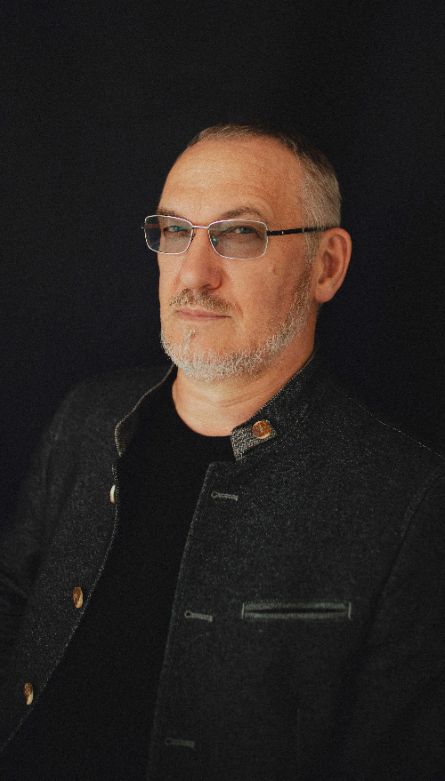
Andrey Bazanov.
Freedom rooted in the academic tradition
Andrey Bazanov occupies a distinctive place in contemporary Russian painting. His work brings together two qualities that are rarely found in such natural harmony: a rigorous academic foundation and a painterly language of remarkable freedom and expressive vitality. At first glance, these qualities may appear contradictory. Academic training is often associated with discipline, established artistic principles and respect for tradition, while painterly freedom is commonly understood as the desire to move beyond accepted conventions. Bazanov's work, however, demonstrates precisely the opposite. His paintings reveal that genuine artistic freedom arises not in spite of academic training, but because of it.
His paintings possess a remarkable sense of inner unity. Confident draughtsmanship, carefully structured compositions and a profound understanding of form never exist for their own sake. Instead, they provide the secure foundation that allows the artist to work with colour, painterly texture and pictorial space with complete assurance, preserving the integrity of the image even in his boldest painterly decisions. The vitality of his work therefore feels entirely natural, emerging from mastery rather than from any desire to impress through visual effect.
Throughout Bazanov's oeuvre, painting is understood as an independent artistic language. Colour extends far beyond the description of local tones, form is never confined to accurate drawing alone, and composition serves a far greater purpose than simply organising the image. Every element exists in close relationship with the others, creating a unified pictorial structure in which emotional expression and formal discipline become inseparable.
Such an approach did not develop overnight. Behind the apparent freedom of his painterly language lie years of disciplined study, deep respect for the academic tradition and a lifelong commitment to refining his own artistic vision. For this reason, Bazanov's work cannot be regarded merely as a continuation of the school in which he was trained. Rather, it represents its natural evolution, demonstrating that academic tradition remains truly alive only when it becomes the foundation for independent artistic thought.
Today, Andrey Bazanov is recognised as one of the leading representatives of the contemporary St Petersburg school of painting. His works are known both in Russia and internationally, while his artistic career demonstrates that fidelity to professional tradition is entirely compatible with continual creative development. On the contrary, it is profound technical mastery that enables an artist to speak in a distinctive visual language, preserving the freedom, conviction and painterly culture that make Bazanov's work immediately recognisable.
This connection between tradition and contemporary practice lies at the heart of Dialogue Across Eras, a project in which Andrey Bazanov turns to the work of major Russian artists of the past and explores their artistic principles through his own painting. Rather than recreating historical works, he enters into a creative dialogue with their approaches to colour, form, composition and materials, creating new and independent works. Through masterclasses, films and accompanying articles, Dialogue Across Eras traces the continuity of painting across generations and considers how artistic traditions can remain alive, relevant and open to new interpretation.

Andrey Bazanov. Aphrodite’s Shore. Study. Cyprus, 40 × 50 cm, oil on canvas, 2011

Andrey Bazanov. Château d’Amboise on the Loire. Study. France, 60 × 80 cm, oil on canvas, 2015

Andrey Bazanov. Fortress on the Danube. Plein Air in Serbia, 60 × 80 cm, oil on canvas, 2012
THE ARTIST'S JOURNEY
Andrey Bazanov was born in Saratov in 1959, a city with a rich artistic heritage where painting has long formed an integral part of its cultural identity. It was here that his journey as an artist began. His first professional training took place at the Saratov Art College, where he acquired a thorough grounding in academic drawing, composition and painting. Even at this early stage, it was evident that art education represented far more than a period of study; it marked the beginning of a lifelong professional commitment.
Equally significant in shaping the future artist was his family background. Bazanov has often spoken of the profound influence of his father, a veteran of the Soviet Air Force, who had once dreamed of becoming an artist himself but was unable to pursue that ambition. Rather than remaining a family anecdote, this unrealised aspiration profoundly influenced Bazanov's own attitude towards his profession. It instilled in him the understanding that the opportunity to devote one's life to painting is both a privilege and a responsibility, never something to be taken for granted.
His childhood was spent among military airfields and garrisons. The frequent relocations, disciplined rhythm of military life and the distinctive environment in which he grew up fostered qualities of self-discipline, resilience and respect for sustained work. These characteristics are not immediately visible on the surface of his paintings, yet they help explain their remarkable sense of internal order. Beneath the apparent freedom of his painterly language lies a profound professional discipline, developed through years of dedicated practice.
The next decisive stage in his development came with his studies at the Ilya Repin Institute of Painting, Sculpture and Architecture in Leningrad, one of Russia's foremost centres of academic art education. There he entered the Monumental Painting Studio led by Professor Andrei Andreyevich Mylnikov. It was during these formative years that Bazanov's artistic outlook took its definitive shape, establishing the principles that have continued to guide his work throughout his career.
Training in the Monumental Painting Studio extended far beyond the specific requirements of monumental art itself. It cultivated a particular way of thinking about painting—one founded upon the structural role of composition, the relationship between form and space, the internal logic of the image and the unity of its plastic organisation. These principles remained fundamental to Bazanov's work long after his studies, becoming equally evident in his easel paintings. Whether creating portraits or still lifes, he approaches every composition with the same sense of structural clarity and compositional integrity that characterises monumental painting.
It was also during these years that his understanding of painting as a profession became fully established. For Bazanov, art has never been governed by fleeting inspiration or spontaneous emotional expression alone. Instead, it has always been a lifelong vocation requiring technical excellence, intellectual discipline and continuous artistic development. This conviction has remained the foundation of his creative practice ever since, shaping not only the way he paints, but also the way he understands the very nature of artistic work.

Andrey Bazanov. Fishing Boats in Sanary-sur-Mer. Study, 60 × 80 cm, oil on canvas, 2015

Andrey Bazanov. Fishing Boats. Kranevo. Bulgaria, 60 × 80 cm, oil on canvas, 2012

Andrey Bazanov. Petra tou Romiou. Aphrodite’s Rocks, 40 × 80 cm, oil on canvas, 2011
THE SCHOOL THAT SHAPED HIS ARTISTIC FREEDOM
Studying in the studio of Professor Andrei Andreyevich Mylnikov marked far more than another stage in Andrey Bazanov's professional education. It was here that his understanding of painting as an art in which technical mastery, structural discipline and creative freedom exist in complete harmony finally took shape. For generations of artists, Mylnikov's studio represented not merely a place of study, but an intellectual and artistic environment in which attitudes towards both the profession and the very nature of artistic creation were formed.
Andrei Mylnikov was one of the foremost representatives of the Russian academic tradition during the second half of the twentieth century. Yet his significance extended well beyond his own artistic achievements. As a teacher, he sought not to produce followers who would imitate his manner, but independent artists capable of developing their own visual language. His aim was to cultivate painterly thinking founded upon a profound understanding of the fundamental principles of art rather than upon stylistic convention.
In his teaching, Mylnikov placed little value on superficial brilliance or outward effect. Instead, he encouraged honesty in painterly expression, mastery in the construction of form, a refined sense of spatial organisation and the ability to convey atmosphere through light and air. These qualities, rather than technical virtuosity alone, became the true measure of professional achievement. Such an approach demanded careful observation, thoughtful analysis of composition and continuous refinement of painterly culture, yet it never imposed rigid formulas that might suppress artistic individuality.

Andrey Bazanov. Bather, 120 × 80 cm, oil on canvas, 2004

Andrey Bazanov. Grace, 100 × 65 cm, oil on canvas, 2000

Andrey Bazanov. Model in the Studio, 110 × 80 cm, oil on canvas, 2010
The atmosphere within the studio was equally important. Former students often recalled it as a place of open artistic dialogue, where high standards were combined with genuine respect for the individuality of every young painter. Independent thinking was encouraged, personal solutions were valued, and each student was expected to discover his or her own artistic direction rather than follow established models. It is no coincidence that the graduates of Mylnikov's studio emerged as remarkably different artists. What united them was never a shared style, but a common level of artistic culture and professional excellence.
For Bazanov, this experience proved decisive. Academic training did not provide him with a fixed repertoire of artistic devices to be repeated throughout his career. Instead, it gave him something far more valuable: an understanding of the internal logic of painting, confidence in the expressive potential of its formal elements and the freedom to employ them according to the needs of each individual work. As a result, his paintings never appear as academic exercises. They possess the natural assurance of an artist for whom technical mastery has become an instrument of expression rather than an end in itself.
The fact that Bazanov studied in a Monumental Painting Studio also left a lasting mark on his artistic vision. Monumental painting demands a particular understanding of composition, where every element serves the integrity of the whole and colour, form and space function as parts of a unified plastic structure. This way of thinking remains evident even in his easel paintings. Whether working on an intimate still life or a portrait, Bazanov approaches each canvas with the same sense of structural clarity, compositional balance and spatial coherence. The scale of the painting may change, but the scale of artistic thought remains unmistakably monumental.
At the same time, the influence of Mylnikov's school never resulted in stylistic dependence. On the contrary, the strength of Bazanov's academic education enabled him to develop a painterly language that is entirely his own. Within his work, professional discipline coexists naturally with expressive freedom, demonstrating that true artistic individuality grows not through the rejection of tradition, but through its profound understanding. It is precisely this union of academic culture and creative independence that defines the distinctive character of Andrey Bazanov's art.

Andrey Bazanov. Night, 90 × 110 cm, oil on canvas, 2010

Andrey Bazanov. Nude against a Green Background, 74.5 × 135 cm, oil on canvas, 2008

Andrey Bazanov. Venus Callipyge, 140 × 100 cm, oil on canvas, 2000
COLOUR AS THE FOUNDATION OF PAINTERLY THINKING
It is impossible to imagine Andrey Bazanov's art without colour. More than any other element, colour forms the foundation of his painterly language, shaping form, organising space and defining the emotional atmosphere of each work. It is never employed merely to describe the local appearance of an object, nor does it function as a decorative addition to the composition. Instead, the entire pictorial structure emerges through the subtle interaction of chromatic relationships, allowing form to acquire plastic vitality while space gains both depth and movement.
Although this approach is rooted in the traditions of the Russian realist school, Bazanov develops it in a distinctly personal way. For him, colour is not simply a means of representing the visible world; it is a way of thinking through painting itself. His works are therefore perceived not as collections of individual objects, but as unified pictorial organisms in which every colour exists only through its relationship with the surrounding colours. No brushstroke stands alone. Each derives its meaning from the overall chromatic harmony of the painting.
This becomes especially evident in the way he constructs form. Rather than relying solely on tonal modelling to create volume, Bazanov frequently builds form through the interaction of warm and cool hues, saturated and restrained colour masses, dense passages of paint and more transparent layers. Form seems to emerge naturally from colour itself, constantly responding to changes in light and atmosphere. Instead of appearing rigidly defined, it remains vibrant, flexible and alive within the pictorial surface.
The character of his brushwork plays an equally significant role. Broad, confident strokes are never intended as displays of temperament or technical virtuosity. Every movement of the brush serves the larger pictorial structure. Even where the paint appears spontaneous, its apparent freedom is supported by remarkable discipline and precision. Texture therefore becomes far more than a visual effect; it forms an essential component of the artistic image itself.

Andrey Bazanov. Portrait of an Air Force Veteran, 80 × 60 cm, oil on canvas, 2010

Andrey Bazanov. Grace, 100 × 65 cm, oil on canvas, 2000

Andrey Bazanov. Self-Portrait, 80 × 60 cm, oil on canvas, 2009
These qualities are perhaps most fully realised in Bazanov's still lifes. Here the visible world becomes a laboratory of painting, allowing him to explore complex chromatic relationships, contrasting textures and the behaviour of light across different surfaces. Ceramic vessels, glass, metal, textiles, fruit and flowers are valued not simply for their material presence, but for their painterly possibilities. Each object retains its own physical character while simultaneously becoming part of a larger chromatic environment in which every element contributes to the unity of the composition.
This approach explains the remarkable sense of inner energy that characterises his work. Even the most tranquil compositions possess an underlying vitality. That energy does not arise from dramatic subject matter, but from the dynamic interaction of colour, form and rhythm. The painted surface appears to remain in motion, inviting the viewer to experience the image not as a static representation but as a living process in which the artistic form continues to unfold before the eye.
Here lies one of the defining characteristics of Andrey Bazanov's art. His paintings demonstrate that the expressive power of painting exists independently of narrative or subject matter. The true protagonist of his work is not the depicted object itself, but painting in its purest sense—its colour, its plastic structure, its rhythm and its capacity to convey the artist's inner response to the world. It is this quality that makes Bazanov's work immediately recognisable and confirms the maturity of a painterly language in which academic tradition is transformed into artistic freedom and profound emotional expression.
A DIALOGUE WITH TRADITION
Every artist enters into dialogue with the generations that came before. Yet this dialogue is rarely a matter of direct influence or conscious imitation. More often, it is reflected in the way artistic tradition becomes an integral part of an artist's own way of thinking. It is in this sense that Andrey Bazanov's work continues one of the most significant traditions of twentieth-century Russian painting.
Among the artists to whom Bazanov has repeatedly expressed particular admiration are Alexander Samokhvalov, Ilya Mashkov, Pyotr Konchalovsky and Aleksandr Deineka. Although they belonged to different generations and represented distinct artistic movements, they shared a profound understanding of painting as an autonomous visual language in which colour, form and composition exist in complete interdependence. It is precisely this understanding of painting that resonates most deeply with Bazanov's own artistic vision.
From Alexander Samokhvalov, Bazanov draws inspiration above all from the refined culture of pictorial form. Samokhvalov succeeded in combining a solid academic foundation with remarkable freedom of colour while preserving compositional clarity and structural harmony. Bazanov responds to these qualities not by adopting Samokhvalov's manner, but by developing them in his own direction. His paintings possess greater material density, more substantial form and a richer tactile presence, allowing the expressive qualities of paint itself to play an increasingly important role.
The work of Ilya Mashkov offers a different source of artistic affinity. Bazanov is particularly drawn to Mashkov's extraordinary chromatic energy, his bold painterly thinking and his ability to construct form through colour alone. Yet he never pursues expressive intensity for its own sake. Even his most vibrant colour harmonies remain governed by an underlying structural order, ensuring that emotional force is always balanced by compositional discipline.

Ilya Mashkov. Cityscape (Moscow), 92.3 × 97.7 cm, oil on canvas, 1911

Aleksandr Deineka. Pioneer, 1934

Pyotr Konchalovsky. Still Life with a Samovar, 111 × 123 cm, oil on canvas, 1917

Andrey Bazanov. Portrait of an Air Force Veteran, 80 × 60 cm, oil on canvas, 2010

Pyotr Konchalovsky. Matador, 125.5 × 97 cm, oil on canvas, 1910
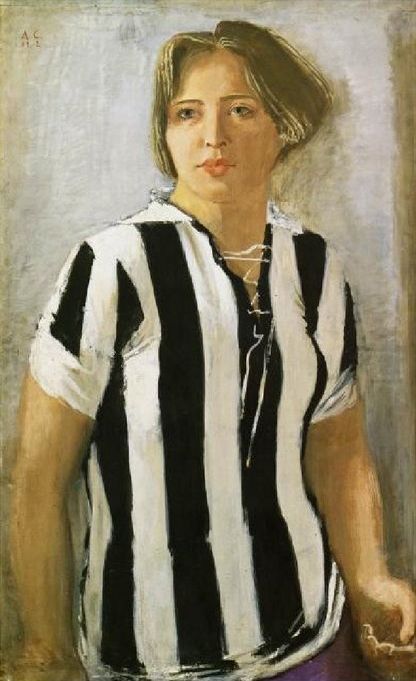
Alexander Samokhvalov. Girl in a Jersey (1932)
Pyotr Konchalovsky represents another important point of connection. Bazanov is particularly close to his understanding of painting as something physical and substantial, where form emerges through relationships of colour, tone and the material presence of paint rather than through contour alone. In Konchalovsky's still lifes, portraits and landscapes, objects possess weight, volume and an almost tangible presence, while the brushstroke remains an active part of their construction. This combination of structural clarity, rich colour and painterly materiality finds a natural resonance in Bazanov's own approach, particularly in his still lifes and his sustained interest in the expressive possibilities of oil paint.
Aleksandr Deineka occupies an equally significant place within this artistic dialogue. What Bazanov values most in his work is the clarity of pictorial construction, the strength of compositional organisation and the remarkable sense of structural coherence that characterises even the simplest images. Monumentality in Deineka's art arises not merely from scale but from the disciplined relationship between every element within the composition. This approach is particularly meaningful for Bazanov, whose own education in monumental painting cultivated a similar understanding of compositional integrity as one of the defining principles of artistic practice.
To describe these artists simply as influences, however, would be misleading. Their work forms part of the artistic environment within which Bazanov's own visual language developed. He neither quotes their imagery nor borrows their stylistic devices. Instead, he engages with the broader tradition they represent, absorbing its principles while allowing them to evolve through his own artistic experience.
For this reason, Bazanov's paintings can never be regarded as an extension of any single predecessor. They emerge from a profound knowledge of Russian painterly culture while remaining entirely independent in their artistic identity. Continuing a conversation begun by some of the most important painters of the twentieth century, Andrey Bazanov speaks in a language unmistakably his own—a language in which academic tradition, painterly freedom and personal artistic experience exist in complete harmony.
BEYOND OUTWARD RESEMBLANCE
At first glance, Andrey Bazanov's painting remains firmly rooted in the realist tradition. His works preserve the recognisability of form, the credibility of space and a close engagement with direct observation. Yet outward resemblance is never his ultimate objective. Rather, it serves as the point of departure for the creation of an artistic image in which painterly expression becomes just as significant as visual accuracy.
Working from life, Bazanov studies the underlying structure of form, the character of light, chromatic relationships and the organisation of space with great care. As a painting develops, however, he gradually eliminates incidental details, retaining only those elements that contribute to the internal coherence of the work. His paintings therefore never appear to be straightforward records of visual reality. Instead, they become carefully considered artistic statements in which every pictorial decision serves a larger expressive purpose.
This approach is particularly evident in his still lifes. Individual objects are never treated as isolated subjects. They become part of a unified pictorial structure in which every form is understood through its relationship to the surrounding forms, every colour through its dialogue with the overall chromatic environment, and every detail through its contribution to the compositional whole. The still life consequently ceases to be merely a depiction of objects and becomes an exploration of pictorial relationships.

Andrey Bazanov. Aviator. Portrait of Nikolai Bazanov, 90 × 130 cm, oil on canvas, 2013

Andrey Bazanov. Young Cadets of SVAUL. Novosibirsk, 120 × 180 cm, oil on canvas, 2022

Andrey Bazanov. Young Pilots of OSOAVIAKHIM. Father’s Youth, 180 × 150 cm, oil on canvas, 2012

Andrey Bazanov. Young Family, 120 × 100 cm, oil on canvas, 2015

Andrey Bazanov. Still Life with Fish, 40 × 50 cm, oil on canvas, 2002

Andrey Bazanov. Zaovine Mountain Lake. Tara National Park. Plein Air in Serbia, 60 × 80 cm, oil on canvas, 2012
The same principles govern Bazanov's portraiture. While preserving the individuality of the sitter, he seeks to reveal something beyond physical likeness alone. Character, presence and psychological depth emerge not through narrative devices or theatrical gesture, but through the language of painting itself—through the organisation of form, the structure of space, chromatic relationships and the rhythm of the composition. As a result, his portraits possess a remarkable sense of unity in which external appearance and inner character become inseparable.
It is here that Bazanov's understanding of realism becomes fully apparent. For him, realism has never meant the literal reproduction of the visible world. Its purpose is not to replicate nature with photographic precision, but to reveal its deeper truth through the expressive means of painting. Form may therefore become more generalised, colour more intense, or composition more structurally emphatic whenever such decisions allow the artistic idea to be expressed with greater clarity and conviction.
This understanding continues one of the defining traditions of the Russian academic school, in which technical mastery has always been valued not as an end in itself but as a means of artistic understanding. It is this principle that gives Bazanov's paintings their rare equilibrium between observation and interpretation, between fidelity to nature and creative transformation. Within that balance lies one of the most distinctive qualities of his art: the ability to move beyond outward resemblance without ever losing the essential truth of the image.
CONTINUING THE TRADITION
The artistic career of Andrey Bazanov demonstrates that the true strength of an academic tradition lies not in the preservation of established conventions, but in its capacity for continual renewal. Remaining deeply committed to the principles of the realist school, he has developed a painterly language that is unmistakably his own—one in which academic culture and artistic freedom exist not in opposition, but in complete harmony.
This continuity extends far beyond his own studio practice. For many years Bazanov has played an active role in the professional artistic community, contributing not only through his paintings but also through his commitment to the future of Russian art. As Chairman of the St Petersburg Union of Artists, he is directly involved in supporting the artistic environment in which new generations of painters continue to develop. In this role, he embodies a tradition in which an artist bears responsibility not only for personal creative achievement but also for preserving professional standards, artistic education and cultural continuity.
His contribution to Russian art has been recognised at the highest level through the honorary title of Honoured Artist of the Russian Federation. Yet neither public recognition nor professional distinction defines the significance of his work. Far more important is the artistic language he has developed over decades of dedicated practice—a language distinguished by its integrity, painterly conviction and profound respect for the enduring values of the academic tradition.
In Bazanov's work, tradition is never presented as something fixed or complete. It remains a living process, continually reinterpreted through personal experience and artistic discovery. This understanding allows him to remain faithful to the foundations of Russian painting while speaking with an entirely contemporary voice. His paintings demonstrate that the vitality of the academic tradition depends not upon repetition, but upon the ability of each generation to rediscover its expressive possibilities.
It is precisely in this union of professional culture, artistic independence and unwavering commitment to painting that the significance of Andrey Bazanov's work resides. His art confirms that academic training and creative freedom are not opposing forces, but complementary principles capable of producing painting of remarkable expressive power and lasting cultural relevance. Through his work, Andrey Bazanov continues a tradition that remains not only preserved, but profoundly alive.

Andrey Bazanov. Still Life with a Jug and Pears, 60 × 70 cm, oil on canvas, 2007

Andrey Bazanov. Still Life with Apples, 40 × 60 cm, oil on canvas, 2002

Andrey Bazanov. Still Life with Apples, 60 × 80 cm, oil on canvas, 1998

Andrey Bazanov. Thaw on Lake Dolgoye, 100 × 120 cm, oil on canvas, 2016

Andrey Bazanov. Still Life with Sunflowers, 60 × 65 cm, oil on canvas, 1997

Andrey Bazanov. Winter Landscape with a Magpie, 80 × 90 cm, oil on canvas, 1997


CRM-форма появится здесь