

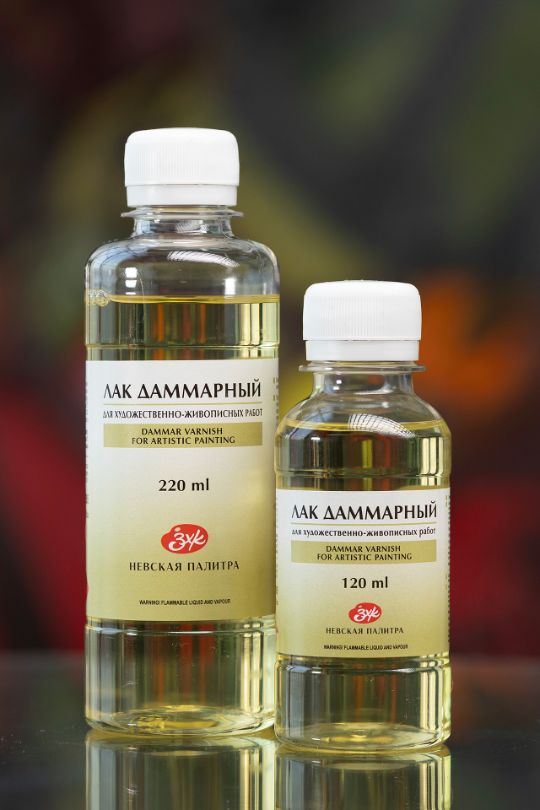
varnishes
Varnishes are used for both intermediate and final treatment of oil paintings. They help isolate paint layers, improve adhesion between layers, simplify work on multilayer compositions, protect finished artworks, and enhance colour depth.

OILS
Painting oils improve the flow and working properties of oil colours, increase the transparency of paint layers, and help artists control colour depth, glazing effects and the character of the painted surface. potential of colour,
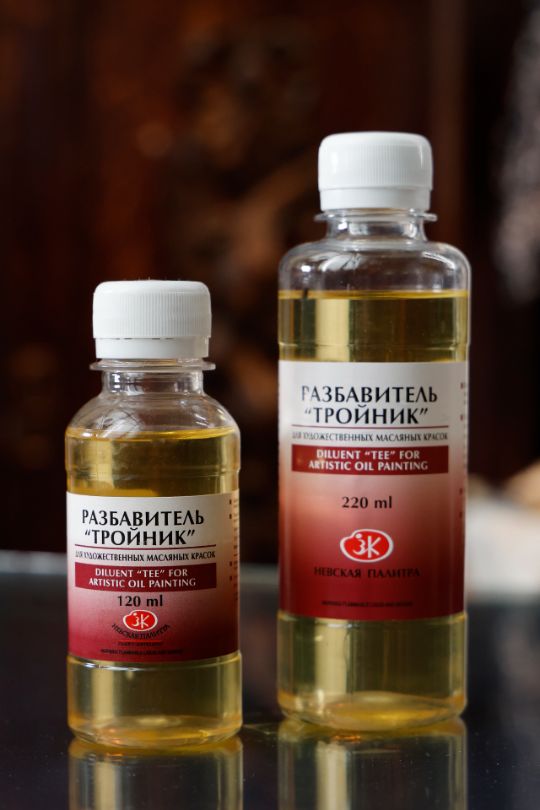
diluents
Oil painting diluents help regulate the viscosity of colours, modify the character of the brushstroke, and enable both delicate glazing techniques and more expressive textured effects. full potential of colour,al of colour,al of colour,
Oil Painting Mediums: Supporting Every Stage of Oil Painting
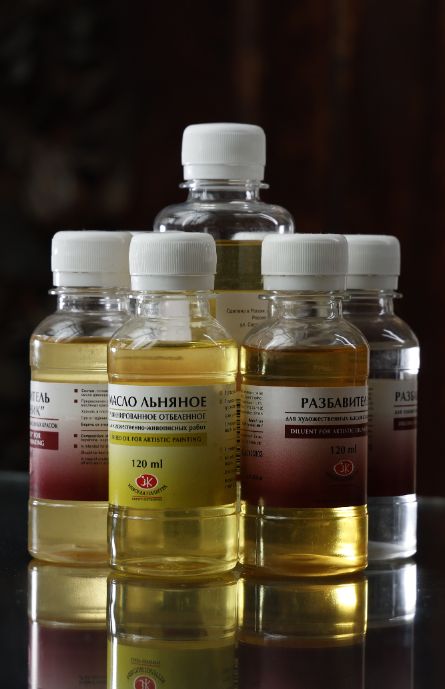
Oil painting is shaped not only by the quality of the colours themselves, but also by the materials used throughout the creative process. Diluents, oils and varnishes help artists adapt colours to different techniques, control their working properties and achieve a wide range of painterly effects.
Diluents regulate the consistency of oil colours, allowing for thinner paint layers, transparent glazes and greater control over brushwork. By adjusting the flow and handling of the paint, they help artists work comfortably in both detailed and expressive techniques. Oils are an essential component of traditional oil painting practice. They improve flow, increase transparency and support smooth transitions, rich glazes and greater colour depth. Different oils can influence the behaviour of the paint, offering additional flexibility when building a painting.
Varnishes play an important role both during the painting process and in the preservation of finished artworks. Intermediate varnishes help isolate paint layers and improve adhesion between them, making complex multilayer work more predictable. Final varnishes protect the surface from dust, moisture and environmental influences while enhancing colour saturation and visual depth.
Together, these materials support multilayer techniques, expand artistic possibilities and contribute to the durability and long-term preservation of the paint film. As an integral part of oil painting, they help artists achieve consistent, reliable results from the first stages of a work through to its final presentation and protection. Whether used in classical academic methods or contemporary painting practices, they provide greater flexibility, control and confidence throughout the creative process.
Dammar Varnish
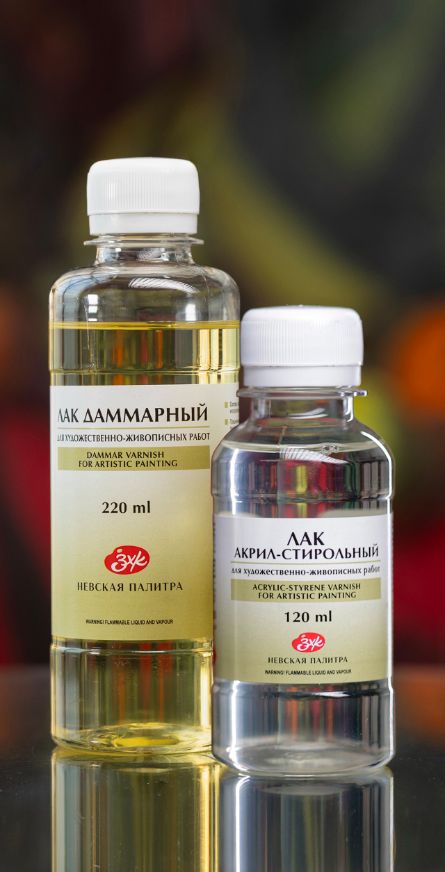
Dammar varnish is a traditional varnish based on natural dammar resin, intended for both intermediate and final treatment of oil paintings. It enhances colour depth and saturation, provides an even glossy finish, protects the paint film from external influences and contributes to the long-term preservation of artworks.
Retouching Varnish
Retouching varnish is designed for the intermediate treatment of oil paintings during the working process. It evens out the gloss of dried areas, restores colour depth and saturation, improves adhesion between paint layers and allows work on multilayer paintings to continue without compromising the visual unity of the surface. Once dry, it forms a thin glossy coating.
Acrylic-Styrene Varnish
Acrylic-styrene varnish forms a durable transparent film with high resistance to moisture, ultraviolet radiation and environmental influences. Less prone to yellowing than traditional natural varnishes, it provides long-lasting protection for the paint film and creates an even glossy finish.
Fir Varnish
Fir varnish is made from natural fir balsam and is traditionally used in oil painting to increase the transparency of paint layers and create rich glazes. As a component of painting mediums, it enhances colour saturation, improves paint flow and helps create a smooth, visually deep surface with a soft glossy sheen.

DAMMAR VARNISH
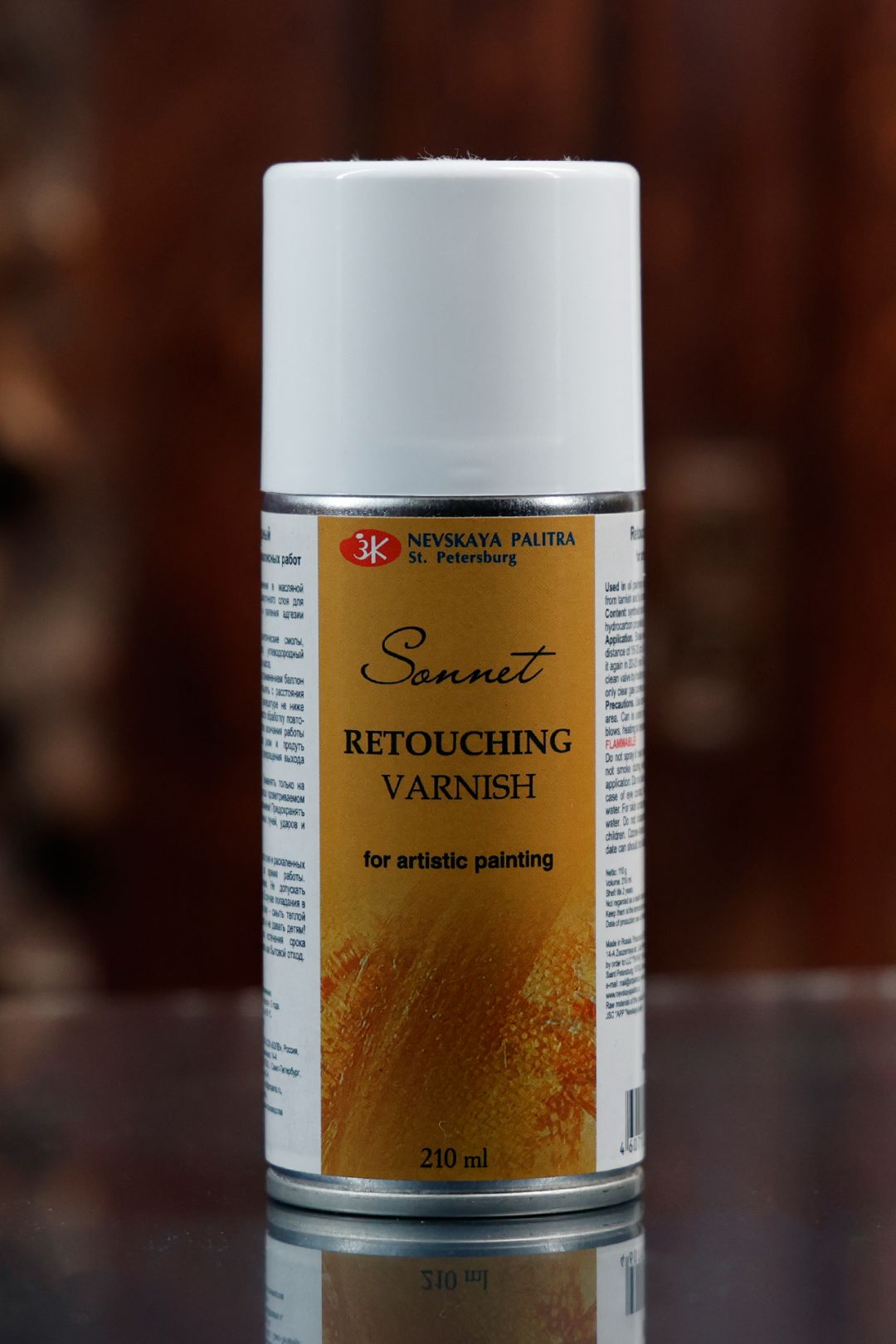
RETOUCHING VARNISH
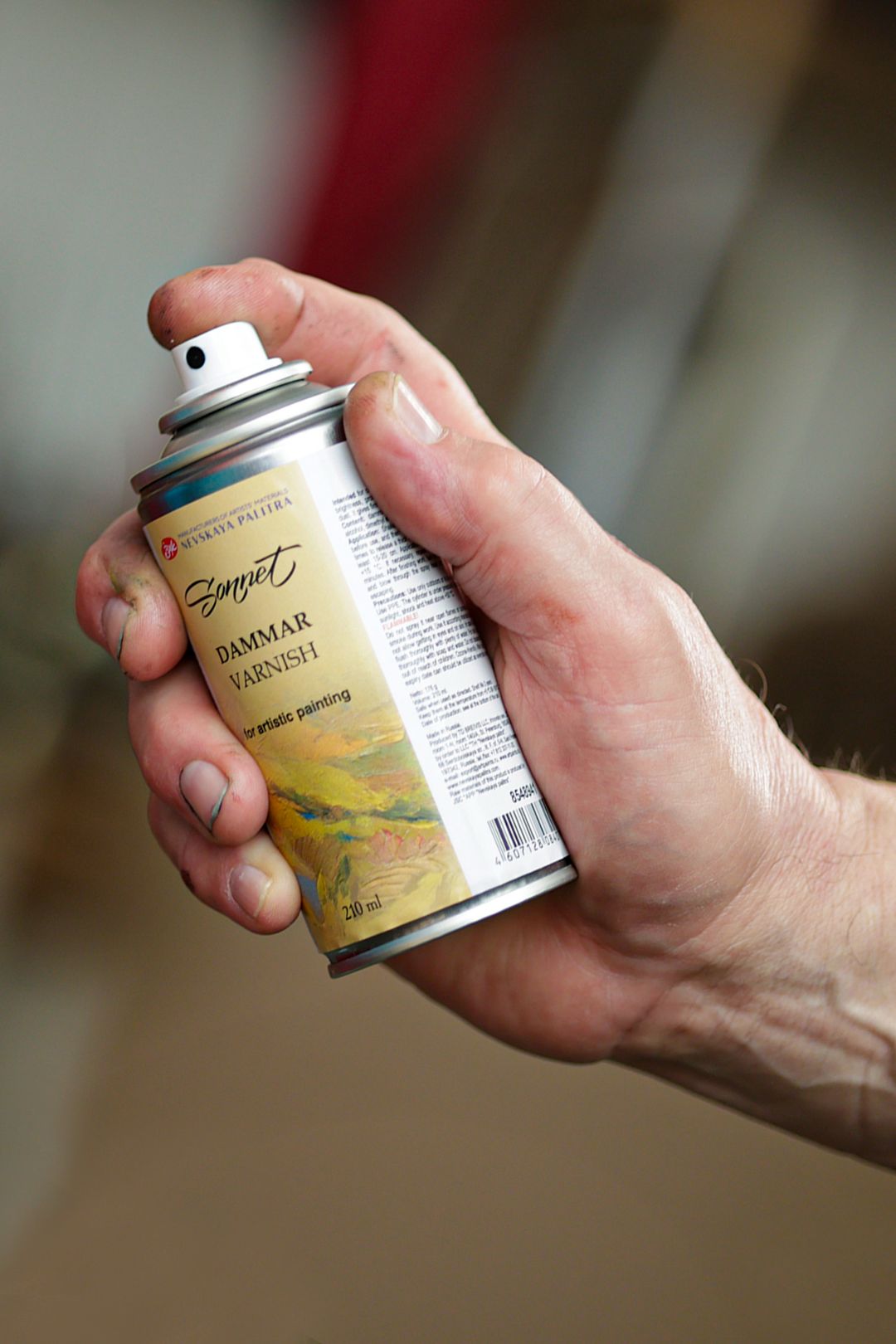
DAMMAR VARNISH

lINSEED OIL
Linseed oil is one of the most traditional and widely used materials in oil painting. It is used to dilute colours, improve their flow and enhance their distribution across the painting surface. The addition of linseed oil increases the transparency of paint layers, supports smooth colour transitions and helps create glazes of varying intensity.
Linseed oil improves the flexibility of the paint film and provides strong binding of pigments, contributing to the long-term durability of the painted surface. Thanks to its favourable drying properties, it dries relatively quickly compared with other vegetable oils used in painting. The medium is suitable for both classical multilayer techniques and contemporary oil painting practices, allowing artists to exercise greater control over the working properties of their colours and the character of the painted surface.
STAND lINSEED OIL #2
Stand oil is produced through prolonged heat treatment of linseed oil, resulting in a significantly higher viscosity. Compared with regular linseed oil, it has a thicker consistency, greater transparency and an enhanced ability to create an exceptionally smooth and even paint surface. Traditionally, stand oil is used for fine glazing techniques and for achieving greater colour depth.
Stand oil improves paint flow, helps reduce visible brush marks and supports the creation of soft transitions between colour areas. Owing to these properties, it is particularly valued by artists working in multilayer painting techniques. Its use makes it possible to achieve greater optical depth, enhanced colour richness and an elegant glossy finish across the painted surface.
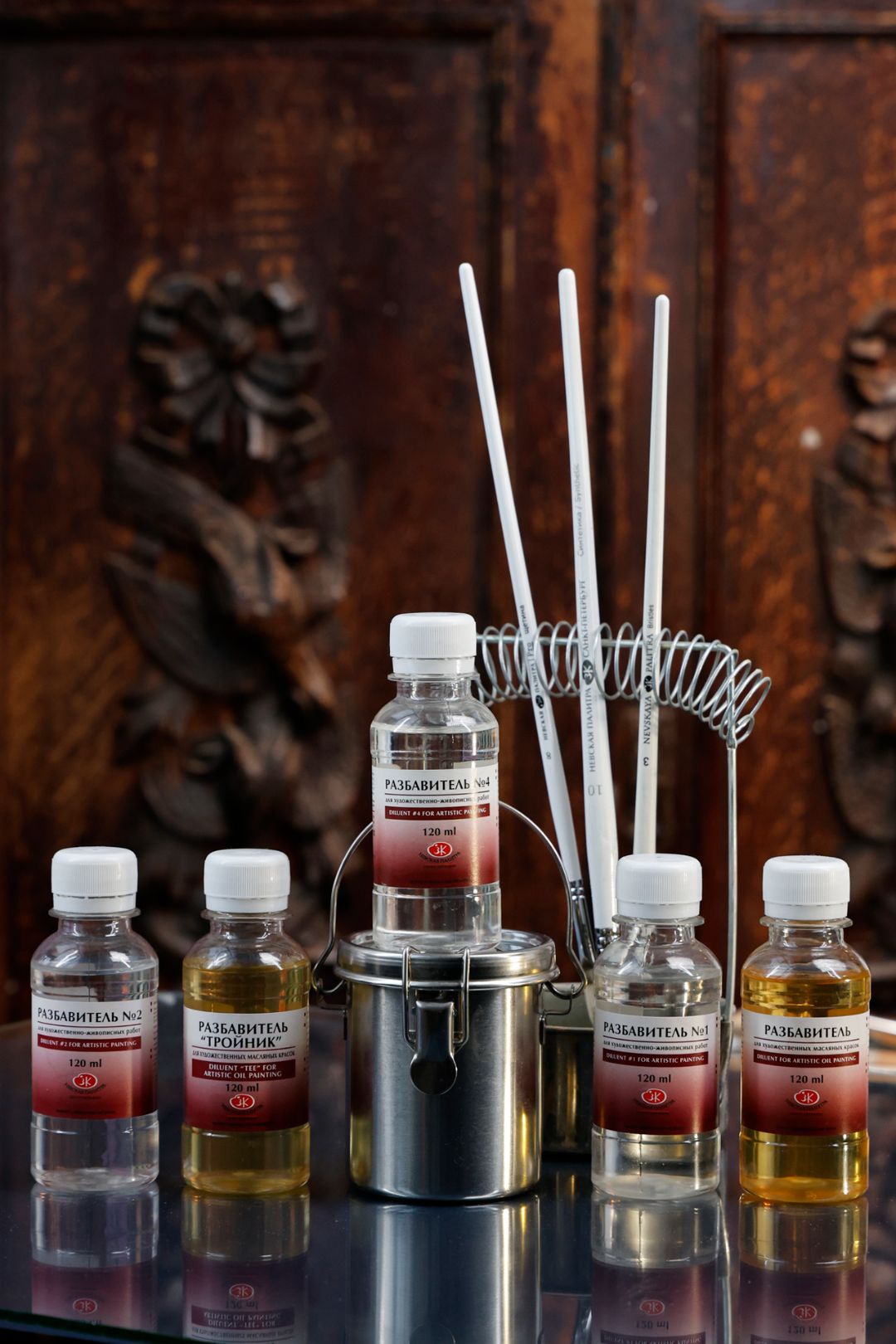
DILUENTs
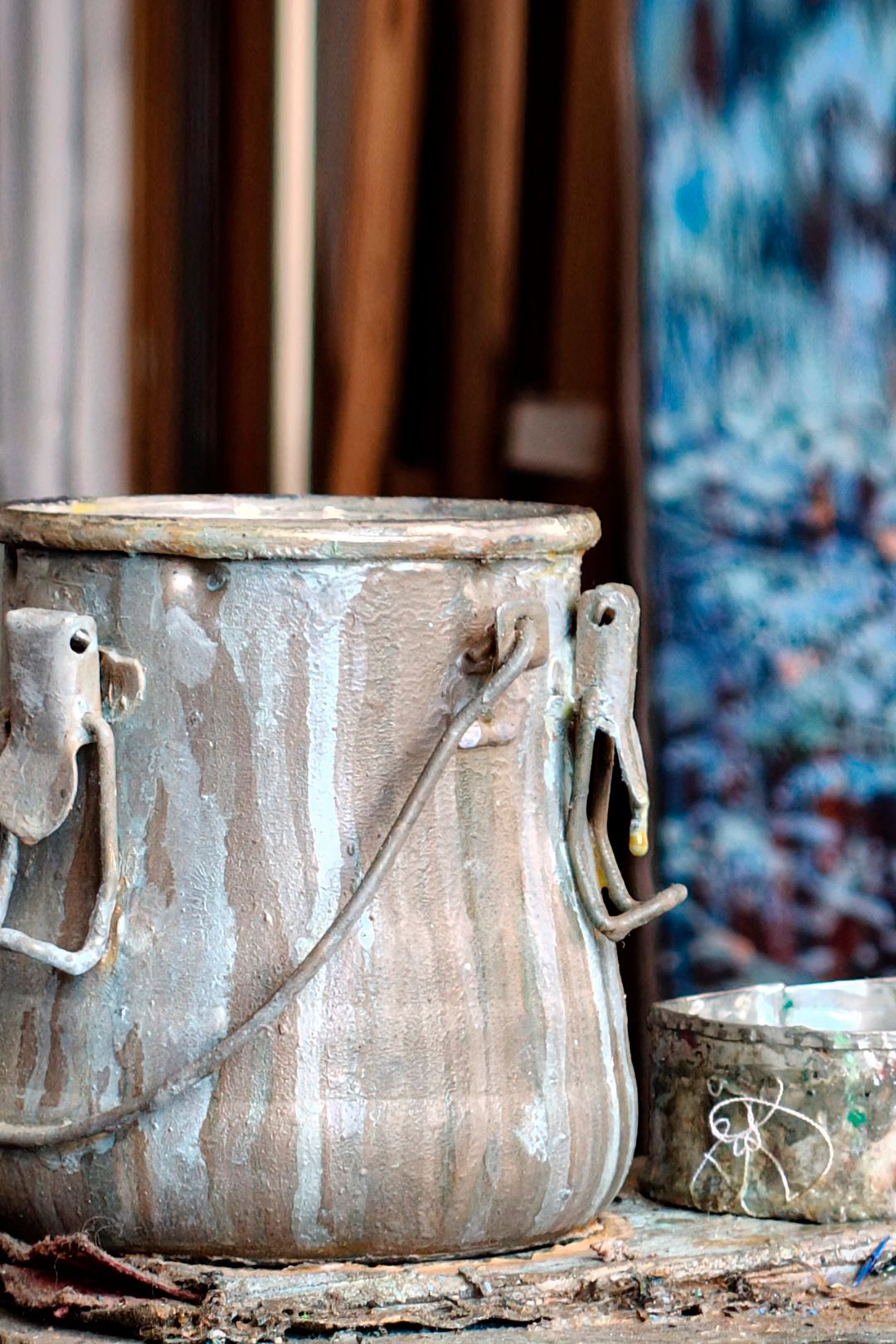
An old diluent jar
DILUENT #4
DILUENT
This diluent combines the properties of a solvent and a painting medium thanks to its blend of linseed oil, white spirit and drier. It improves paint flow, promotes more even application and helps accelerate the drying of paint layers. Suitable for general painting work and multilayer oil painting techniques.
DILUENT #1
Diluent No. 1, based on white spirit and turpentine, is designed for thinning oil, penta-oil and alkyd paints. It allows artists to adjust paint viscosity while maintaining control over brushwork and handling. It can also be used for cleaning brushes, palettes and other painting tools after use.
DILUENT #2
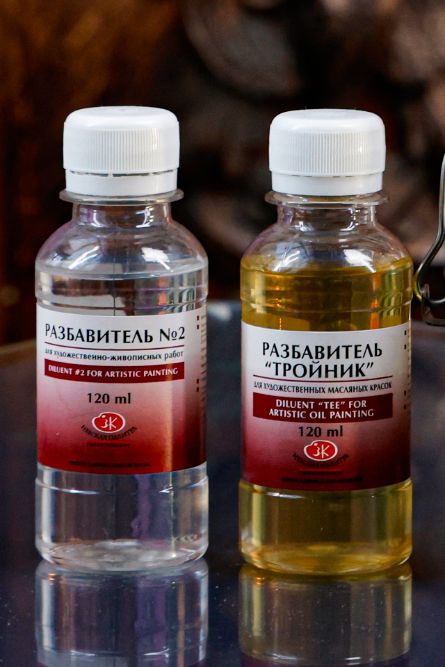
Diluent No. 2, based on white spirit, is intended for thinning oil, penta-oil and alkyd paints. It reduces paint viscosity, improves application and is particularly suitable for underpainting and initial paint layers. It can also be used for cleaning brushes, palettes and other painting tools, as well as for degreasing working surfaces before painting.

DILUENT #4
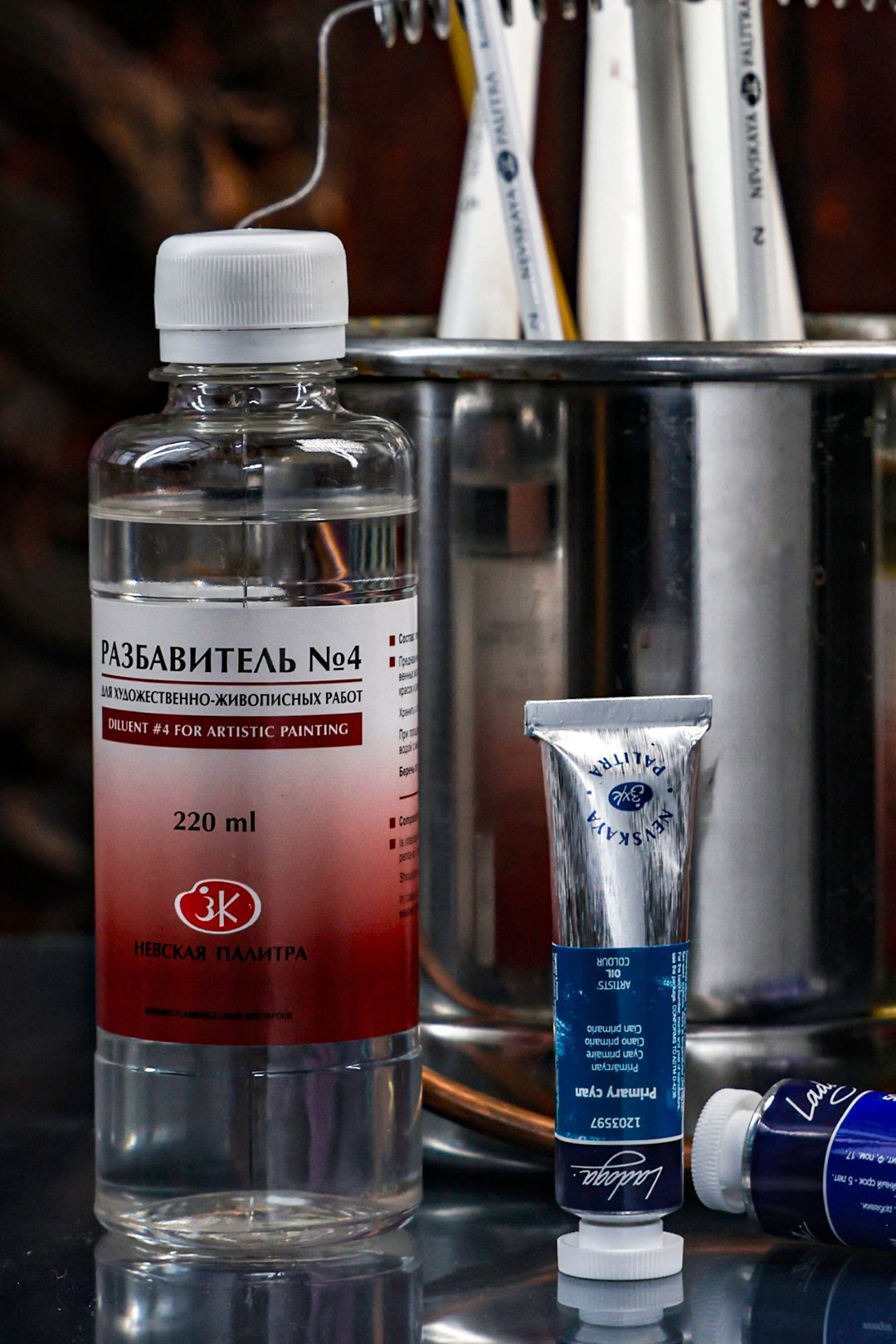
Diluent No. 4, based on pine turpentine, is a traditional material used in oil painting. It is suitable for thinning oil, penta-oil and alkyd paints and is particularly effective in glazing and multilayer techniques, where transparency, colour clarity and the preservation of painterly qualities are especially important.
DILUENT "tee "
Tee Diluent is a traditional painting medium based on polymerised linseed oil, dammar resin and solvents. It increases paint transparency, enhances colour depth and helps create a smooth painted surface. It is especially valued for glazing and multilayer painting techniques.
ODOURLESS DILUENT
Odourless Diluent, based on isoparaffinic hydrocarbons, is used for thinning oil paints, reducing their viscosity and cleaning painting tools. Thanks to the absence of a strong characteristic odour, it provides a more comfortable working environment and is suitable for cleaning brushes, palettes and other painting accessories after use.


CRM-форма появится здесь