


Olga Grigorieva-Klimova. Painting Begins with Seeing
Working from life has always been at the heart of Olga Grigorieva-Klimova’s painting — people, the sea, flowers, everyday objects, a sunlit day or the slightest change in light. She does not deliberately search for subjects; more often, they emerge from life itself, from whatever is around her and, at a particular moment, makes her stop and look more closely.
Olga lives and works in Crimea, and the southern light has become a natural part of her painting. For her, colour never exists in isolation — it is constantly altered by the colours around it and shaped by light, air and space. This gives her work its distinctive sense of an immediate, living impression, observed in the here and now.
This attentiveness also gives Olga’s paintings their sense of spontaneity. She is interested in the relationships that appear in a particular moment: a warm reflection against a cool shadow, a colour shifting in bright sunlight, or a familiar landscape transformed by the time of day. Working from life allows her to respond directly to these changes, with colour, tone and brushwork developing naturally as the painting takes shape.
THE PATH TO PAINTING
Olga Grigorieva-Klimova was born in 1984 in Shchelkino, in eastern Crimea. As a child, she was more absorbed in music, dance and literature, while drawing remained a favourite pastime for many years. The decision to become an artist came much later, during her final years at school.
A turning point came with an almost accidental visit to an art college. The idea came from her yoga teacher, who had once studied painting herself. The atmosphere of the studios, the students completely absorbed in their work, the sense of creative freedom and even the smell of oil paint that greeted her at the entrance — all of it opened up an entirely new world. After that visit, the choice of profession was largely made.

Nastya and Angelina. And Phoebe, 2025. Oil on canvas, 100 × 130 cm
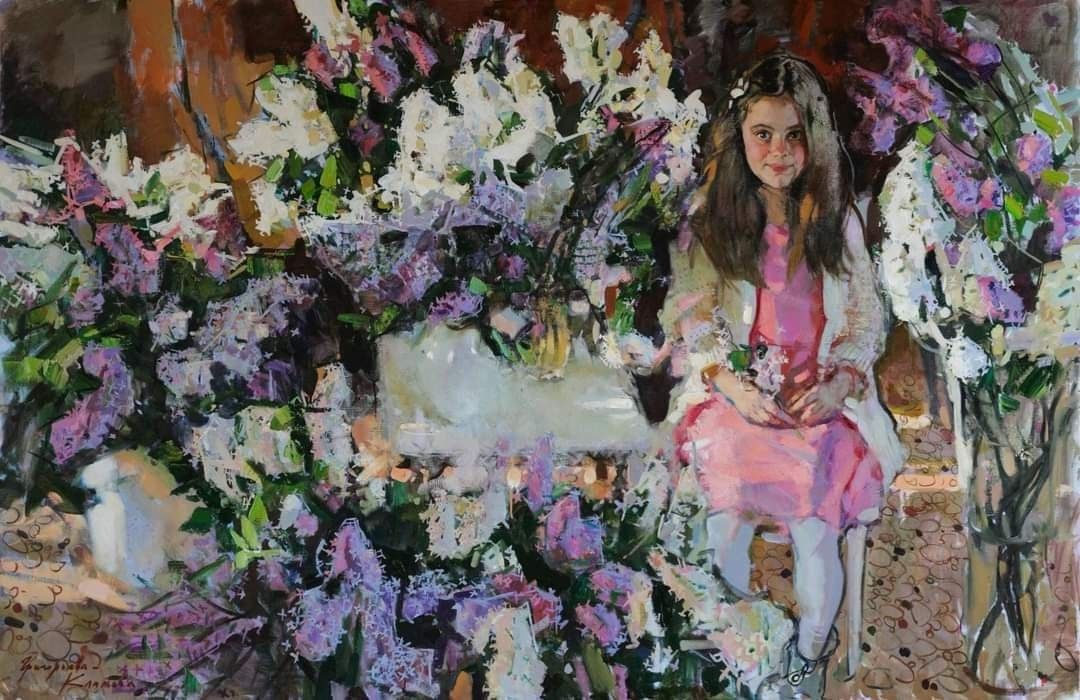
Lilacs, 2020. Oil on canvas, 120 × 185 cm
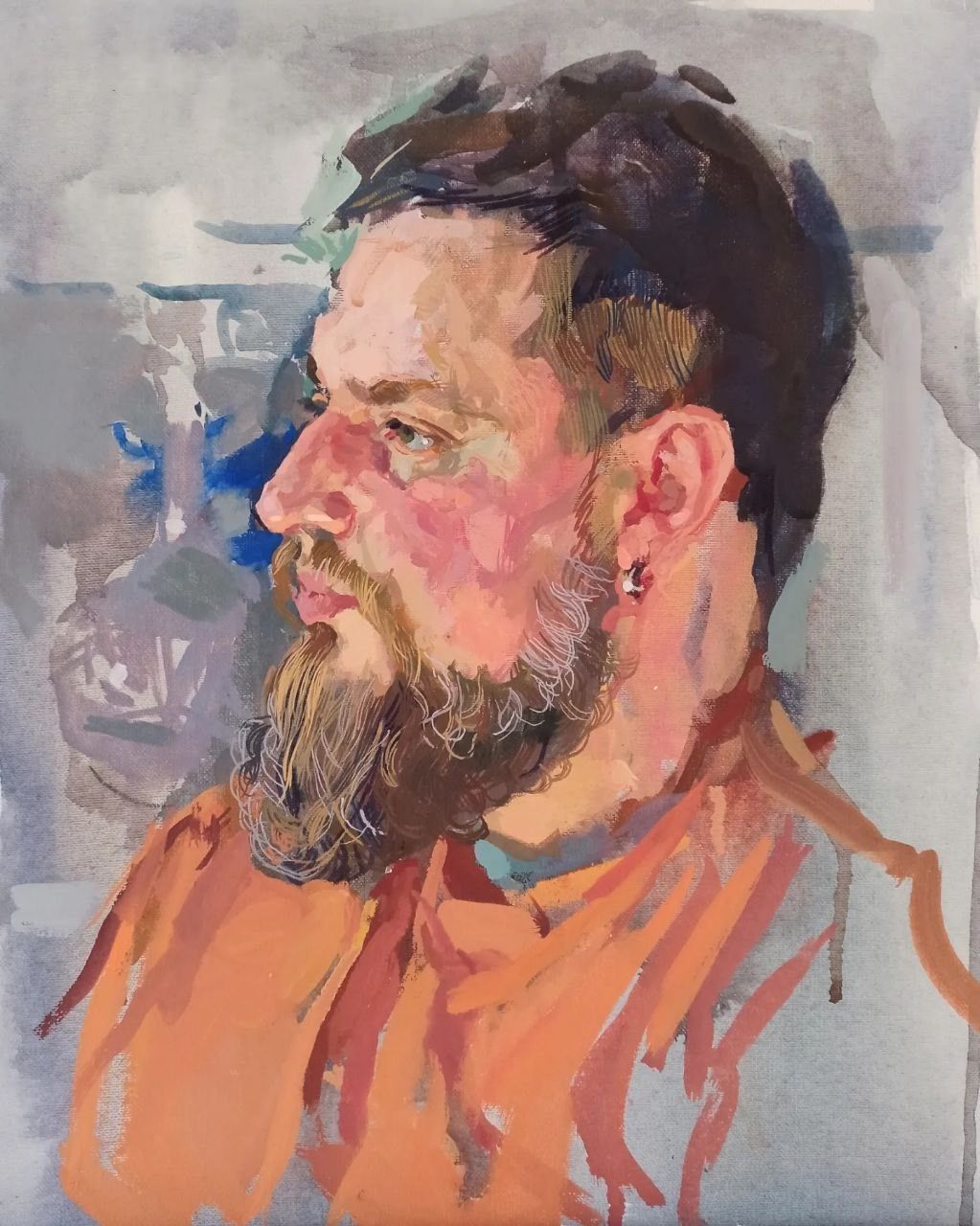
Artur, 2023. Tempera on canvas, 50 × 40 cm
LEARNING TO SEE
One of the most important discoveries of Olga’s student years was a simple realisation: an artist’s principal tool is neither the brush nor the paint, but the eye. An artist learns to see in much the same way as a musician learns to hear.
Over time, this became fundamental to her approach to painting. Olga tries to take in the subject as a whole rather than isolating a single object or colour. One hue changes beside another, light brings the space together, reflected colours appear — and all of these relationships exist simultaneously. Olga compares colour relationships to music. For her, an individual colour is like a single note: it acquires its meaning through its relationship with the others.
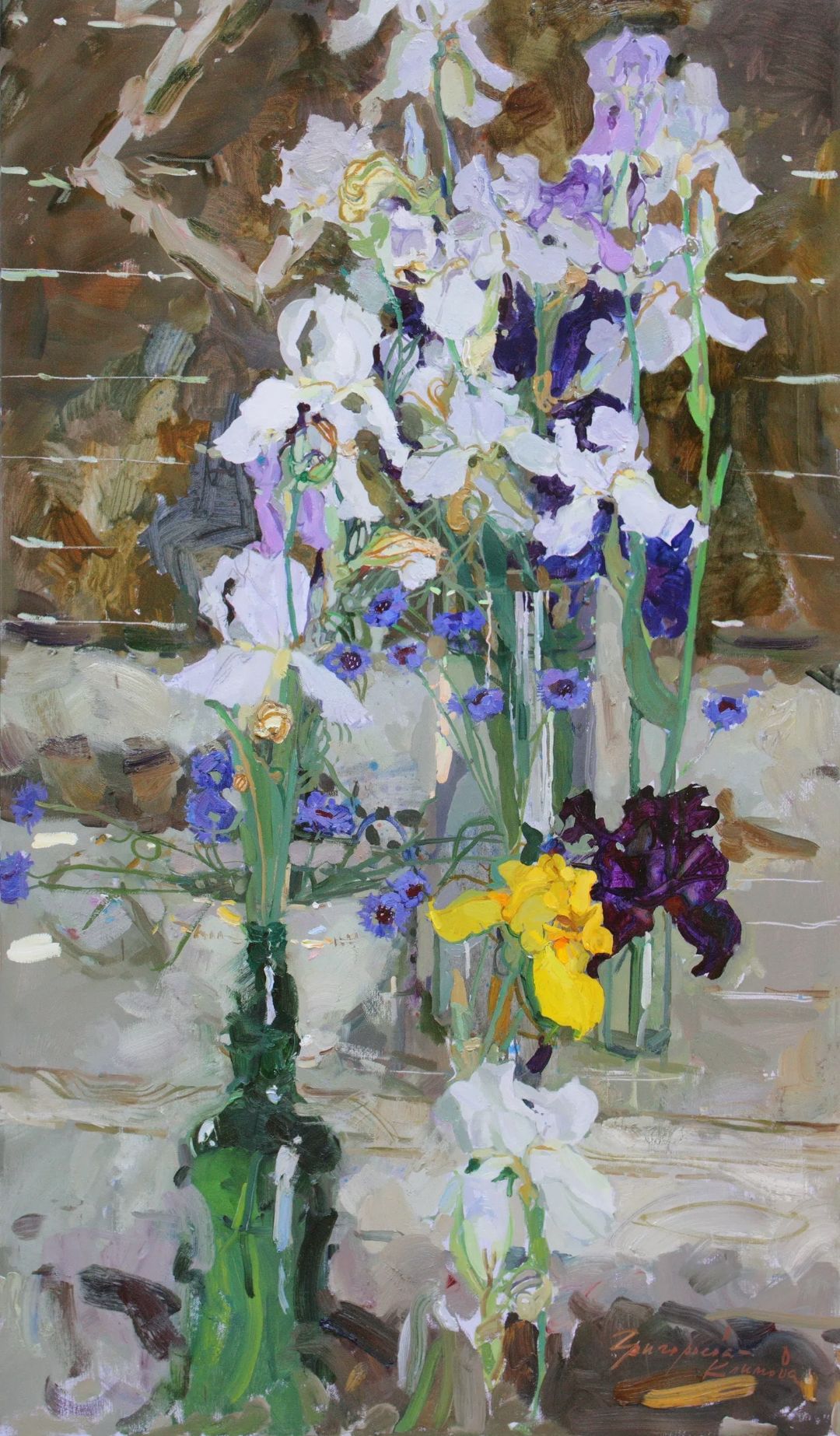
White Irises and Cornflowers, 2026. Oil on canvas, 130 × 75 cm
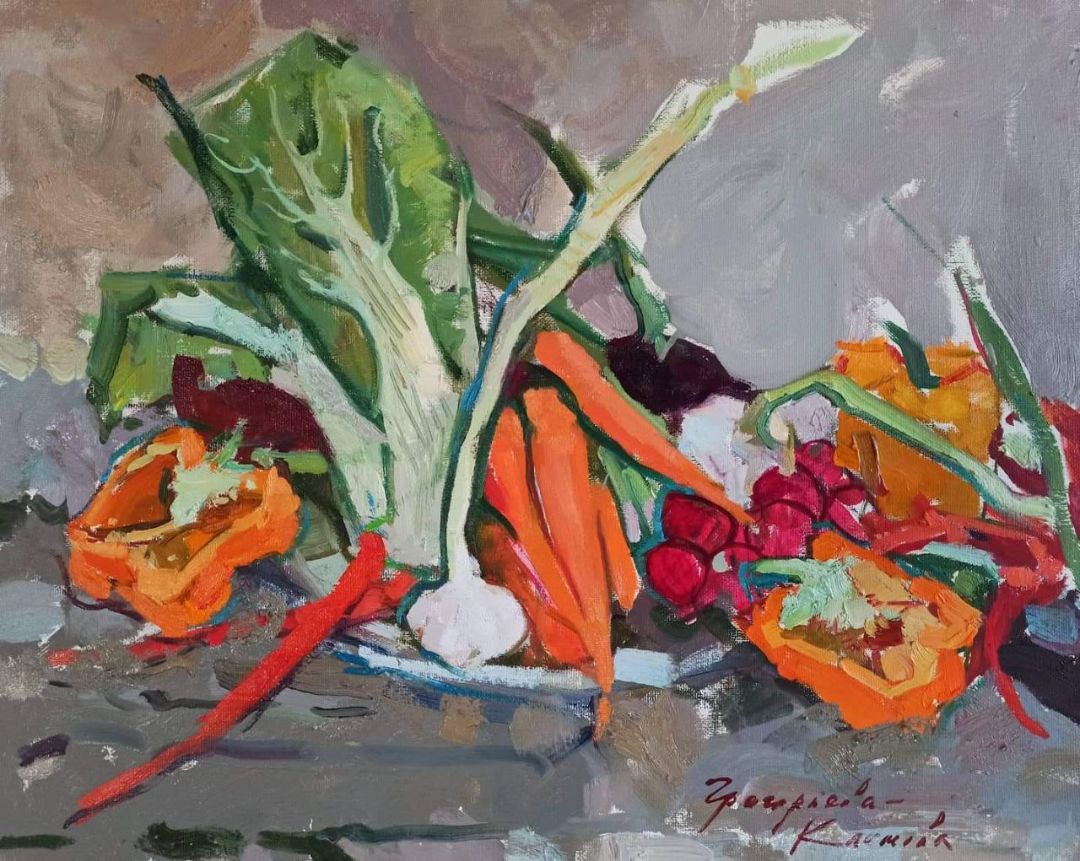
Vegetable Still Life, 2021. Oil on canvas, 45 × 55 cm
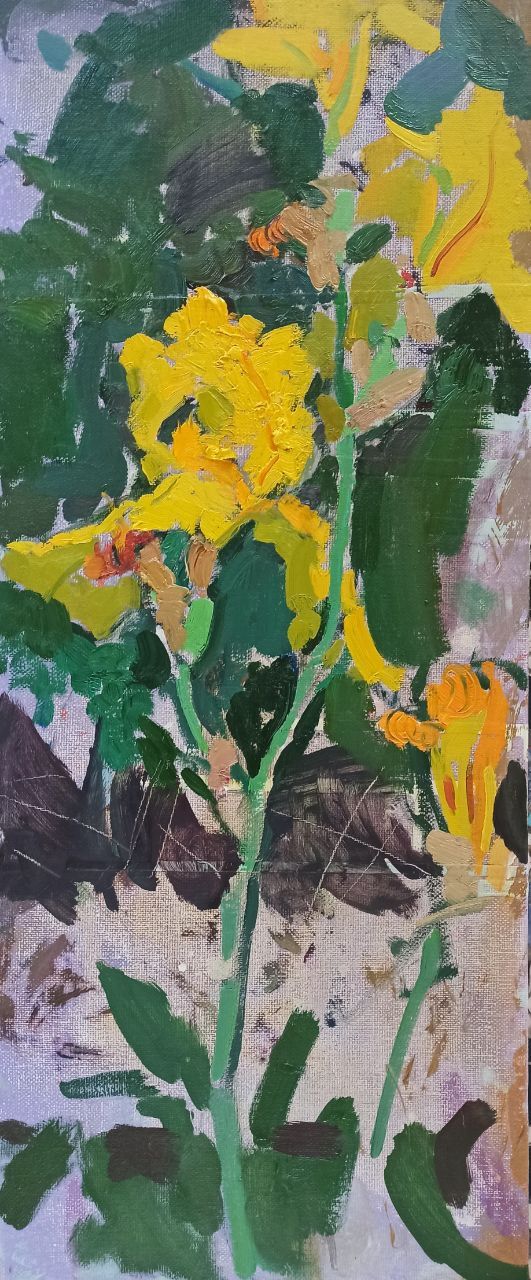
Yellow Iris, 2022. Oil on canvas, 60 × 25 cm

Ill, 2018. Oil on canvas, 35 × 20 cm
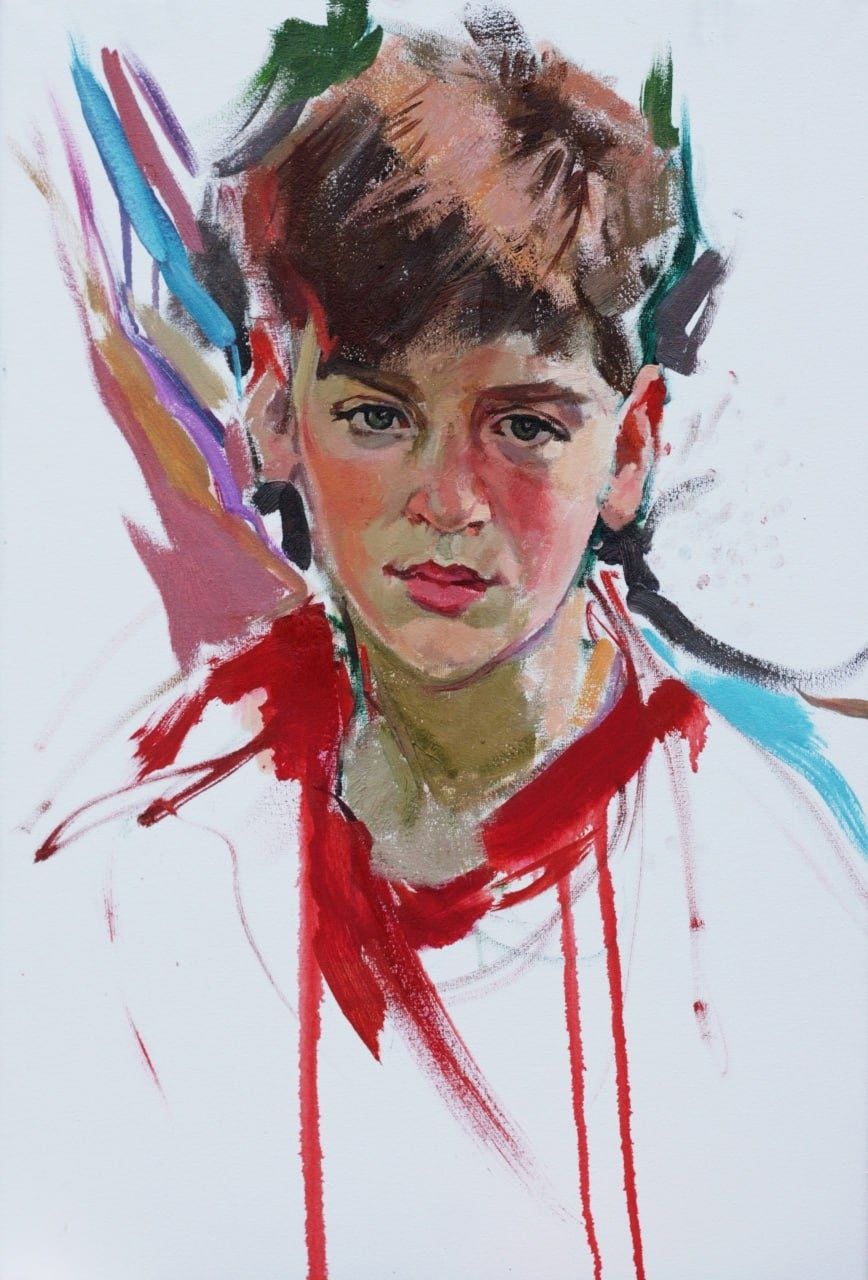
Timofey, 2019. Oil on canvas, 60 × 40 cm
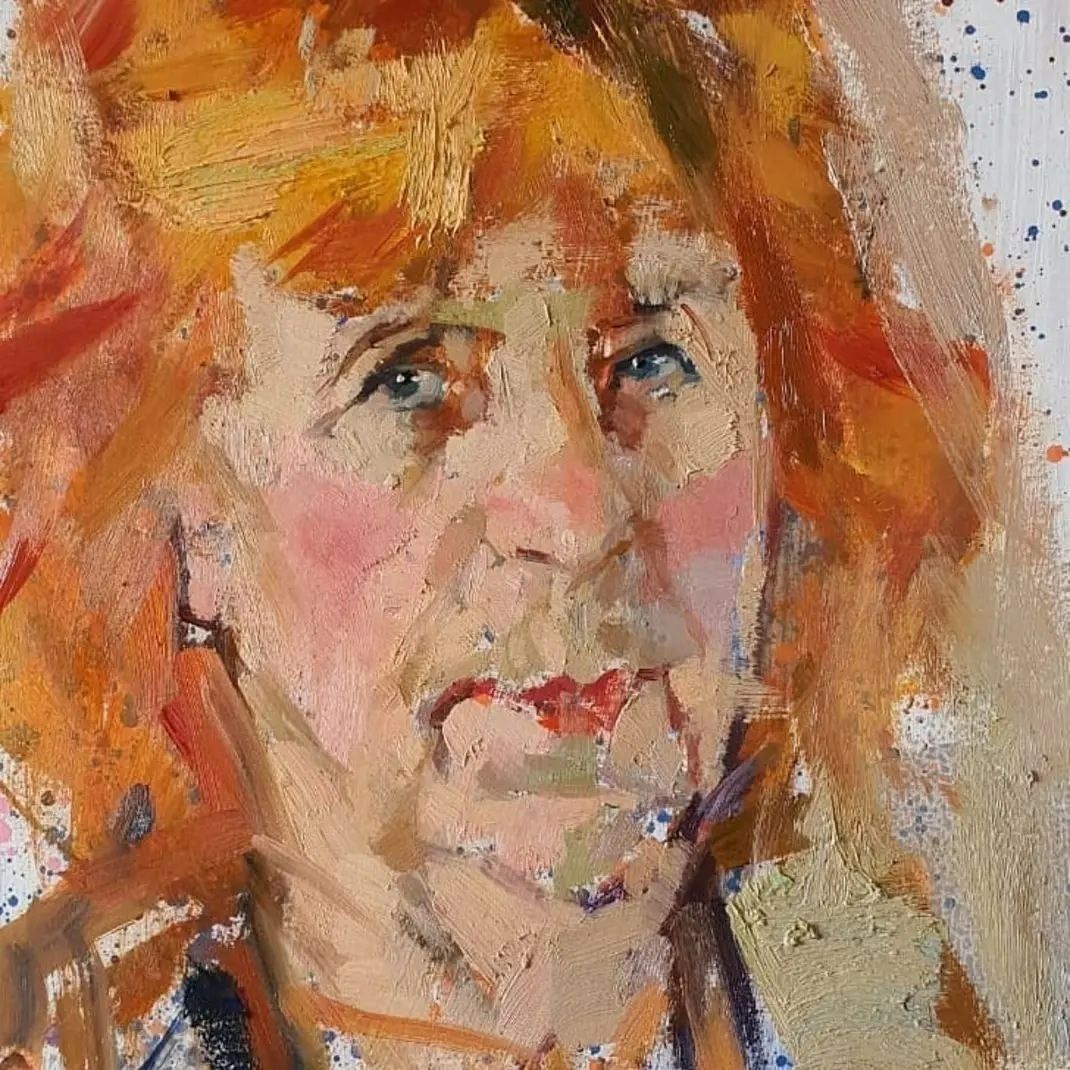
Evgenia, 2020. Oil on fibreboard, 45 × 35 cm
THE HUMAN FIGURE
People have always been one of Olga’s central subjects. Portraits, images of children, multi-figure compositions and scenes by the sea allow her to observe not only appearance, but also character, mood and movement. Working with a model is also a form of communication. Each person brings a different presence to a painting, so a solution found once cannot simply be repeated in the next portrait. As the model changes, so does the painting itself.
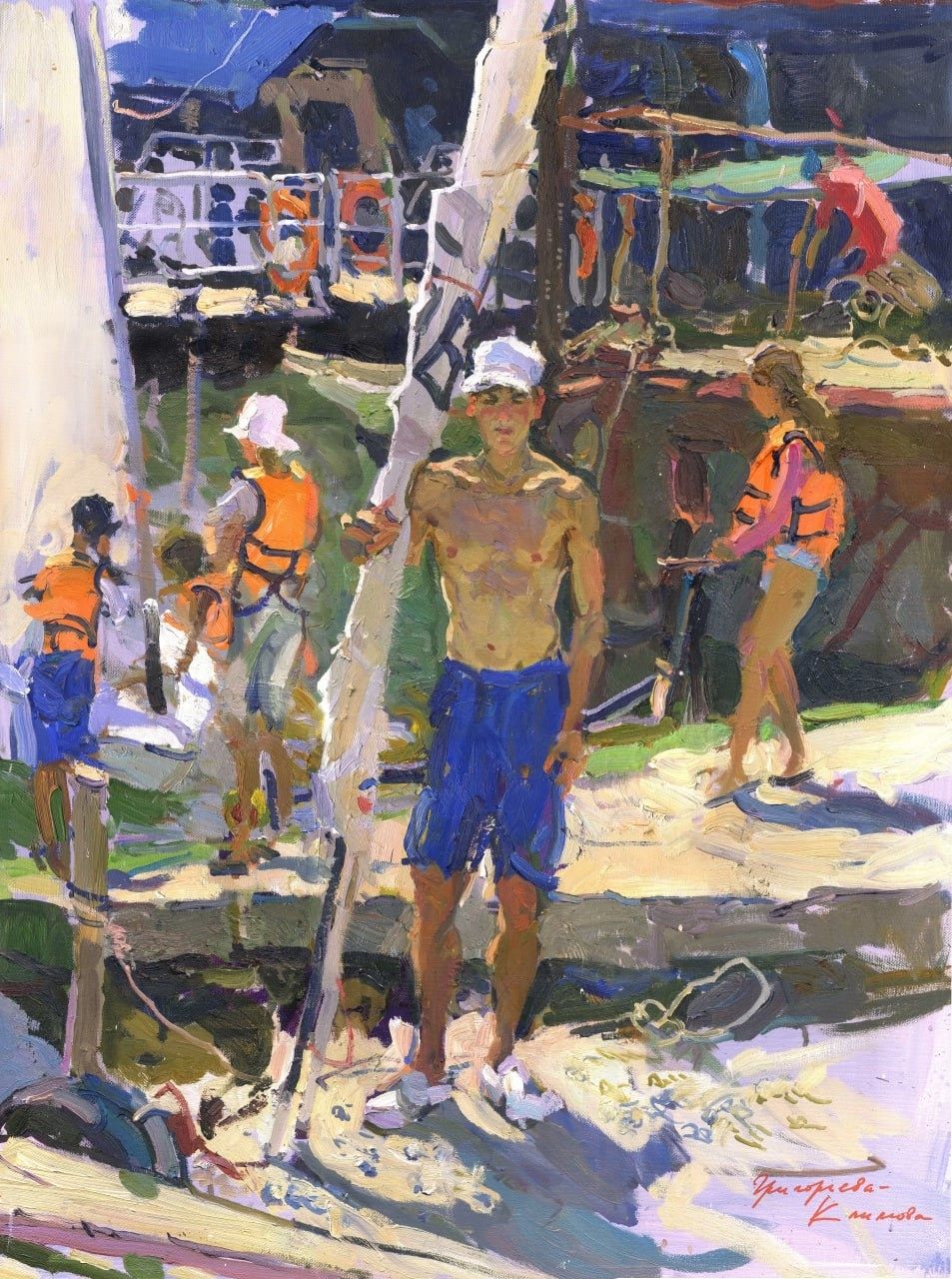
Tiger Lily, 2025. Oil on canvas, 65 × 65 cm

Tsaritsyno, 2018. Oil on canvas, 100х100 cm

Virginia Creeper, 2021. Oil on canvas, 120 × 120 cm
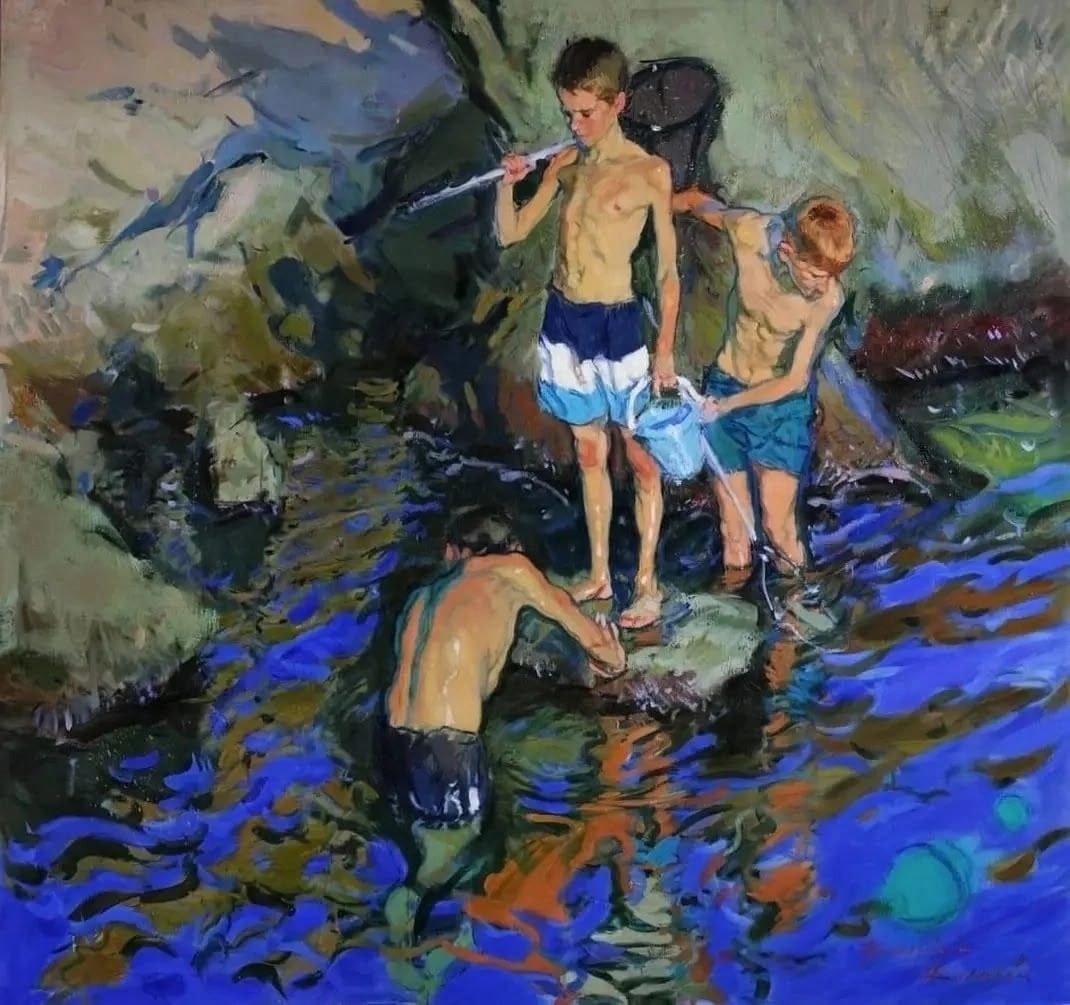
Shrimp Fishers, 2021. Oil on canvas, 140 × 150 cm

Summer on the Sea of Azov, 2026. Oil on canvas, 100 × 130 cm
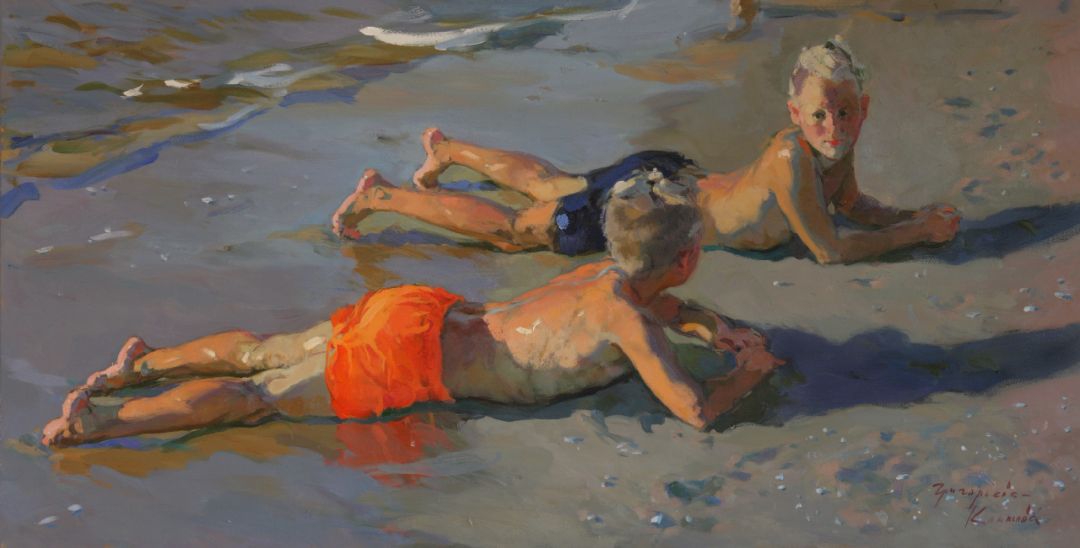
Boys in the Surf, 2025. Oil on canvas, 75 × 145 cm
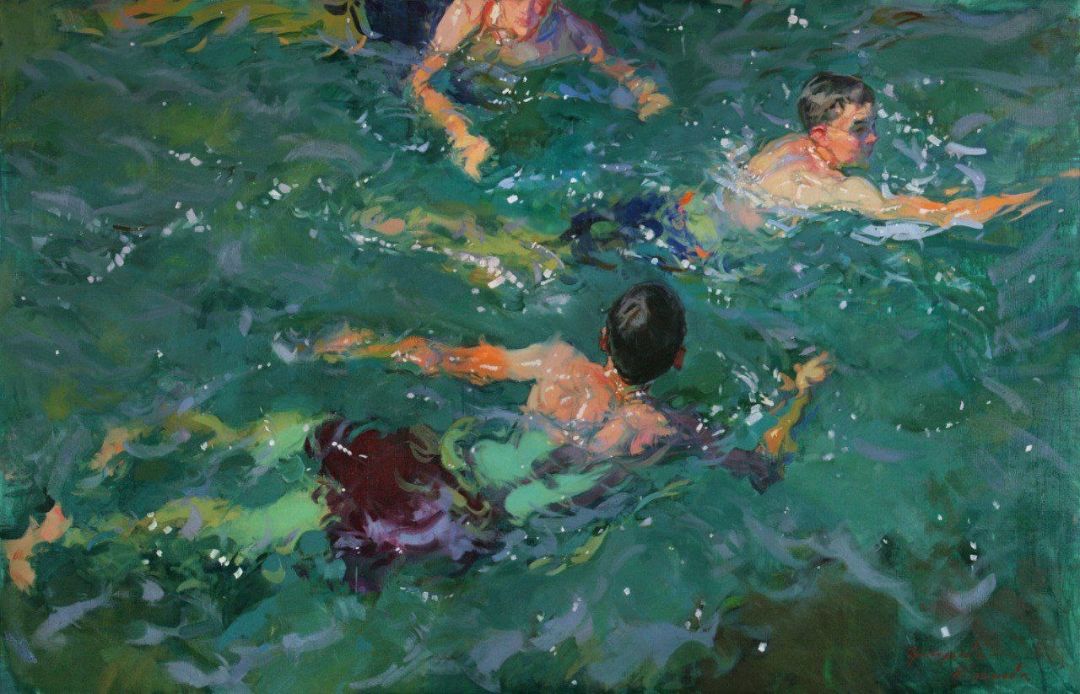
Boys Swimming, 2023. Oil on canvas, 120 × 185 cm
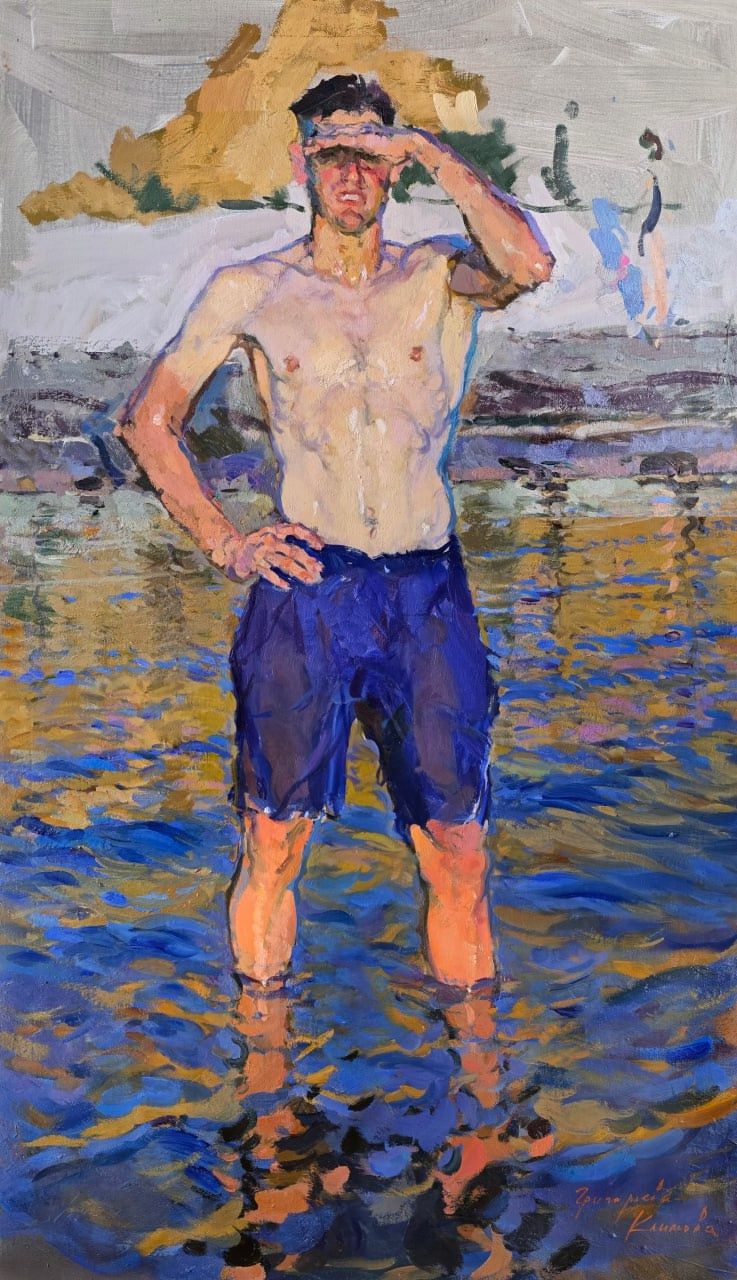
Sunset, 2025. Oil on canvas, 130 × 75 cm

Children on the Beach, 2020. Oil on canvas, 80 × 100 cm

On the Shore, 2026. Oil on canvas, 120 × 185 cm
LIGHT AND COLOUR
Olga’s understanding of colour was shaped to a great extent by Crimea. Southern light and constant work from life taught her to see colour as something living and continually changing. Her encounter with the work of Fyodor Zakharov, Valentin Bernadsky and Pyotr Stolyarenko was also important in shaping her outlook.
Valentin Serov holds a special place among the artists she feels closest to: Olga is drawn to the way his freedom of painterly expression is combined with precision of observation and a profound interest in people. In Nikolai Fechin, she values the strength of his drawing, the energy of the painted surface and his attention to the human figure; in Joaquín Sorolla, it is the light, air and sun-filled subjects, so naturally attuned to the character of southern painting.

Sunflowers, 2025. Oil on canvas, 130 × 100 cm
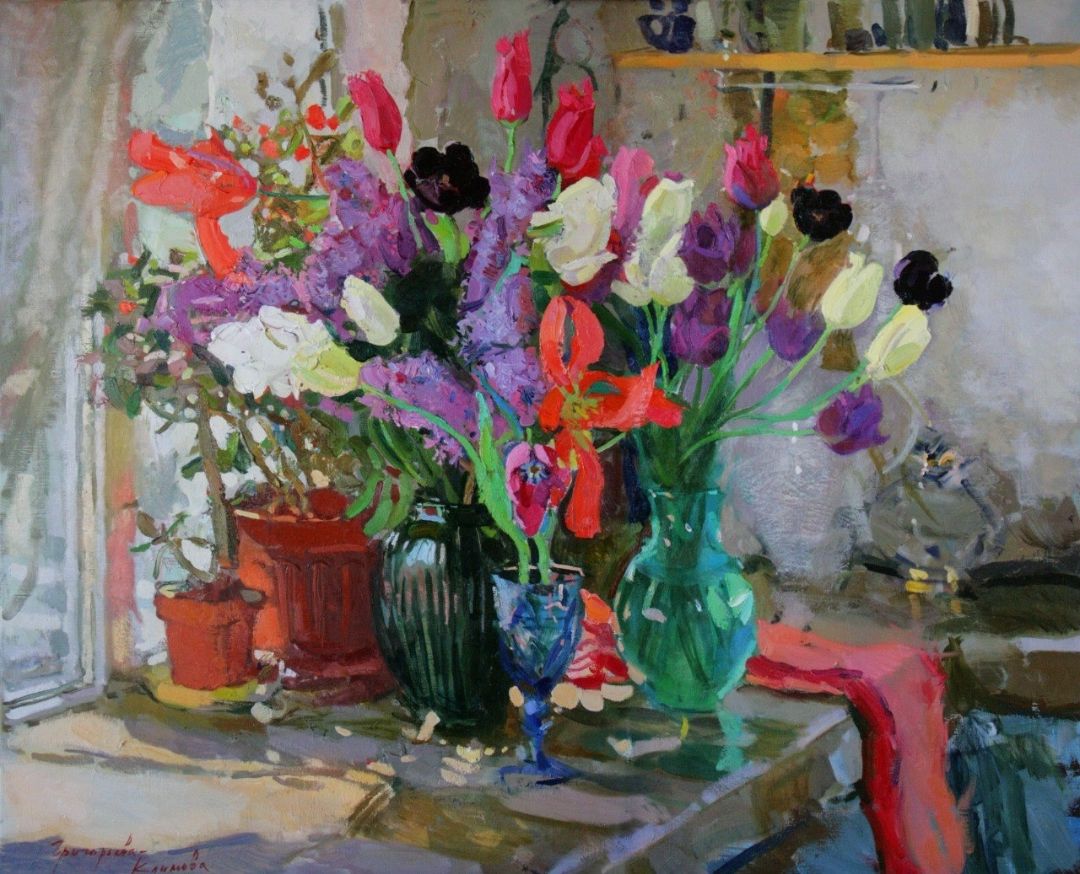
Tulips and Lilacs, 2023. Oil on canvas, 90 × 110 cm

Pumpkin against a Green Background, 2023. Oil on canvas, 50 × 60 cm
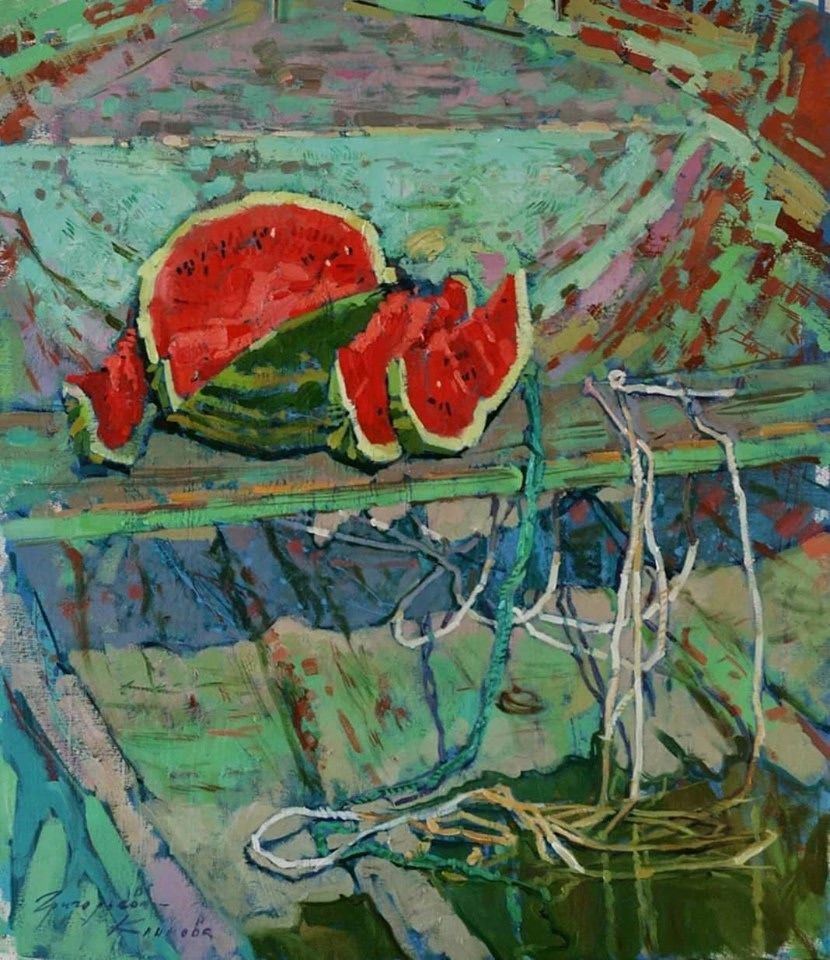
Old Boat and Watermelon, 2019. Oil on canvas, 80 × 70 cm

Still Life with Peonies and a Leningrad Porcelain Service. Oil on canvas, 80 × 100 cm
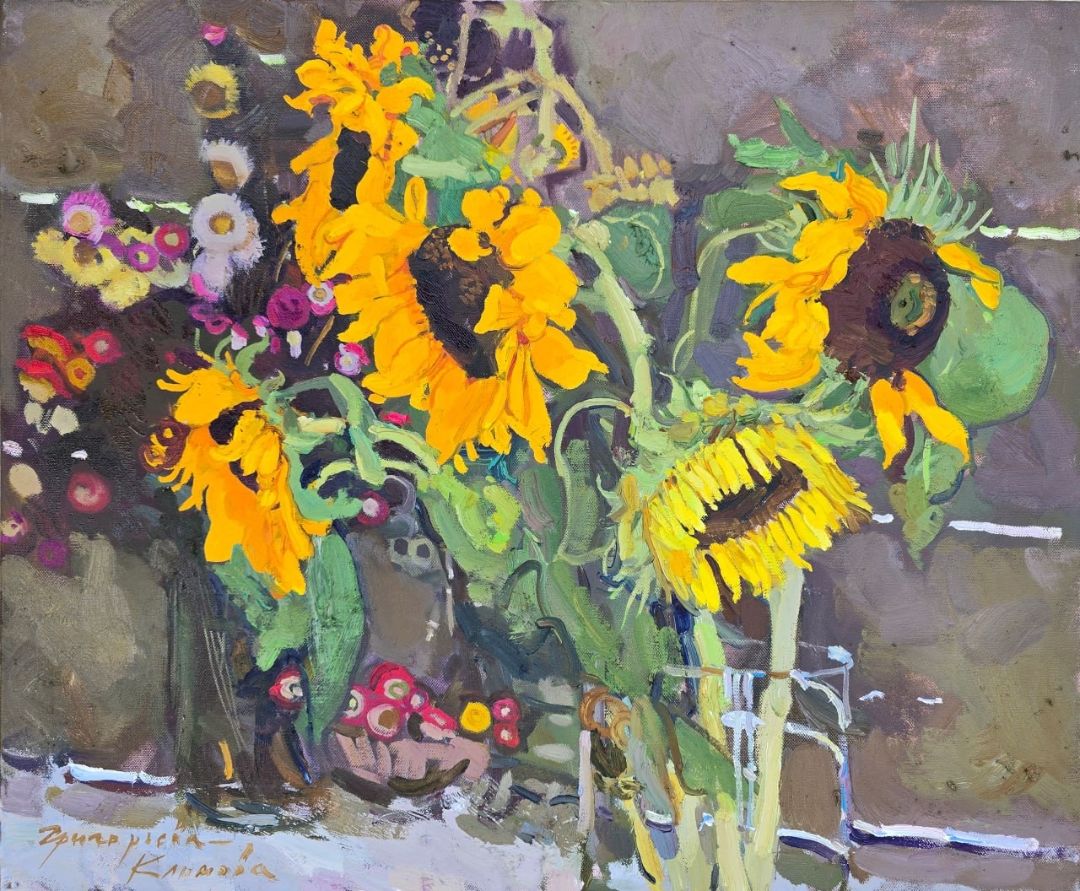
Little Sunflowers, 2025. Oil on canvas, 50 × 60 cm
LIFE AS A SOURCE OF SUBJECTS
The subjects of Olga’s paintings change with the life around her. Summer brings the sea, children on the beach, holidaymakers, small sailing boats and sunlit shores. In spring there are snowdrops, narcissi, tulips and lilac; in autumn, chrysanthemums. When fruit and vegetables come into season, still lifes emerge, bringing together glass, ceramics, fabrics, flowers and freshly harvested produce.
Olga rarely decides on a subject in advance. What matters more is whatever has caught her eye — an unusual combination of colours, a person, light on the water, a bouquet or a few objects on a table. Painting begins with the desire to preserve that impression.
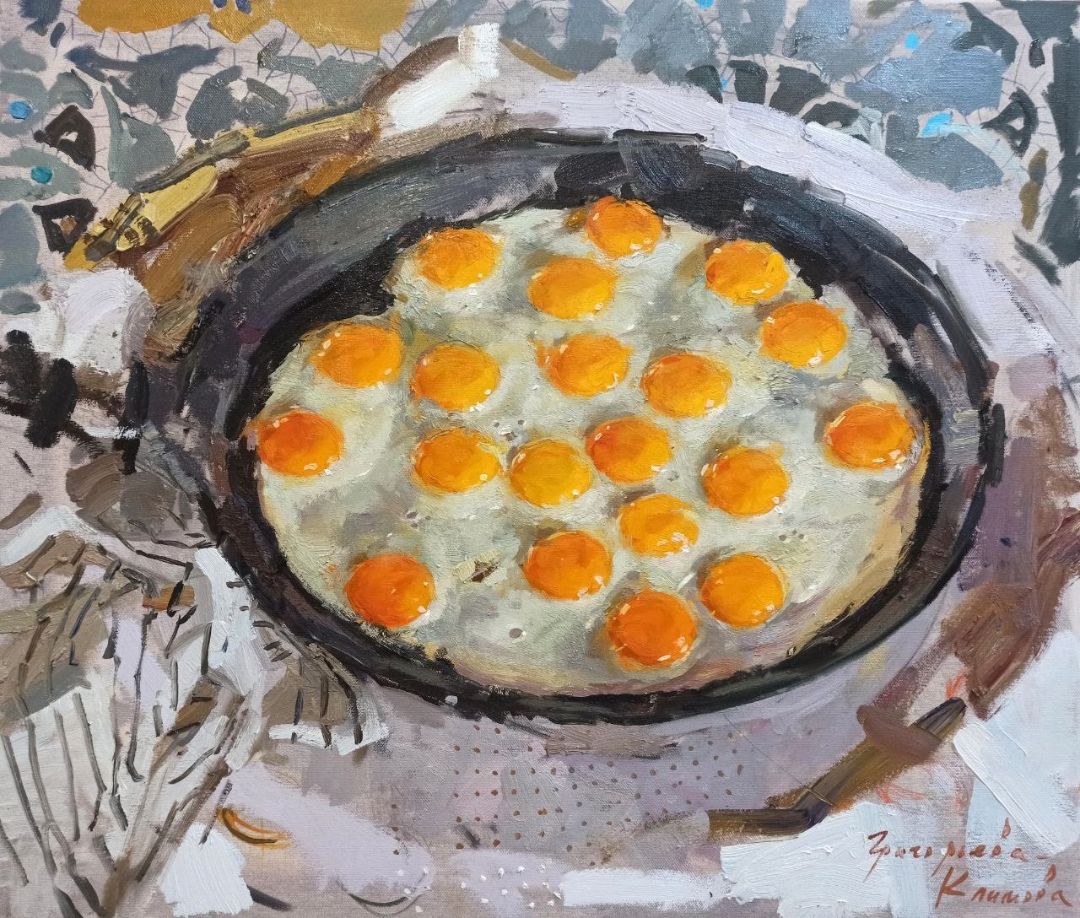
Fried Eggs, 2025. Oil on canvas, 60 × 70 cm
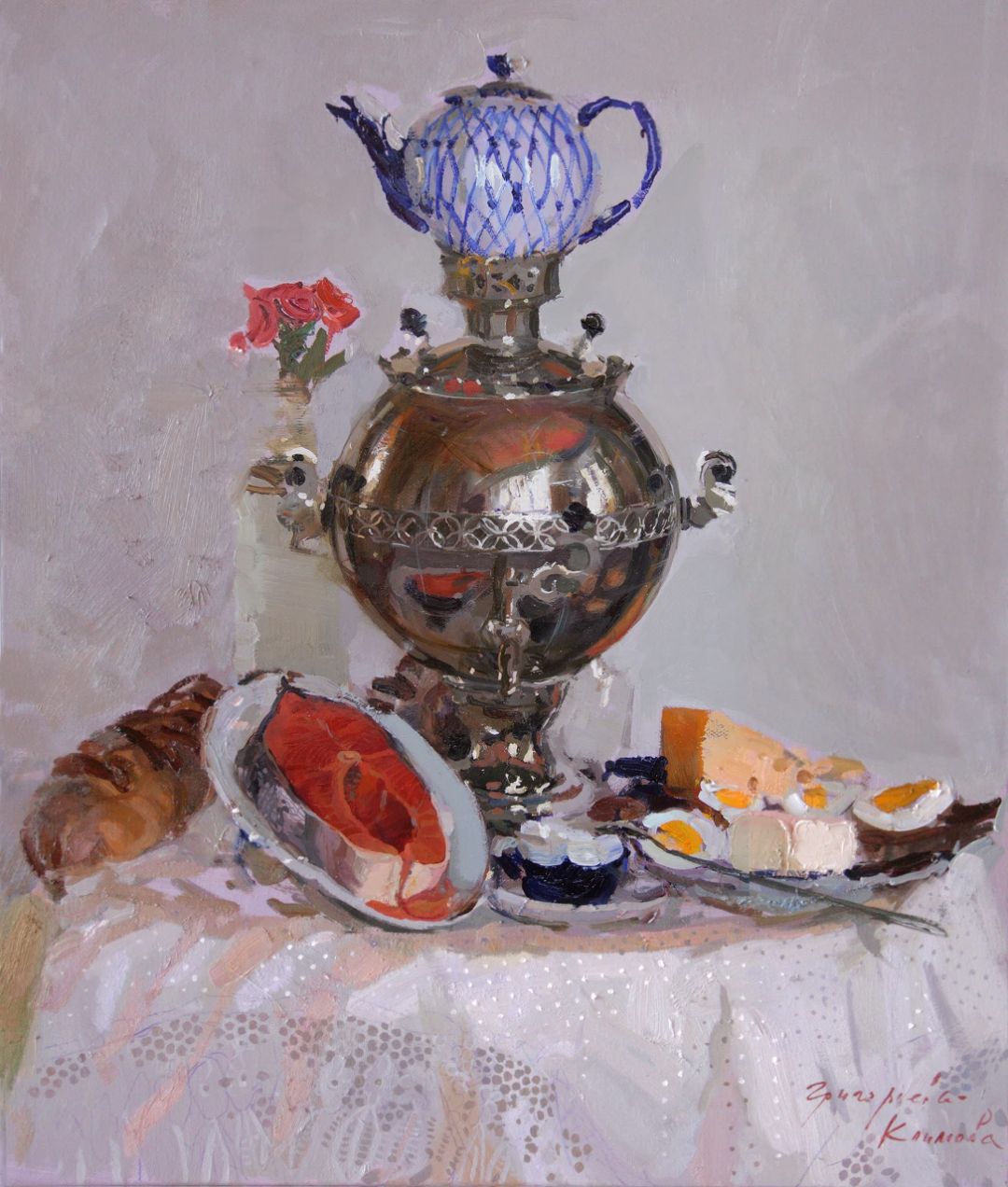
Still Life with a Samovar and Fish, 2026. Oil on canvas, 60 × 50 cm
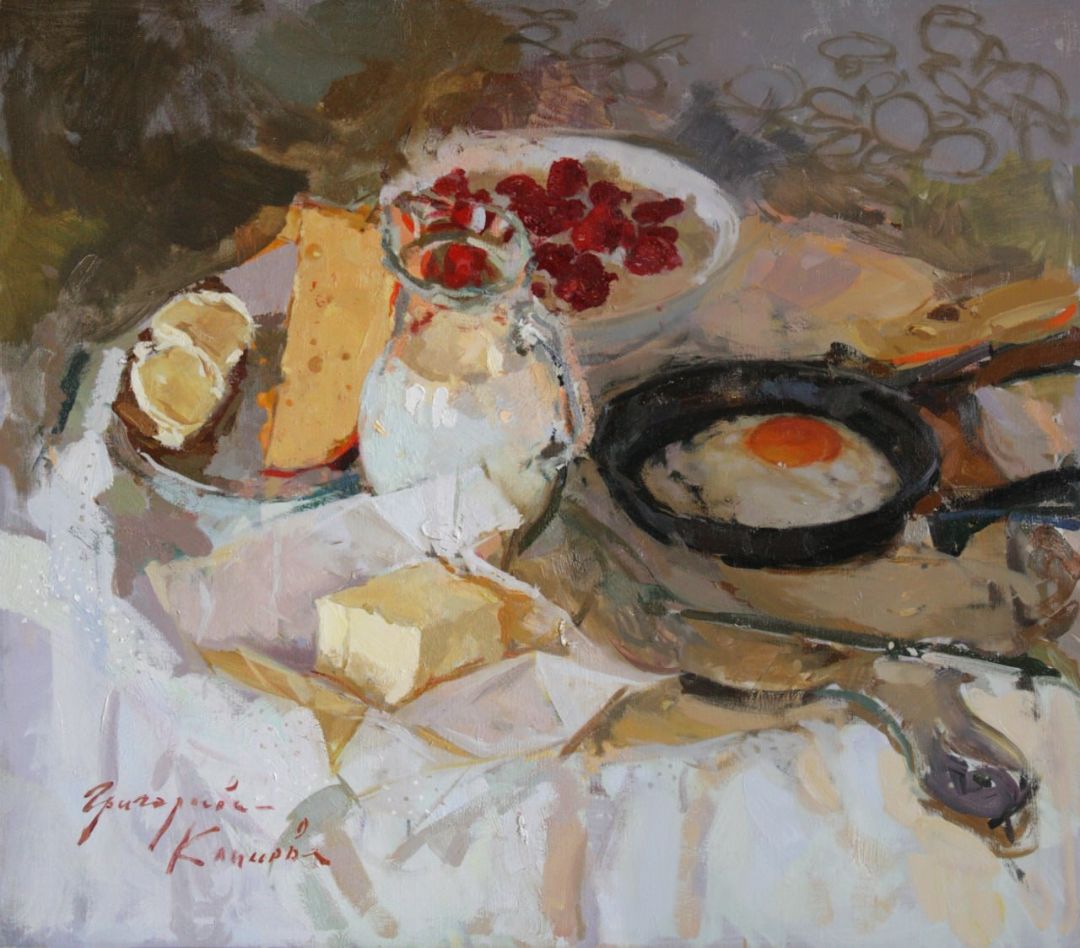
Still Life with Fried Eggs and Butter, 2025. Oil on canvas, 70 × 80 cm
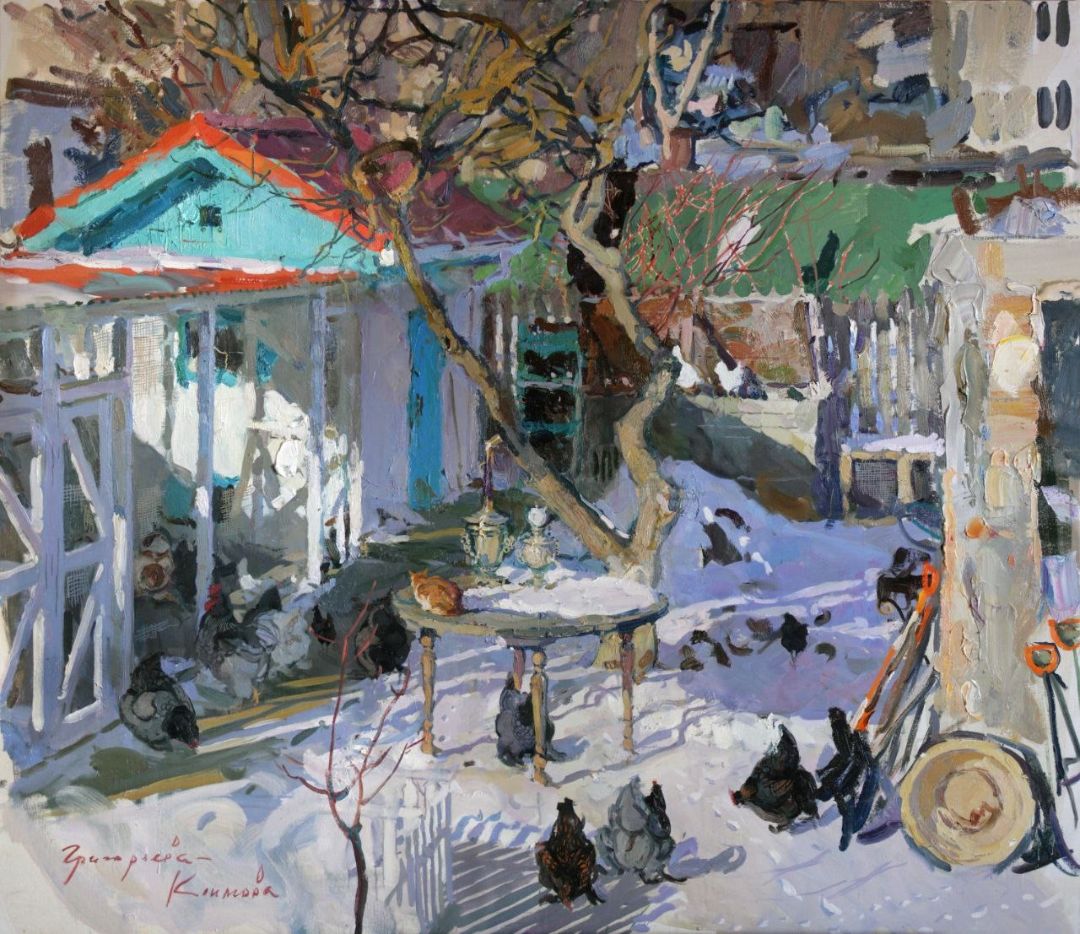
The Farmyard, 2026. Oil on canvas, 100 × 115 cm

Kurskoye Village, Crimea, 2023. Oil on canvas, 70 × 80 cm
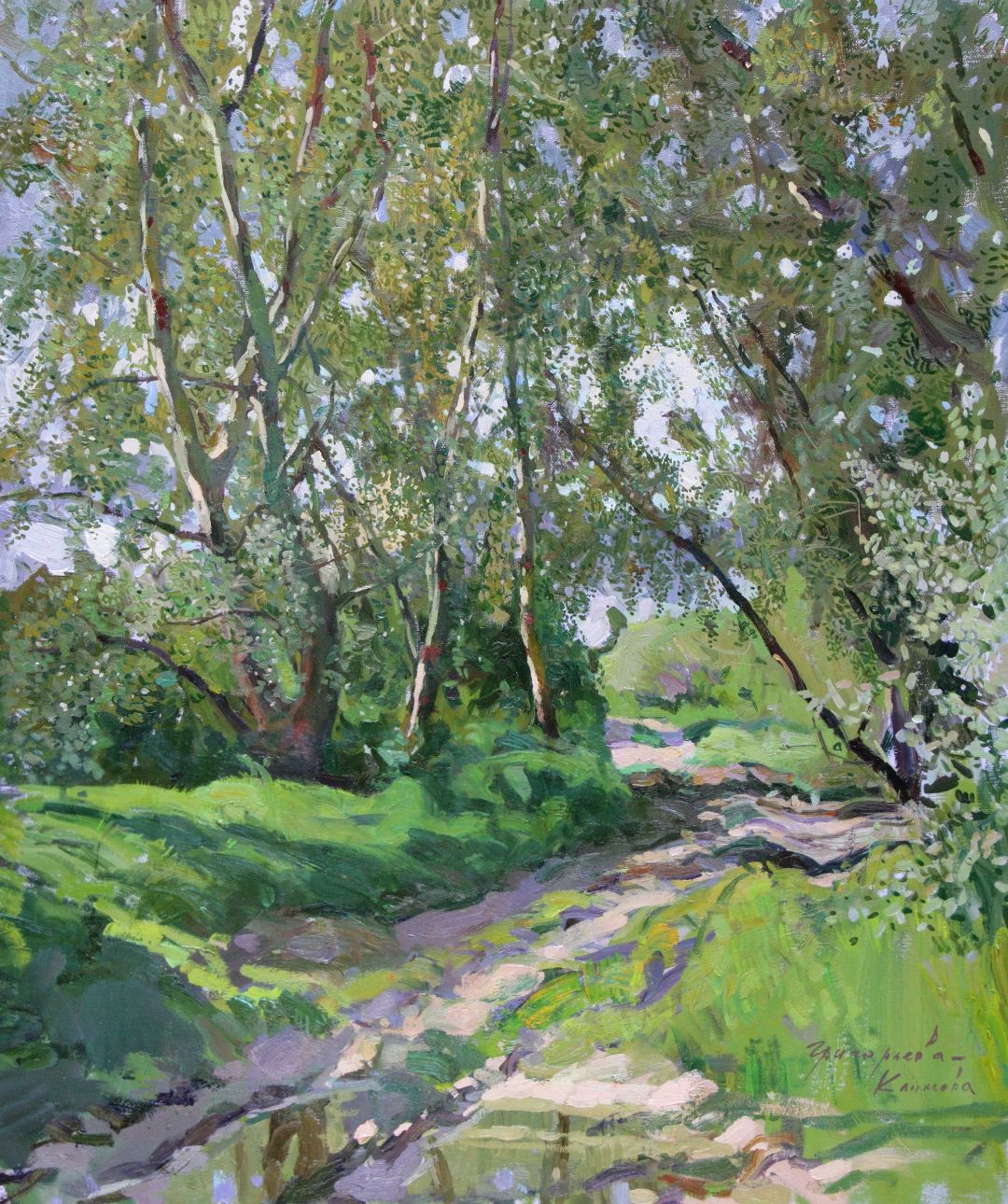
Trees, 2026. Oil on canvas, 60 × 70 cm
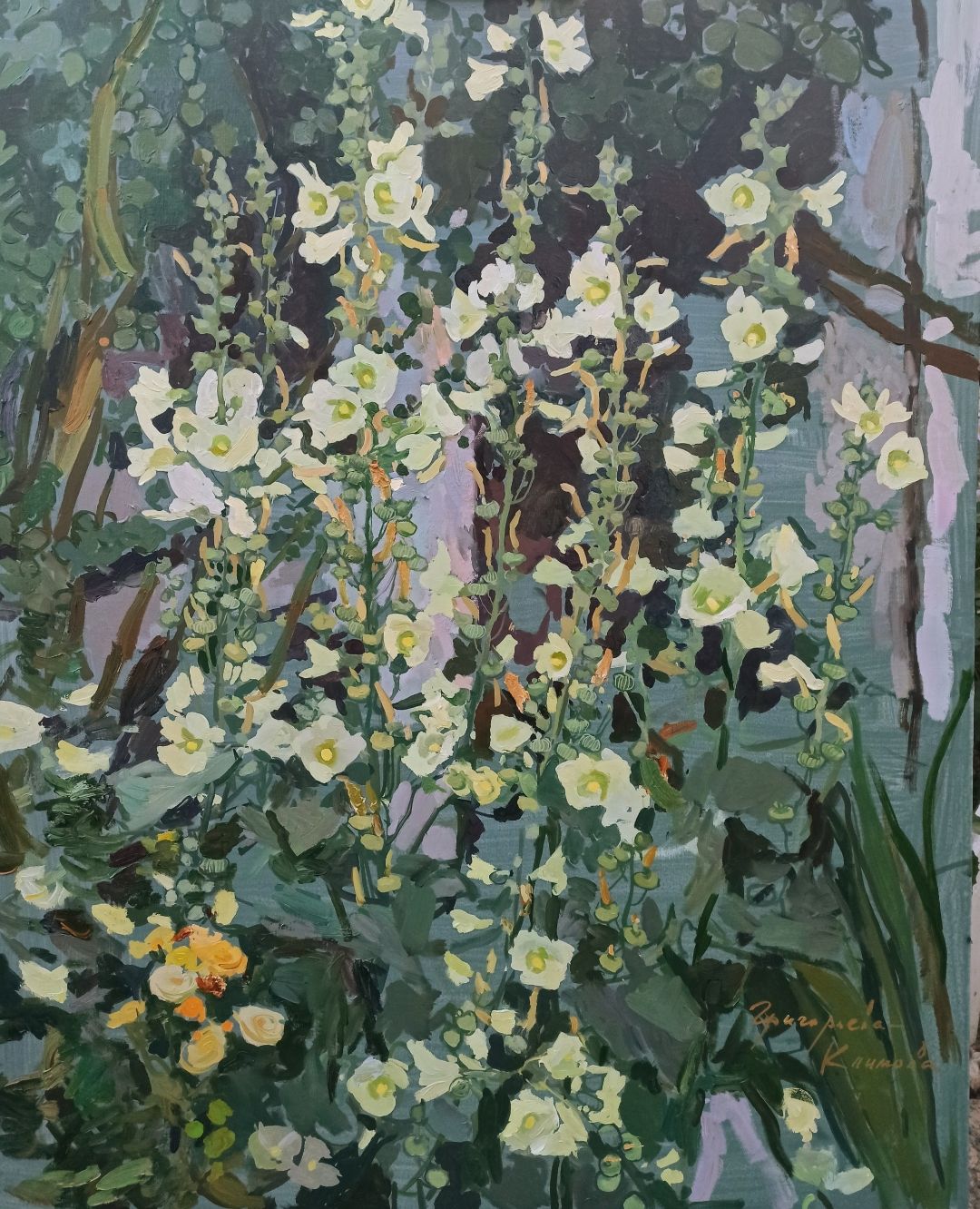
Yellow Hollyhock, 2026. Oil on canvas, 100 × 80 cm
THE ARTIST’S PALETTE
Olga’s palette has developed gradually and continues to change alongside her painting. Some colours appear in response to a particular task or period of work, others gradually disappear, while certain paints remain on her palette for years.
Olga has worked with Master Class oil colours for many years. At the heart of her palette are rich cadmiums, natural earths, deep blues and a wide range of greens. Alongside them are quinacridones, ultramarines, Indanthrene Blue, Caput Mortuum Deep, Lori Violet-Grey and other complex colours. Her palette remains fluid: she is constantly trying new shades and introducing them whenever a particular painting calls for them.
For Olga, what matters is not the beauty of an individual colour in isolation, but how it works alongside the others. Rich, clean hues therefore sit beside complex earth colours and more muted tones, allowing her to build subtle colour relationships and convey the light, air and atmosphere of the subject.
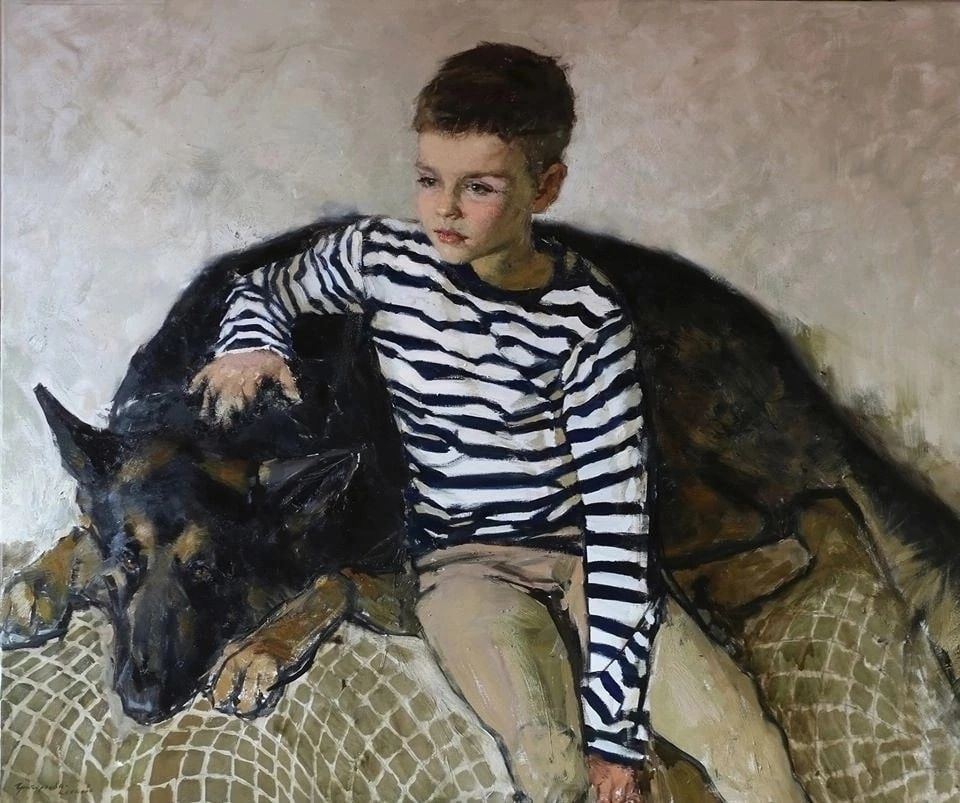
Timka and Grishka, 2016. Oil on canvas, 85 × 100 cm
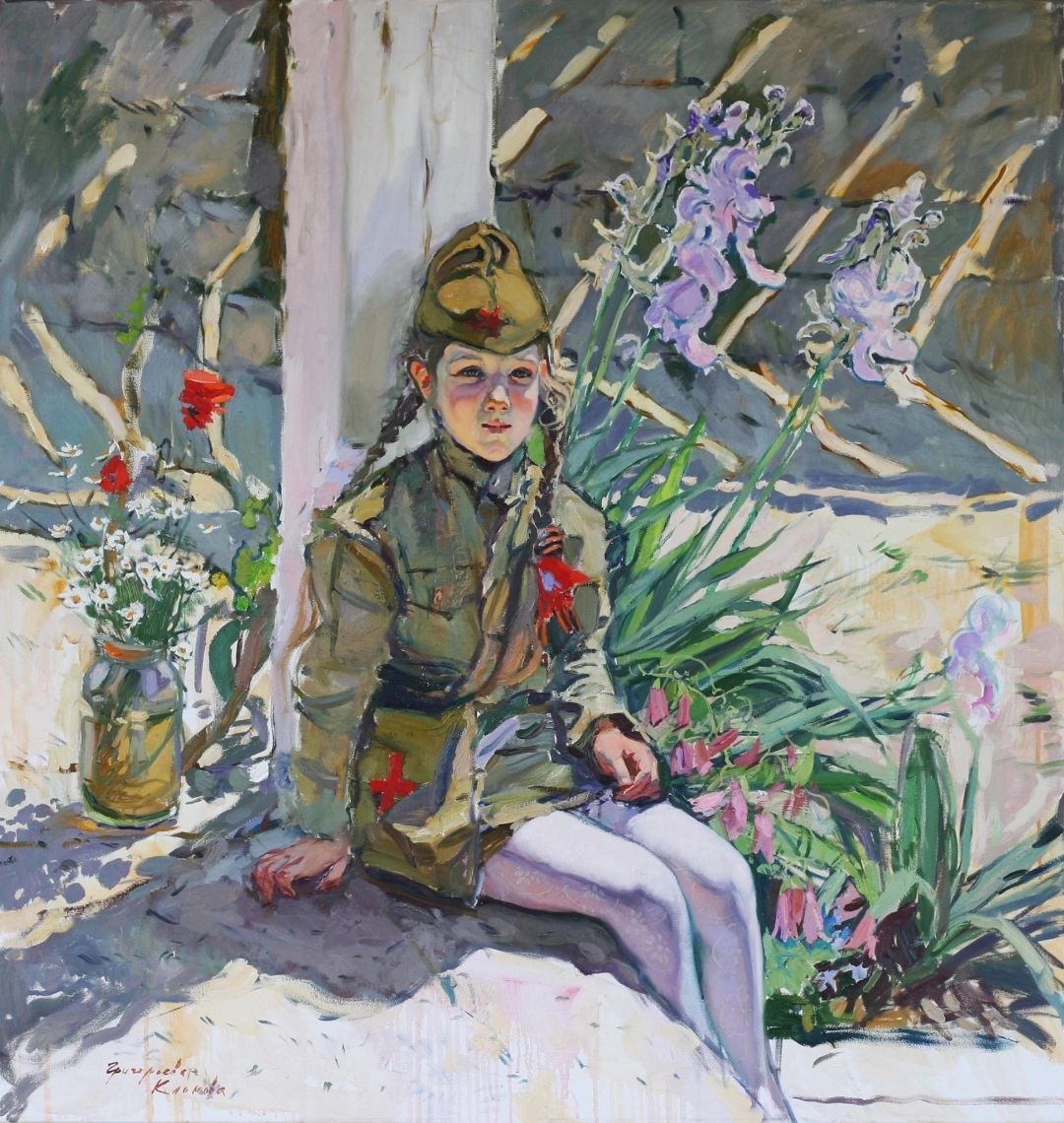
Victory Day, 2017. Oil on canvas, 110 × 105 cm
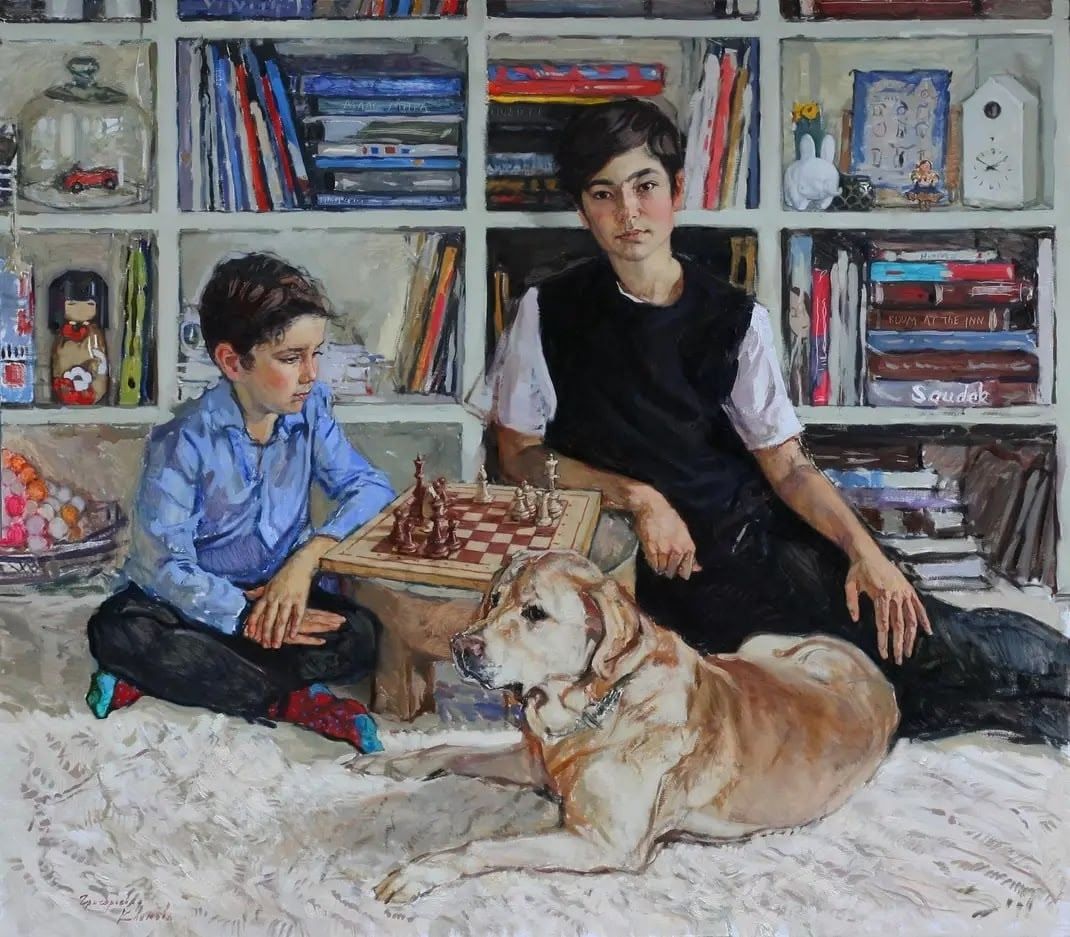
Chess, 2017. Oil on canvas, 140 × 160 cm
ON PAINTING
When Olga speaks about artistic skill, she always returns to the ability to see. This is why she advises young artists to work from life as much as possible, to develop their powers of observation and not to replace direct experience with photography.
Persistence is equally important to her. A good painting does not always emerge at the first attempt: it may need to be repainted, corrected and reconsidered, and sometimes even a successful passage has to be sacrificed if it disrupts the painting as a whole.
For Olga, painting is a continuous practice of working and observing. It is through this daily process that both skill and the ability to see the world more deeply, more precisely and with greater curiosity gradually develop.
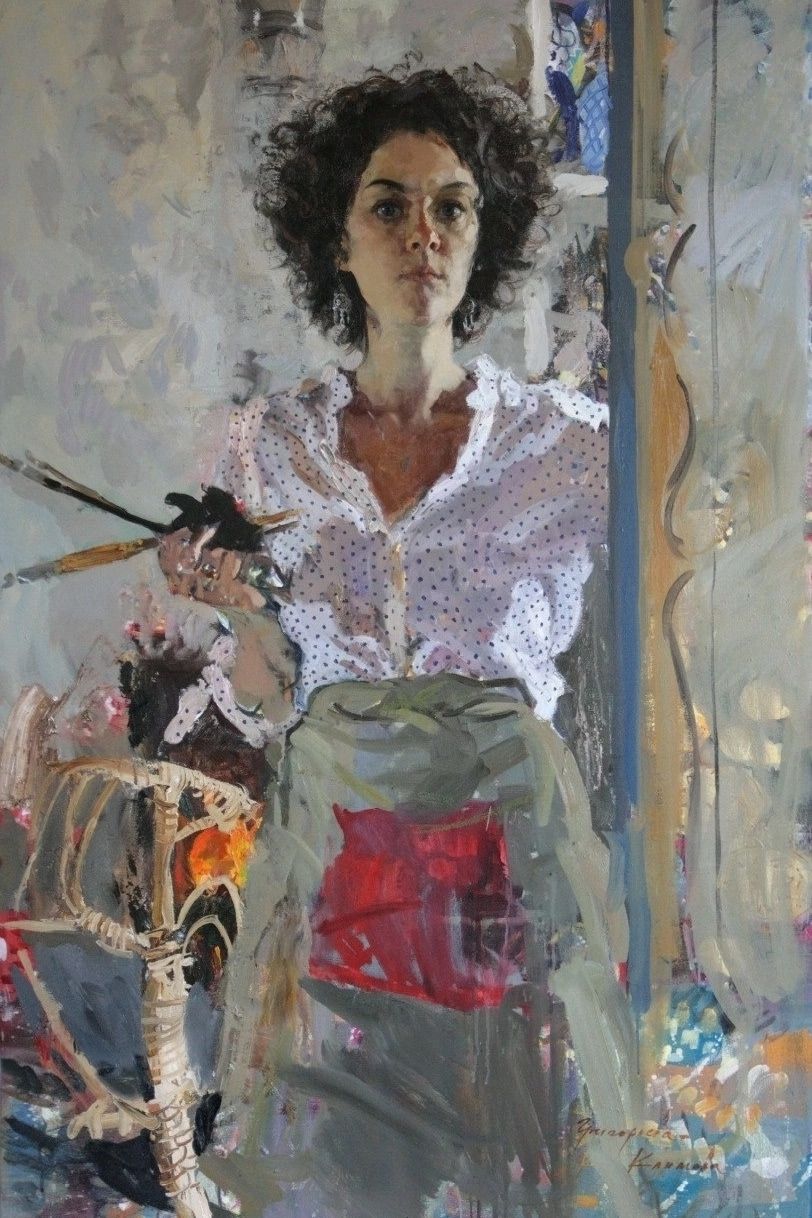
Self-Portrait, 2024. Oil on canvas, 142.5 × 89.5 cm

Girls with a Bouquet of Flowers, 2021. Oil on canvas, 140 × 75 cm
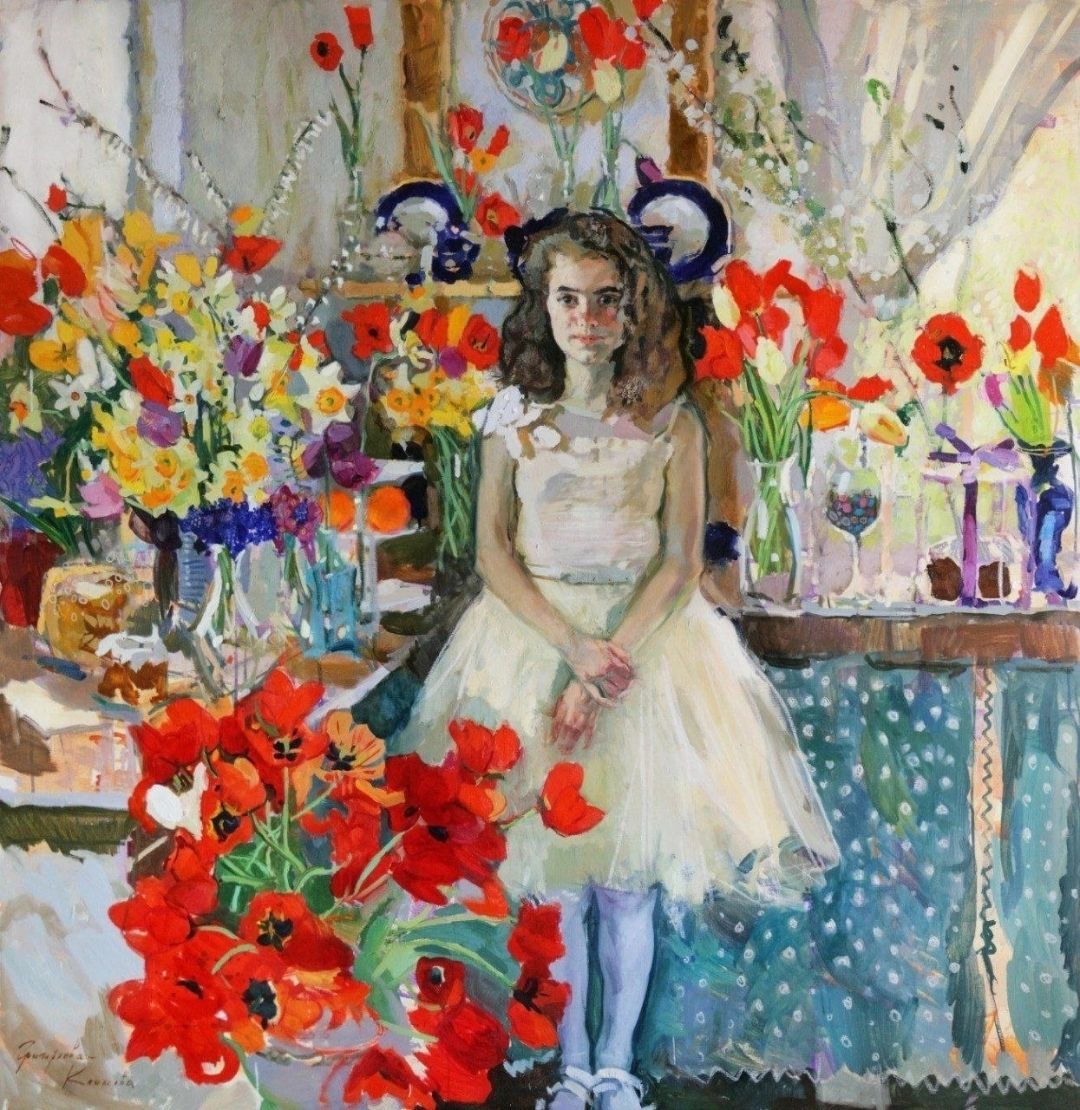
April, 2022. Oil on canvas, 150 × 148 cm

Alyonka with Braids, 2025. Oil on canvas, 70 × 50 cm
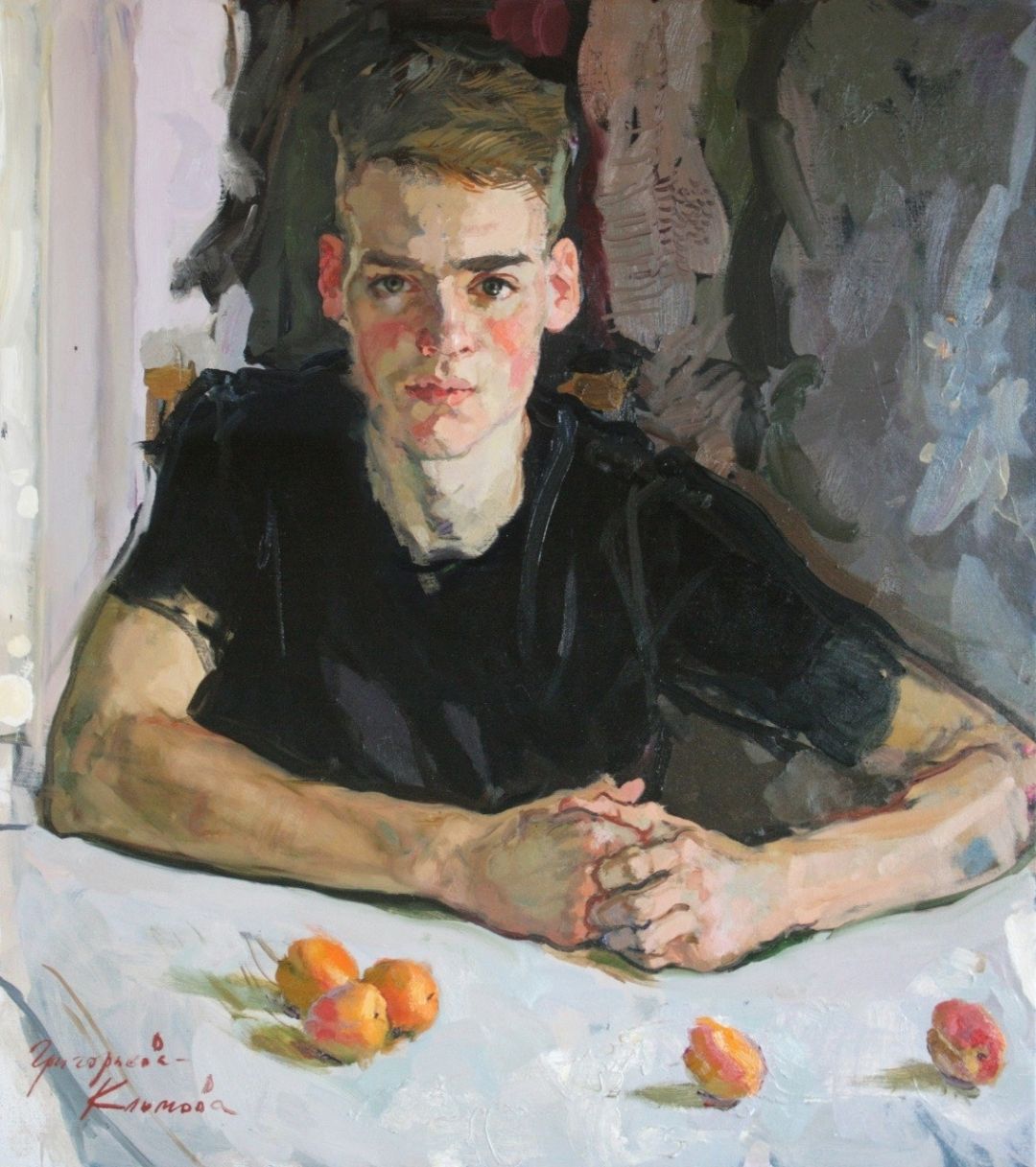
Boy with Apricots, 2024. Oil on canvas, 80 × 70 cm


CRM-форма появится здесь