


VYACHESLAV KOROLENKOV. Thinking Like a Painter
"How do we learn to see?"
This question lies at the heart of Vyacheslav Korolenkov's work. For him, painting begins long before the first brushstroke touches the canvas. It begins with observation, reflection and a persistent desire to understand why the world around us leaves such a powerful visual impression. Every new painting is another attempt to answer that question.
Painting has never been, for Korolenkov, a collection of techniques to be mastered once and repeated throughout a career. Instead, he sees it as a living process—one that constantly evolves and can never truly be completed. Every finished canvas marks the beginning of another stage of enquiry; every new work encourages him to question his own perception, to look more attentively and to discover something that had previously escaped his notice.
His interest extends far beyond technical proficiency. What fascinates him is the very nature of pictorial thinking. How does an image come into being? Why does one painting possess an inner vitality while another remains little more than an accurate description? How do colour, light, space and form begin to function as a single visual whole? These are the questions that shape not only his artistic practice but also his approach to teaching and to the study of painting itself.
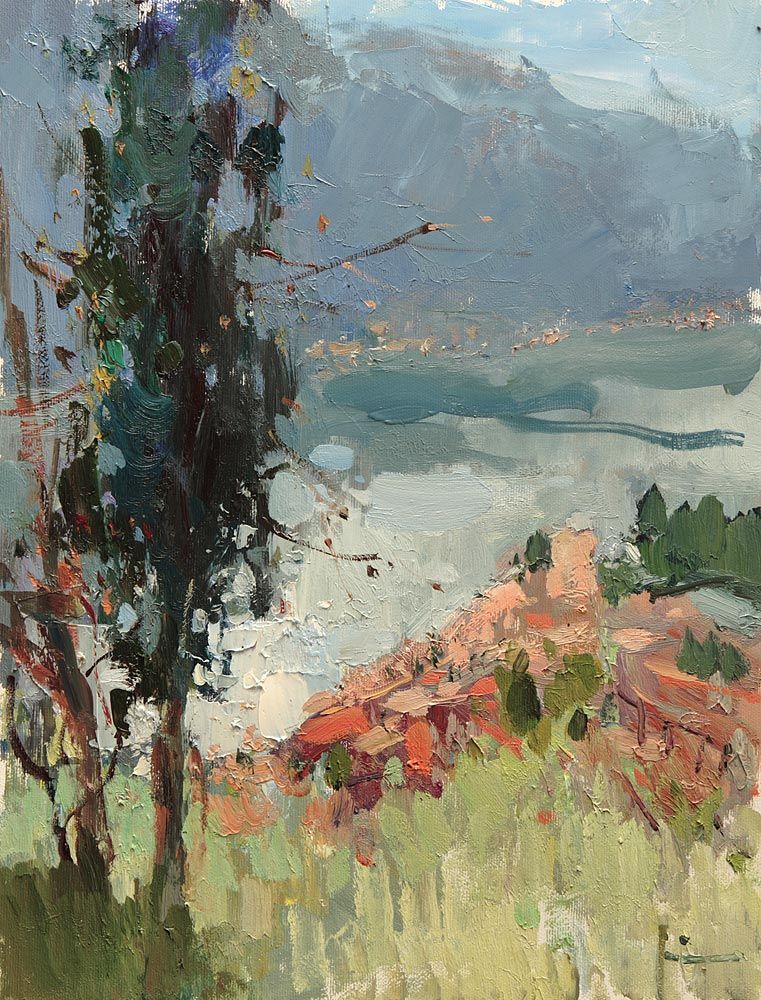
Bay of Kotor, 2017. Oil on canvas, 41 × 31 cm
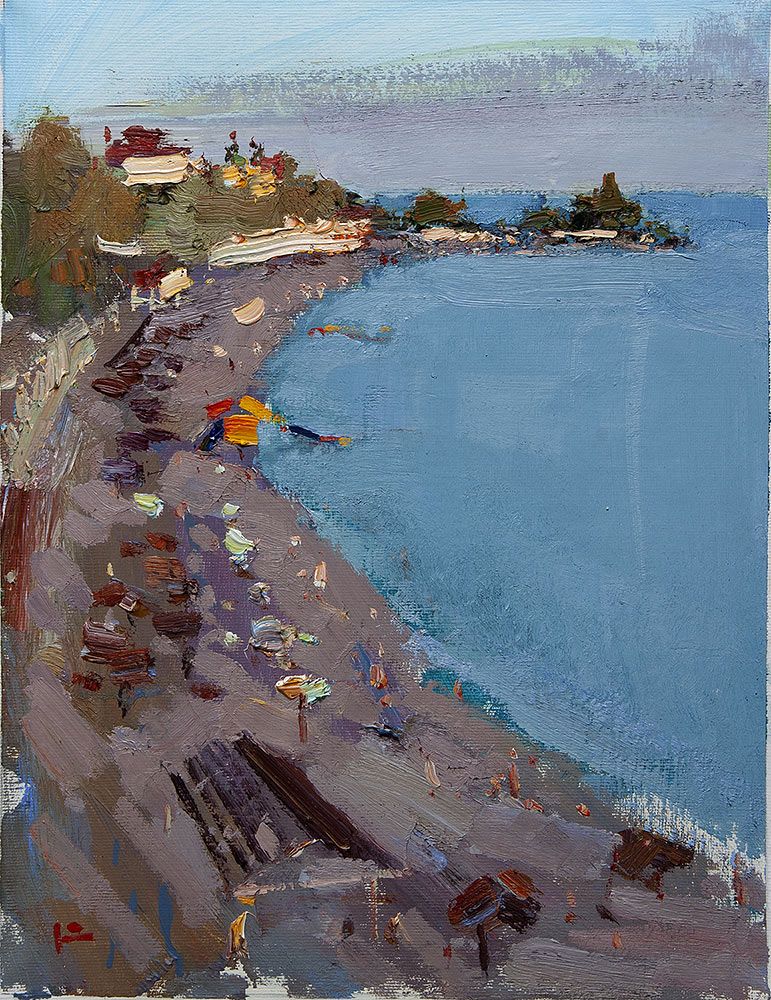
Beach at Myskhako, 2020. Oil on canvas, 41 × 31 cm
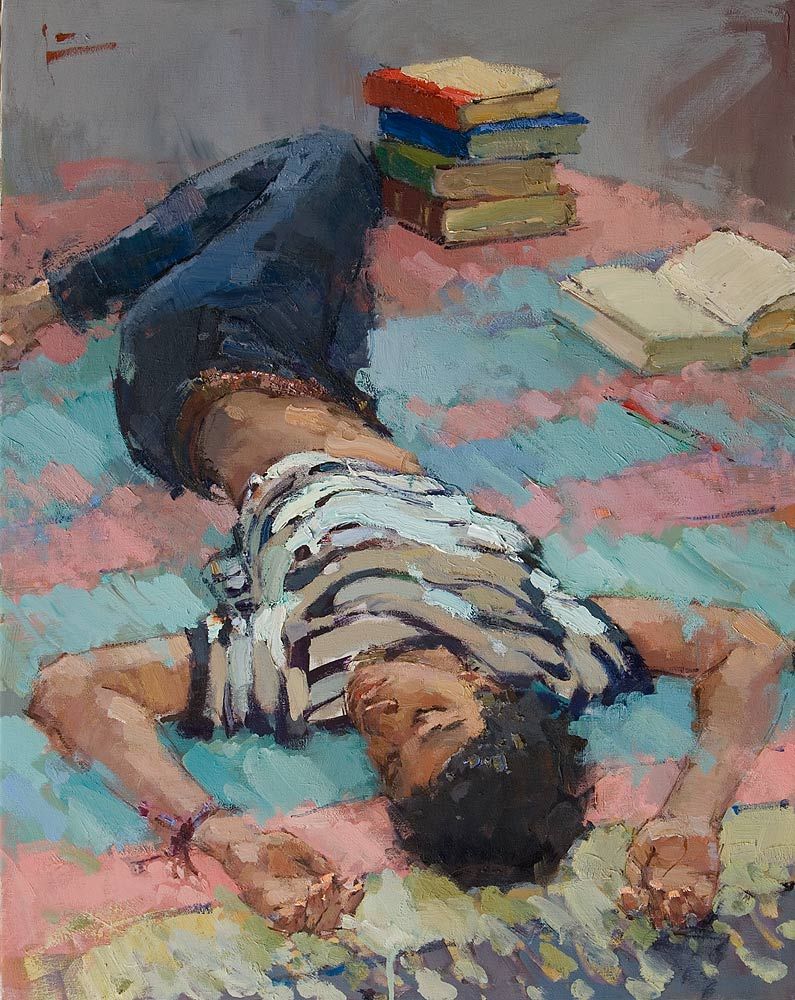
Studied Too Hard, 2018. Oil on canvas, 77 × 60 cm
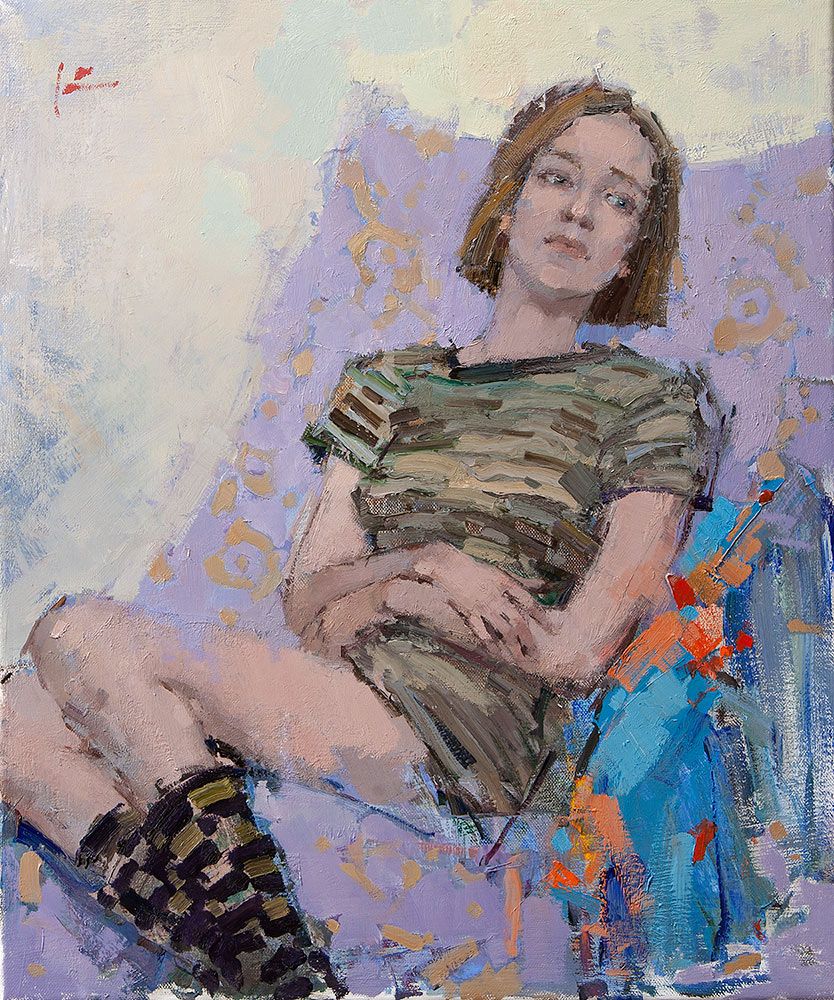
Alexandra, 2020. Oil on canvas, 55 × 46 cm
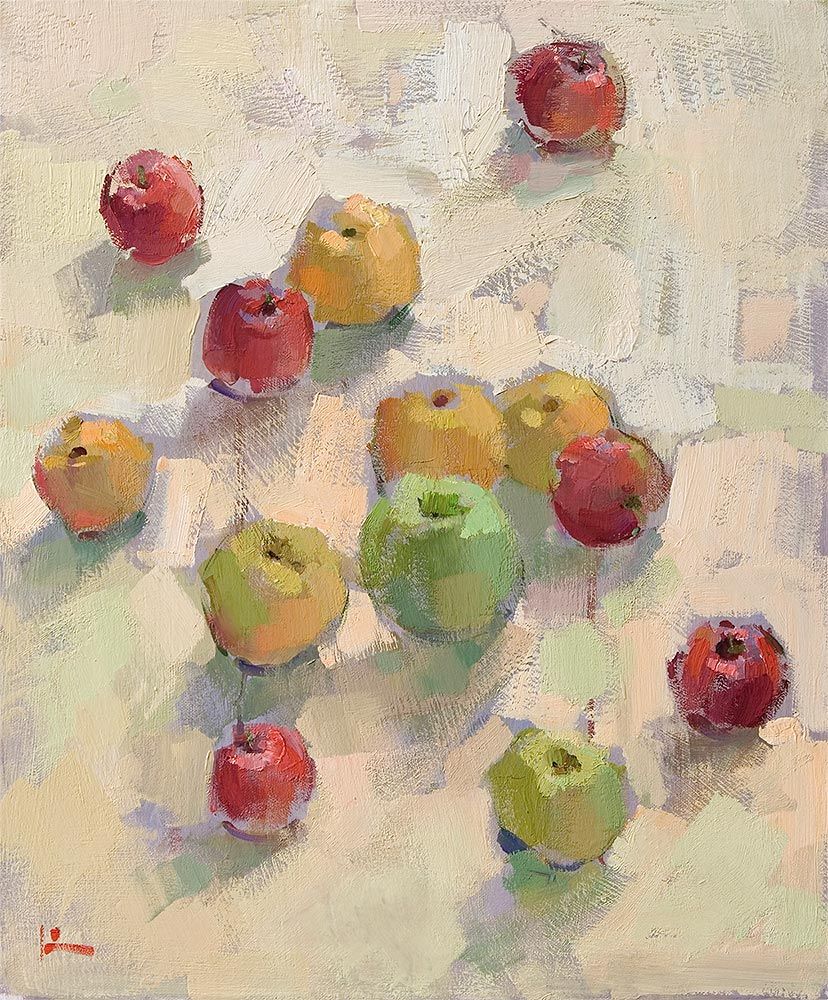
A Gift of Summer, 2019. Oil on canvas, 55 × 46 cm
Korolenkov speaks about painting in a way that often surprises his audience. A discussion about brushwork quickly becomes a conversation about perception; an explanation of drawing naturally leads to questions about the way we think; the analysis of a single painting opens into a wider reflection on the nature of visual experience. Beneath this direct and disarmingly simple manner of speaking lies an uncompromising commitment to artistic practice and a constant willingness to question his own conclusions.
For him, every painting represents another stage in an ongoing search rather than the confirmation of established ideas. The aim is never to repeat a successful solution but to understand more deeply why it worked in the first place. A change in light, a different landscape or simply the passing of time may transform the way an artist perceives the same subject. As perception changes, painting changes with it.
This attitude defines far more than the works themselves. Studio practice, painting from life, studying the great masters, exhibiting, teaching and discussing art all become parts of a single continuous process. At its centre lies a lifelong determination to understand painting more profoundly and to preserve the sense of discovery without which technical skill alone can never produce truly living art.
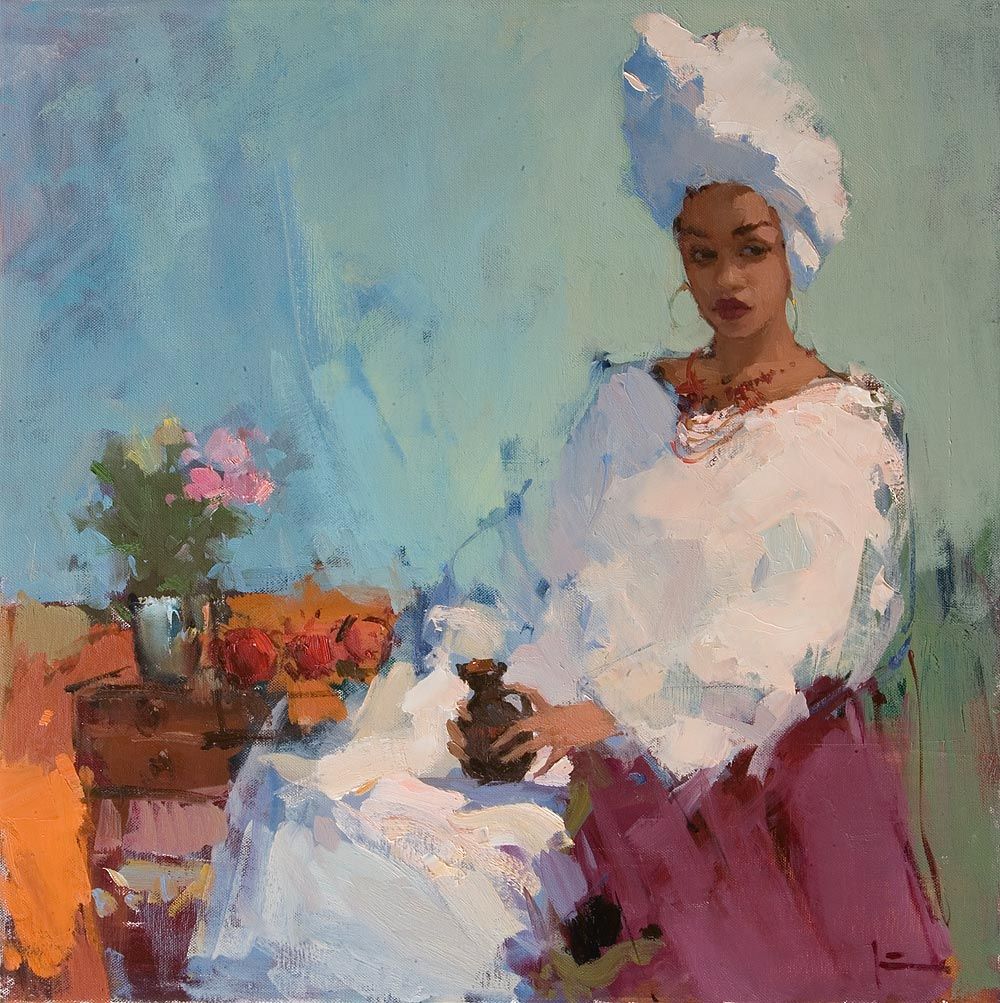
Sophia, 2018. Oil on canvas, 60 × 60 cm

A Glass of Wine in San Francisco, 2016. Oil on canvas, 41 × 51 cm
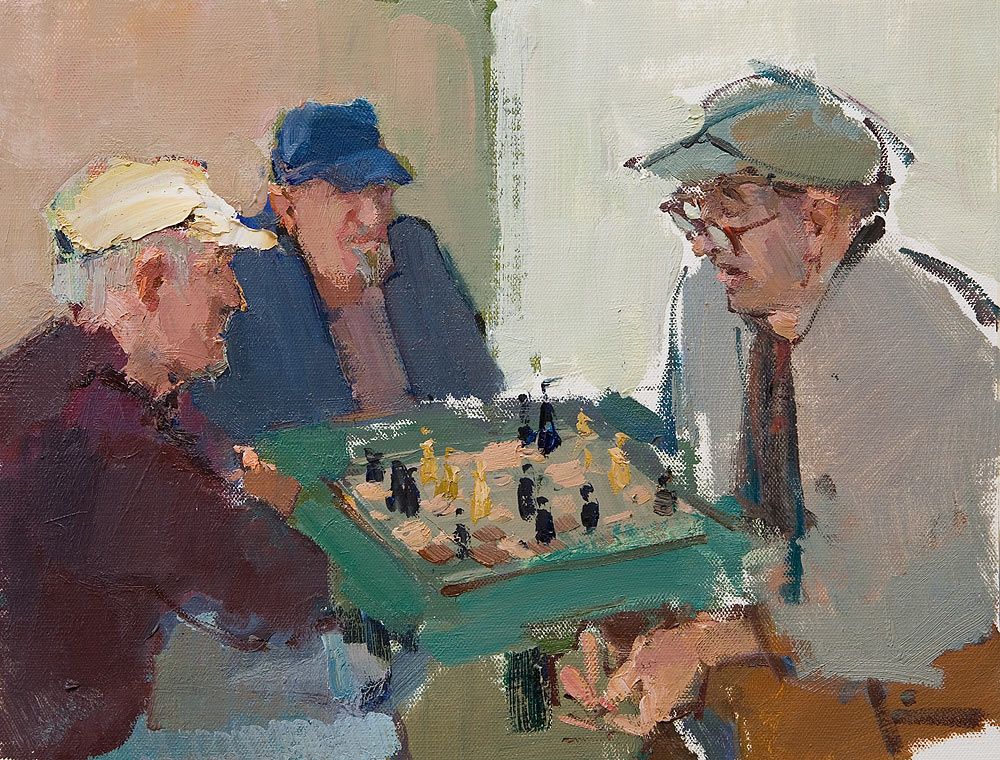
The Chess Players, 2017. Oil on canvas, 31 × 41 cm
Throughout his entire career as a painter, Vyacheslav Korolenkov has worked with oil colours by Nevskaya Palitra. These are the materials he used for his early works and continues to use in his painting today. Decades of experience allow him to judge the colours not only by the way they behave while he is painting, but also by how well the finished works stand the test of time. Korolenkov’s early paintings have retained their colour and the character of the paint layer remarkably well, while the paints themselves remain a familiar and comfortable material for him to work with. His choice of Nevskaya Palitra is therefore not a recent decision, but a natural part of a painting practice developed over many years.
Vyacheslav Korolenkov works with a broad palette that includes traditional cadmium, cobalt and earth colours alongside more complex modern hues. His regular palette includes Titanium White, Cadmium Lemon Yellow, Strontium Yellow, Cadmium Yellow Medium, Cadmium Yellow Deep, Cadmium Orange, Cadmium Red Light, Cadmium Red Deep, Permanent Rose Madder, Burnt Umber, Van Dyck Brown, Red Ochre, Yellow Ochre, Indian Yellow, Royal Blue, Ultramarine, Sky Blue, Cobalt Blue Light, Emerald Green, Naples Yellow Light, Caput Mortuum, Quinacridone Violet Rose, Alizarin Crimson, Shakhnazarskaya Red, English Red, Turkish Blue, Coral Rose, Venetian Red, Venetian Purple, Petersburg Lilac and Mars Brown Deep. This range gives him considerable freedom in his use of colour, from clean, saturated colour relationships to complex, finely nuanced mixtures.
The Making of an Artist
This is not simply a biography. It is the story of someone who realised at an early age that painting can never be mastered once and for all.
Vyacheslav Korolenkov was born in Tula, one of Russia's oldest historic cities, situated approximately 180 kilometres south of Moscow. It was here that his fascination with drawing first took shape. In one interview he recalls copying a reproduction of the Venus de Milo from a magazine while still at school. His classmates gathered around his desk, and a notoriously strict deputy headteacher, instead of reprimanding him, quietly praised the drawing. It was a small moment, yet one that remained with him—a first indication that art would become something far more significant than a childhood pastime.
His artistic education began in Tula and continued in Moscow, where he studied at the Stroganov Moscow State Academy of Arts and Industry, one of Russia's leading institutions for art and design. There he received the rigorous academic training that still underpins his work today: drawing, composition, the construction of form and sustained observation from life.
Yet Korolenkov has never regarded academic training as an end in itself. For him, it provides the foundation upon which genuine artistic freedom can be built. A painter must first understand structure before allowing instinct to take over. Technical confidence is valuable only when it serves perception rather than replacing it.
Early Works by Vyacheslav Korolenkov

Old Believers’ Church in Borovsk, 1986. Oil on canvas, 47 × 35 cm
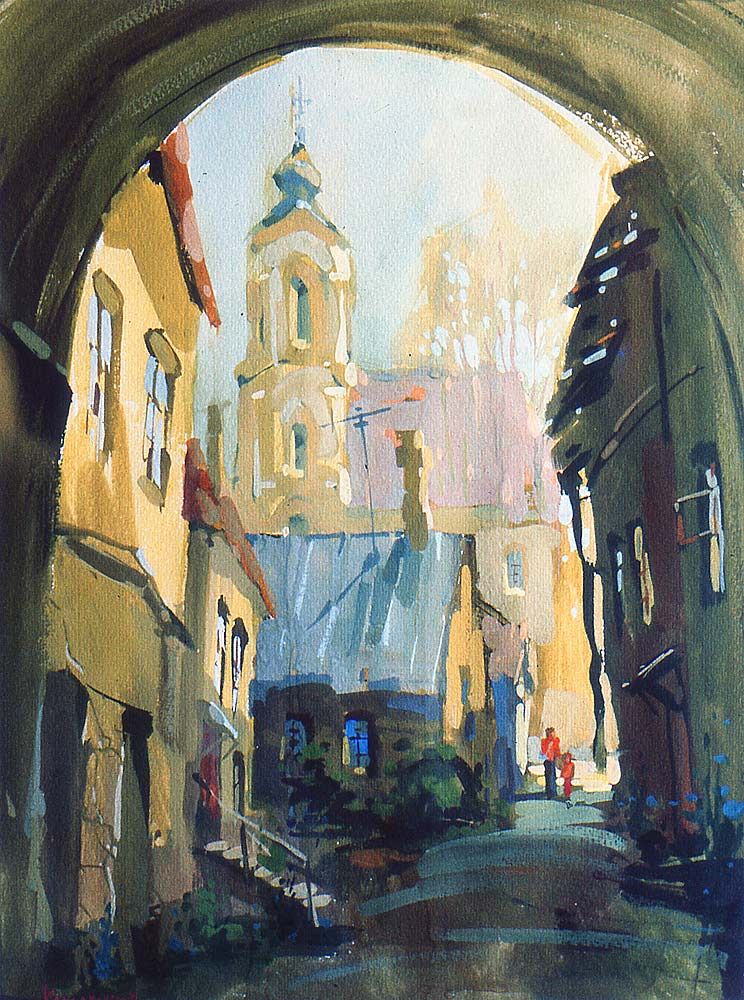
Old Courtyard, 1998. Oil on canvas, 35 × 25 cm

Arkhipova Street, 1990. Oil on canvas, 75 × 45 cm
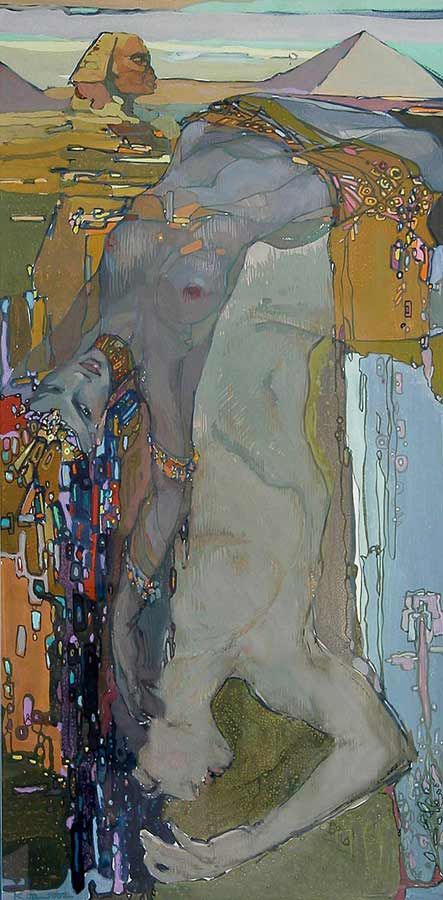
River Lands, 2002. Oil on canvas, 100 × 50 cm
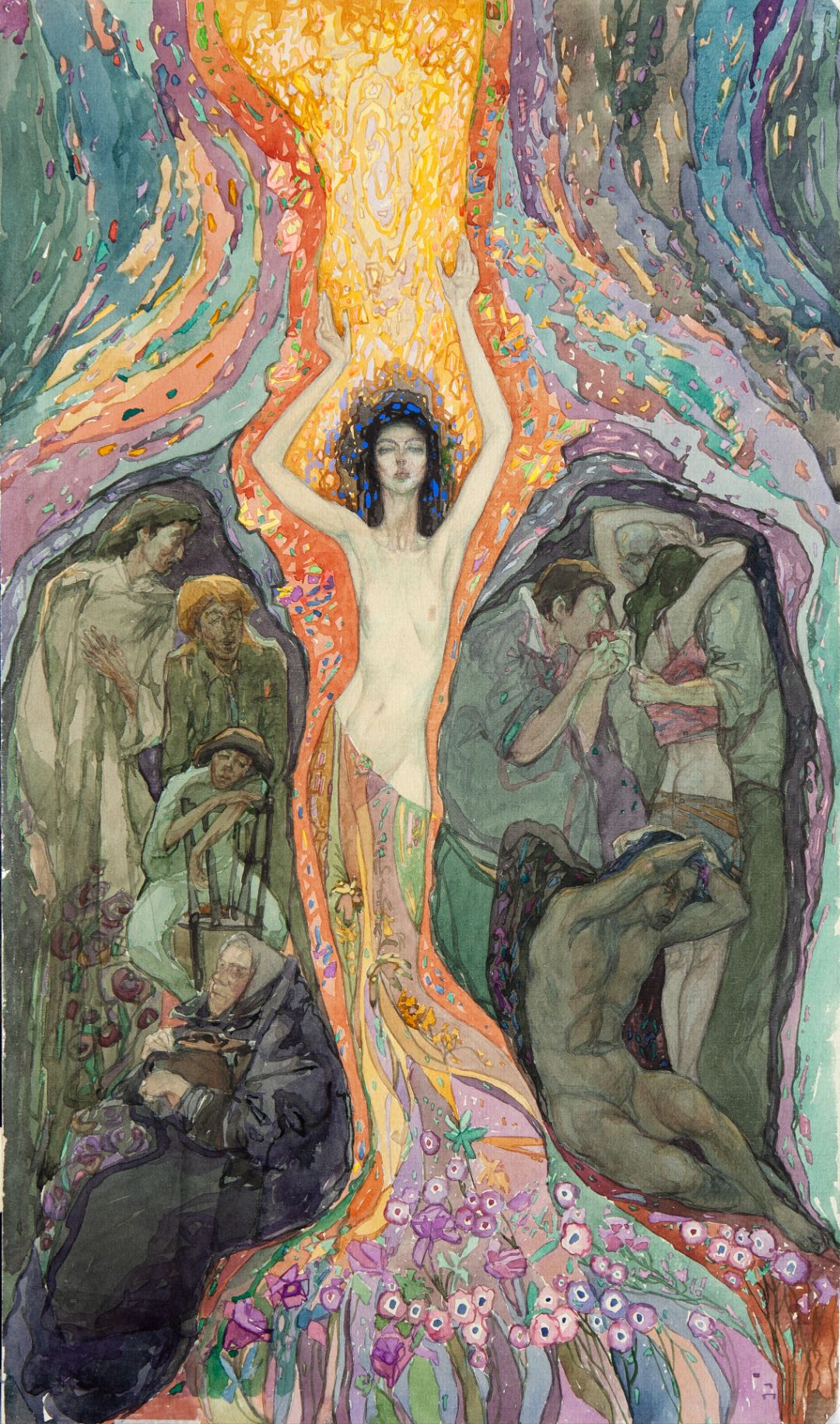
Untitled, 1990. Oil on canvas, 100 × 50 cm
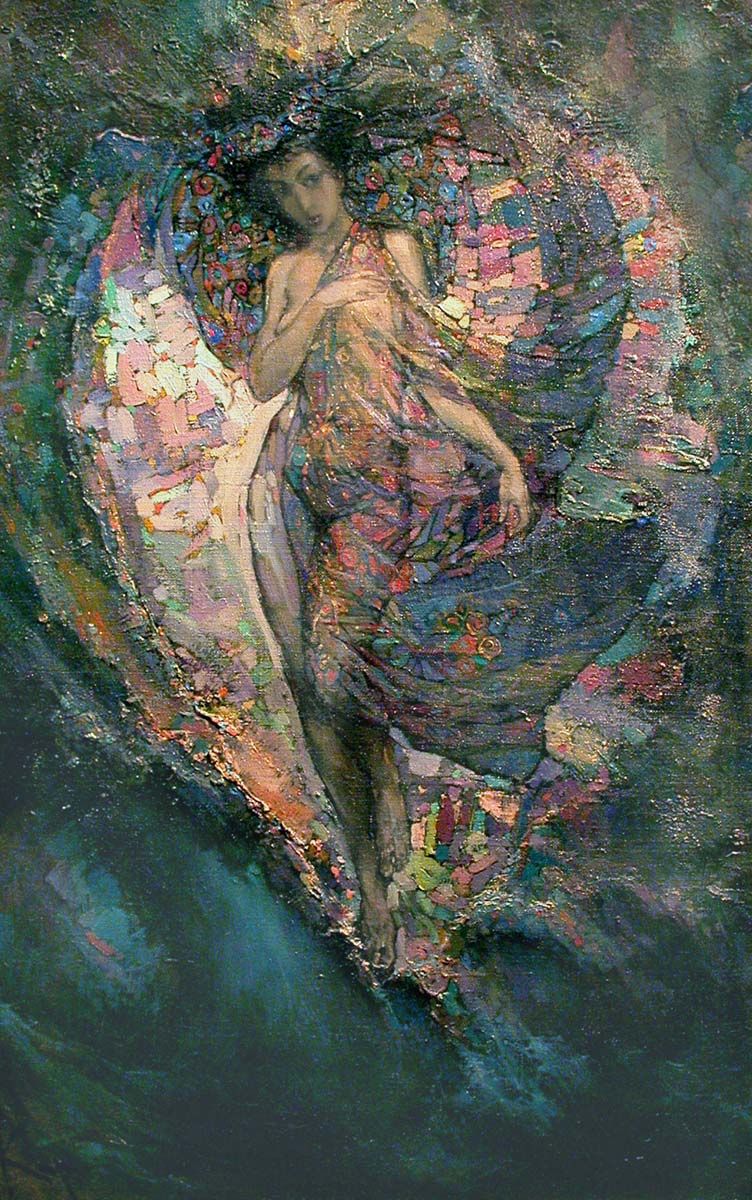
The Birth of Aphrodite, 1995. Oil on canvas, 100 × 70 cm
Drawing remains the cornerstone of this foundation. It teaches the artist to understand rather than simply describe the visible world. Structure, proportion, rhythm and spatial relationships are not abstract academic concepts but practical tools that enable a painter to respond freely to nature. Without them, expressive brushwork risks becoming decorative rather than meaningful.
One episode in his life illustrates this belief with particular clarity. For almost fifteen years he painted very little. When he eventually returned to the easel, he discovered something unexpected. Although his hand had been inactive, his way of seeing had continued to develop. Life itself had become part of his artistic education.
This experience reinforced one of the principles that runs throughout both his work and his teaching: artistic growth depends not only on practice but on perception. As our understanding of the world deepens, painting inevitably changes with it. Technique may improve through repetition, but vision matures through experience. As the years pass, experience deepens, perception evolves and painting itself begins to reveal new possibilities. Every completed work becomes another step in an ongoing search rather than a final destination. Each canvas raises new questions, challenges previous assumptions and opens the way towards a deeper understanding of painting.
Today Korolenkov's paintings are exhibited regularly in Russia and abroad. His works are held in private collections across Europe, Japan and the United States, while his professional life continues to balance studio practice, exhibitions, plein-air painting and teaching. Yet public recognition has never altered the essence of his approach. The desire to observe more attentively, to question familiar solutions and to keep learning remains the driving force behind everything he does.
Learning to See
Real artistic growth begins not when the hand becomes more skilful, but when the eye begins to see differently.
This idea lies at the very centre of Vyacheslav Korolenkov's philosophy of painting. Technical ability can be developed through discipline and practice, but genuine artistic progress depends on something far more fundamental: learning to perceive the world with greater clarity, sensitivity and understanding. One of his best-known observations is deliberately provocative: "An artist should train the brain rather than the hand." Behind this simple statement lies years of experience. The hand can only paint what the eye has already recognised and the mind has already understood. Without perception, technique becomes mechanical; without thought, even virtuosity risks becoming little more than habit. Drawing therefore occupies a unique place in his approach. It is not merely an academic exercise or a preliminary stage before painting begins. It is a way of understanding reality. Through drawing, the artist discovers the structure of form, the rhythm of proportions, the movement within a figure and the relationships that bind an object together. It teaches observation before expression.
Korolenkov often reminds his students that the greatest challenge is not learning how to draw every detail but recognising which details truly matter. Seeing is an act of selection. Every painting requires the artist to decide what should remain, what can be simplified and what may be omitted altogether in order to preserve the integrity of the whole.
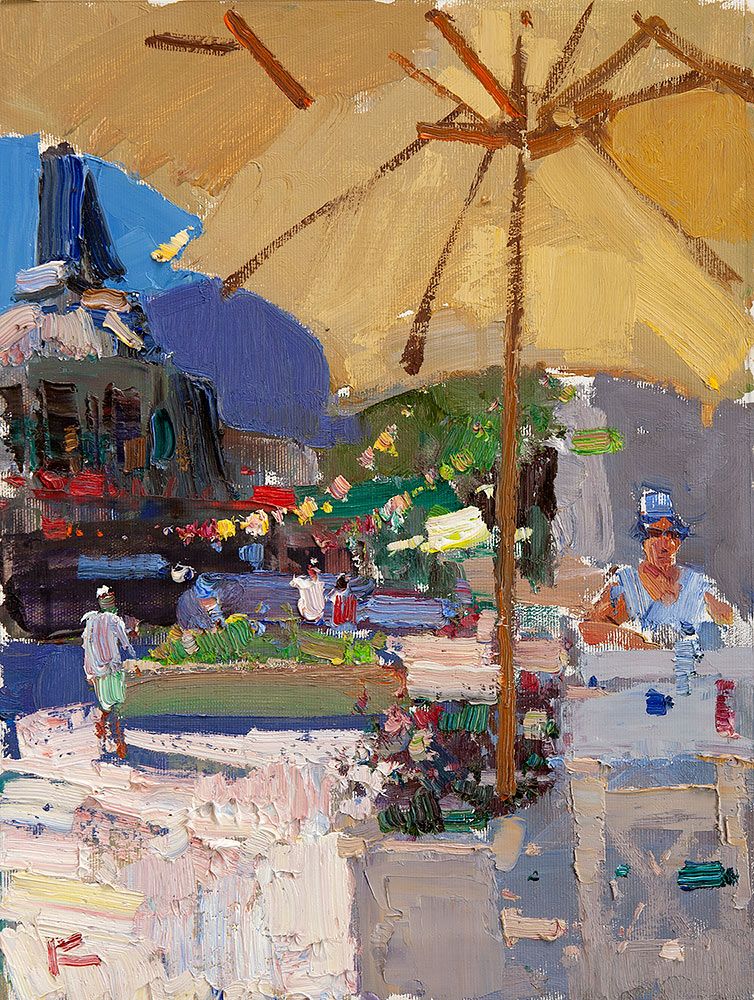
Breakfast at the Tavern, 2021. Oil on canvas, 41 × 31 cm
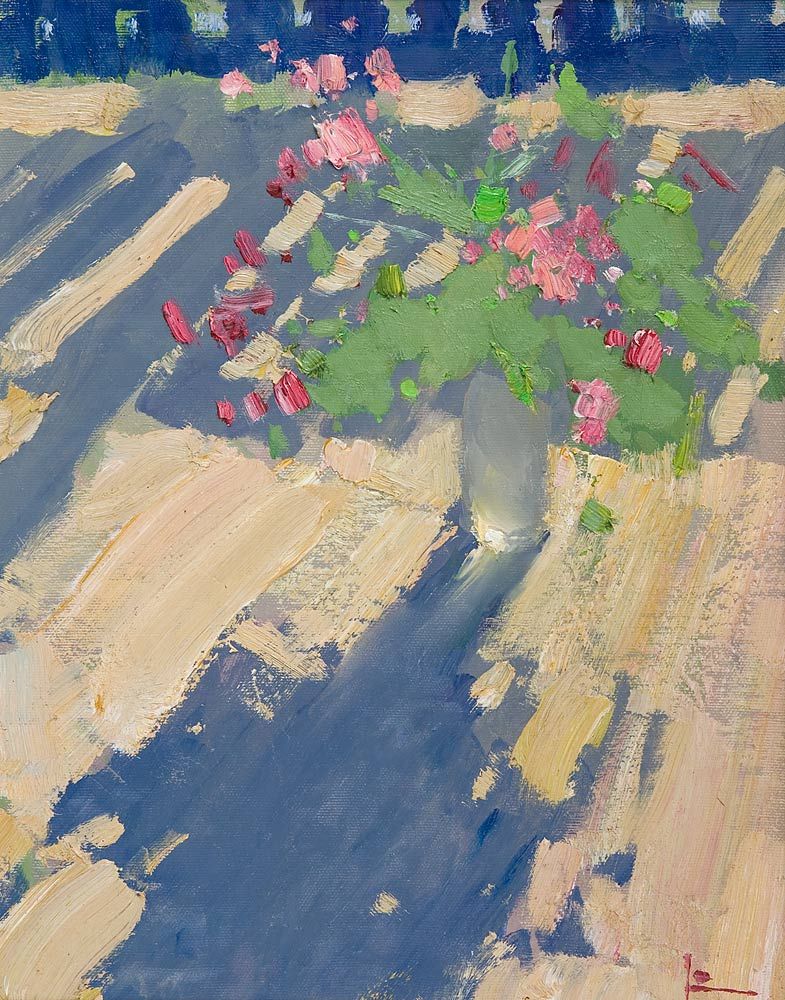
Flowers on the Terrace, 2017. Oil on canvas, 41 × 31 cm

Boatswain, 2021. Oil on canvas, 60 × 40 cm
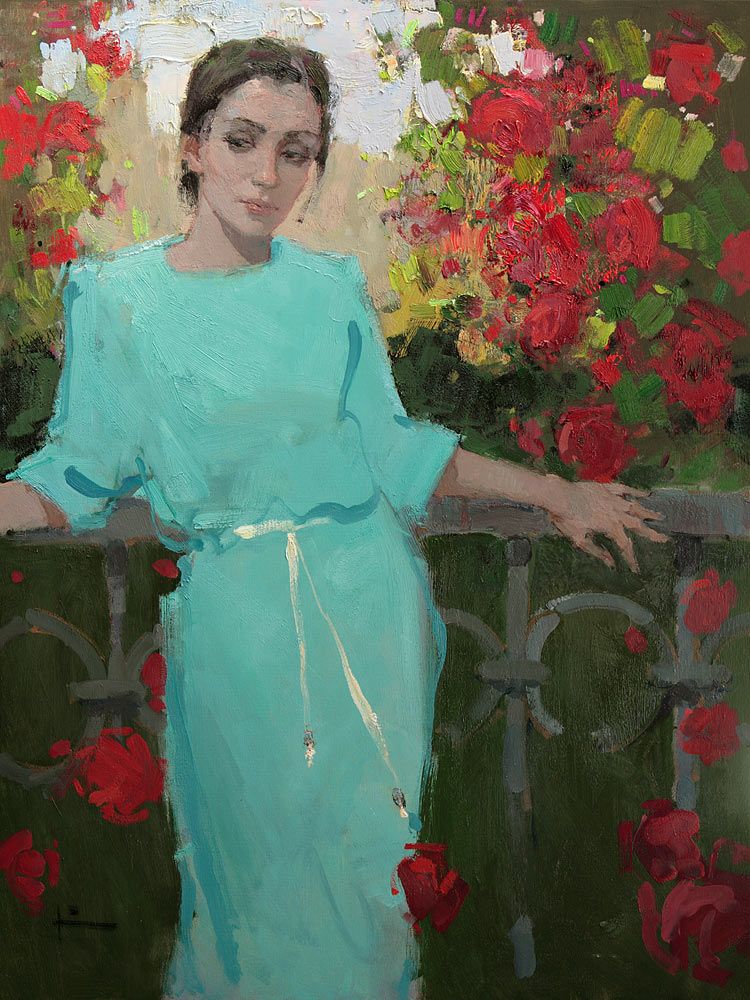
Parisian Woman, 2016. Oil on canvas, 102 × 77 cm
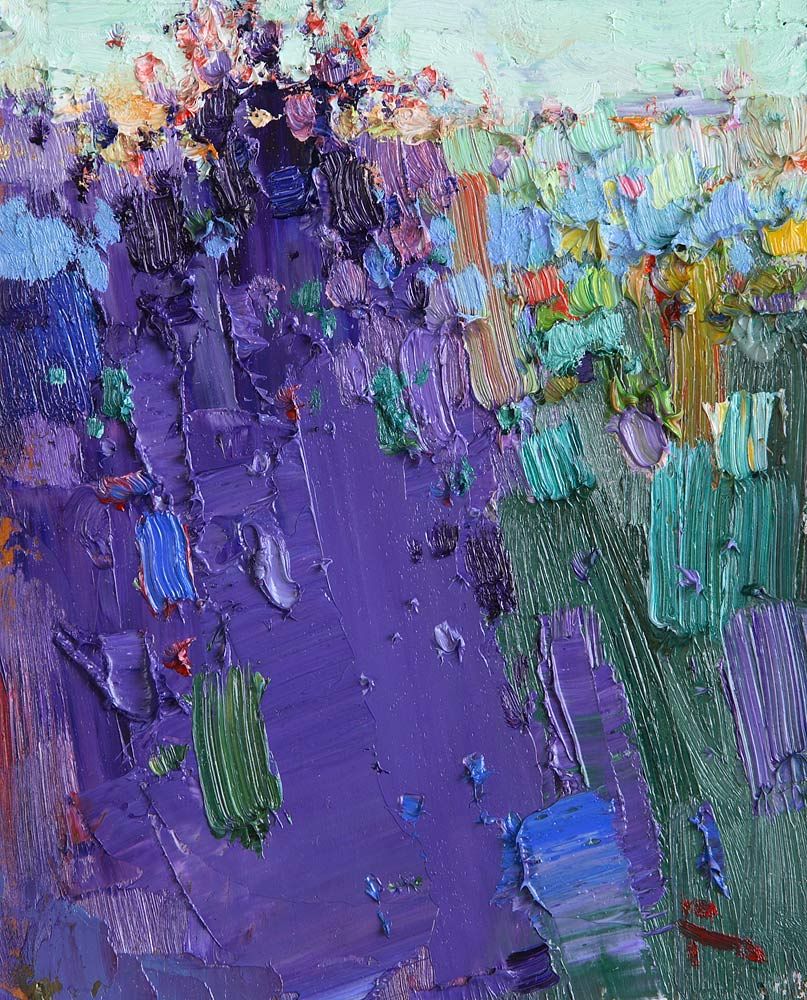
Studied Too Hard, 2018. Oil on canvas, 77 × 60 cm
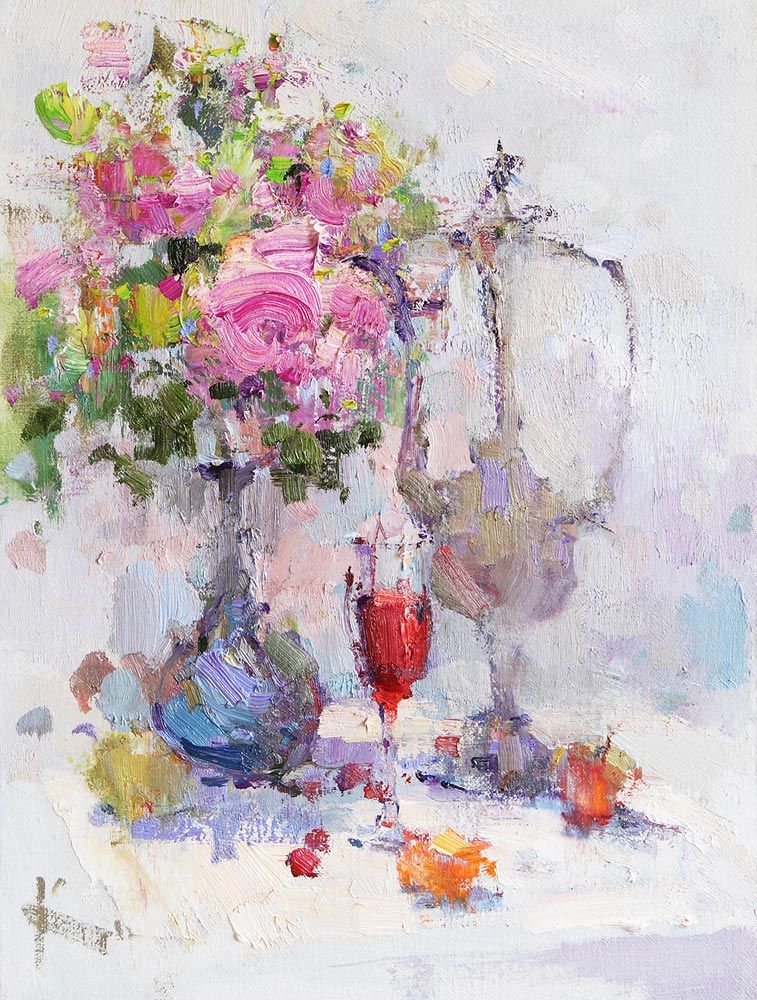
A Glass of Wine, 2013. Oil on canvas, 40 × 30 cm
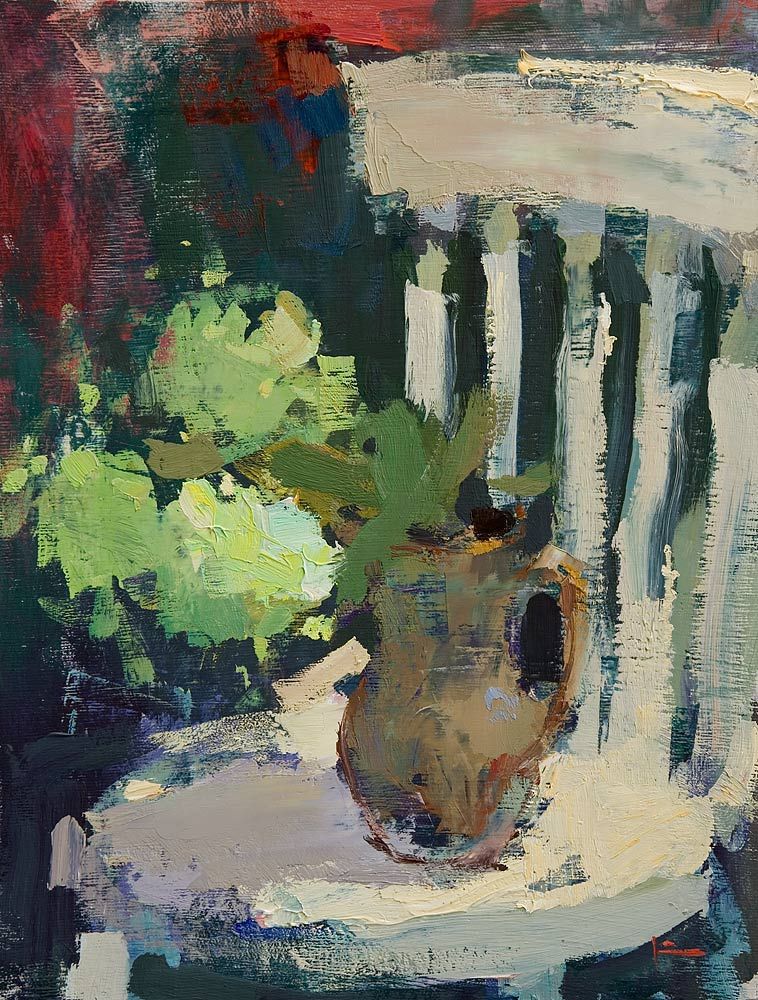
Hydrangeas, 2019. Oil on canvas, 41 × 31 cm
For this reason, accuracy should never be confused with description. A painting overloaded with information may lose its vitality, while a more economical image can convey the essence of a subject with remarkable conviction. What matters is not the quantity of detail but the truthfulness of the relationships between colour, light, space and form. This understanding transforms the role of drawing itself. Rather than serving as an end, it becomes a means of developing visual intelligence. Every line is an attempt to understand structure; every correction is a refinement of perception. Drawing does not simply record what is seen—it teaches the artist how to see. Learning to see is therefore not a stage that can be completed during formal education. It is a lifelong discipline. Experience does not eliminate uncertainty; instead, it reveals new complexities. The more deeply an artist understands painting, the more aware he becomes of everything that remains to be discovered.
Perhaps this is why Korolenkov speaks about painting with such openness and curiosity. Decades of experience have not diminished his desire to question, compare and observe. Every new motif presents another opportunity to test familiar ideas against direct experience. Every painting becomes another lesson. In the end, seeing is not simply the beginning of painting—it is painting itself.
Learning from Nature
For Vyacheslav Korolenkov, working from life remains the foundation of painting. Not because he seeks photographic accuracy, but because direct observation offers something that no photograph, memory or imagination can fully replace. Nature is never static. It changes with shifting light, the movement of the air and the position of the observer. Every encounter becomes unique. The same landscape is never truly the same twice. Morning light organises form differently from the evening sun; a passing cloud can transform the entire tonal structure of a scene within moments; colours that appeared stable only minutes before suddenly reveal unexpected relationships. Painting from life demands constant attention. It asks the artist to recognise what is essential while everything around him continues to change. In the studio, the pace is different, yet the principle remains exactly the same. Whether working from a still life, a portrait or the human figure, Korolenkov is interested not in isolated objects but in the relationships between them. Colour exists only in relation to another colour. Form is understood through the space that surrounds it. Light does not illuminate separate objects—it unites them into a single visual structure.
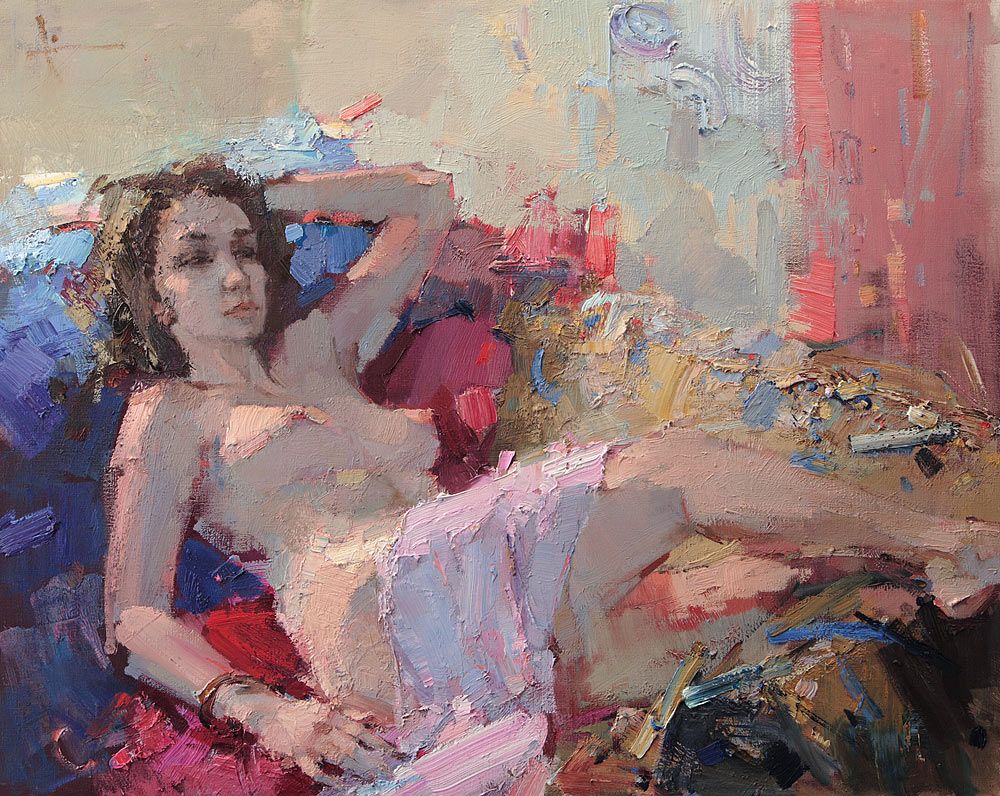
Polina, 2014. Oil on canvas, 61 × 77 cm
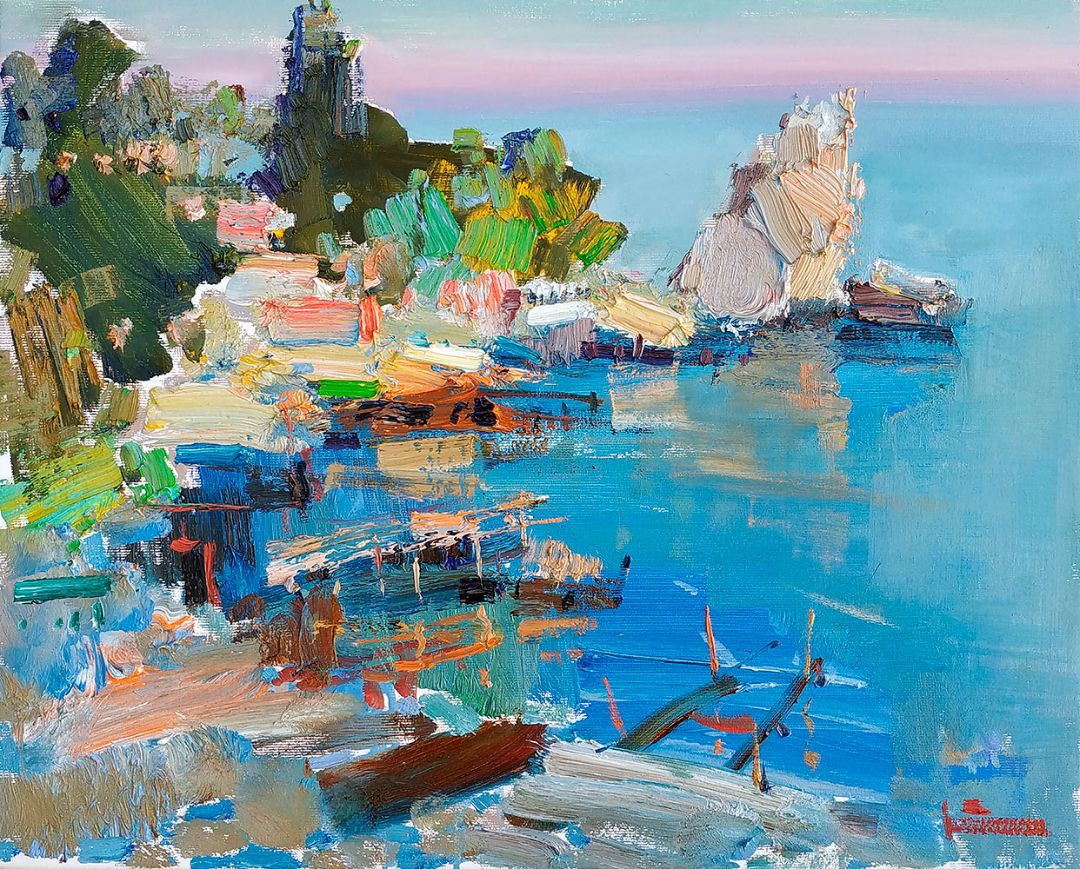
Chekhov Bay in Gurzuf, 2021. Oil on canvas, 41 × 51 cm
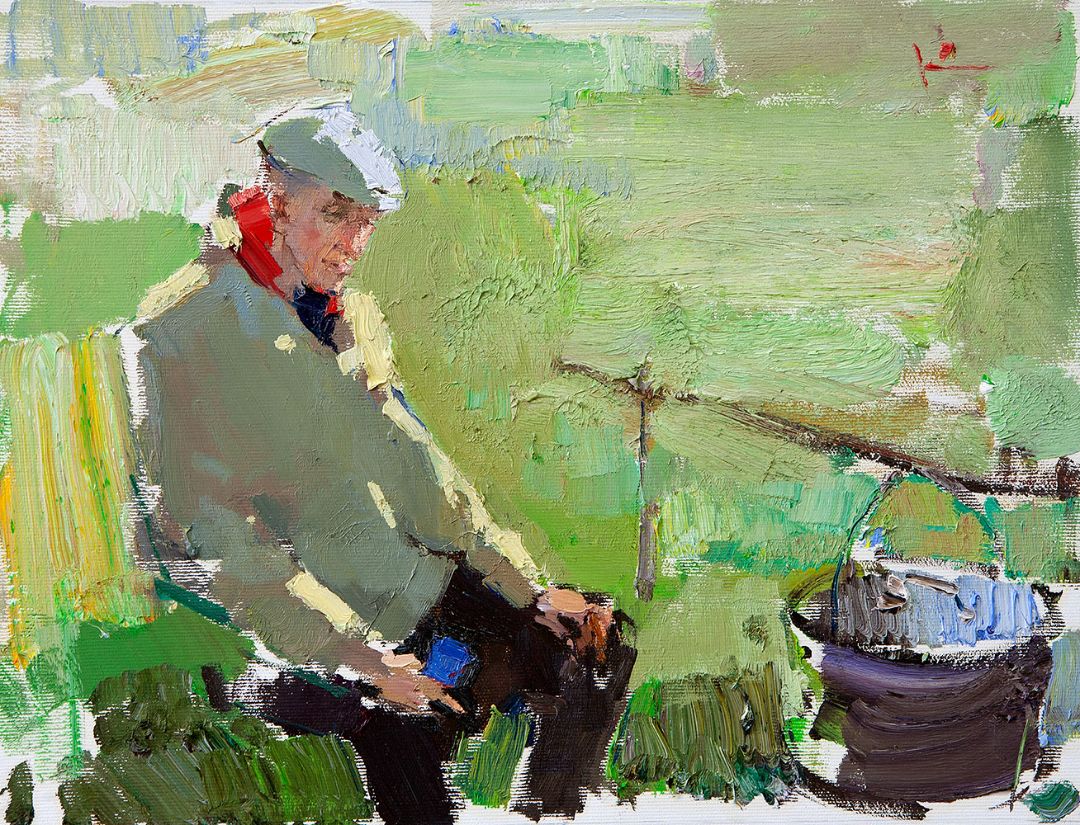
Fish Soup, 2021. Oil on canvas, 31 × 41 cm

On a Sunlit Terrace, 2018. Oil on canvas, 51 × 61 cm
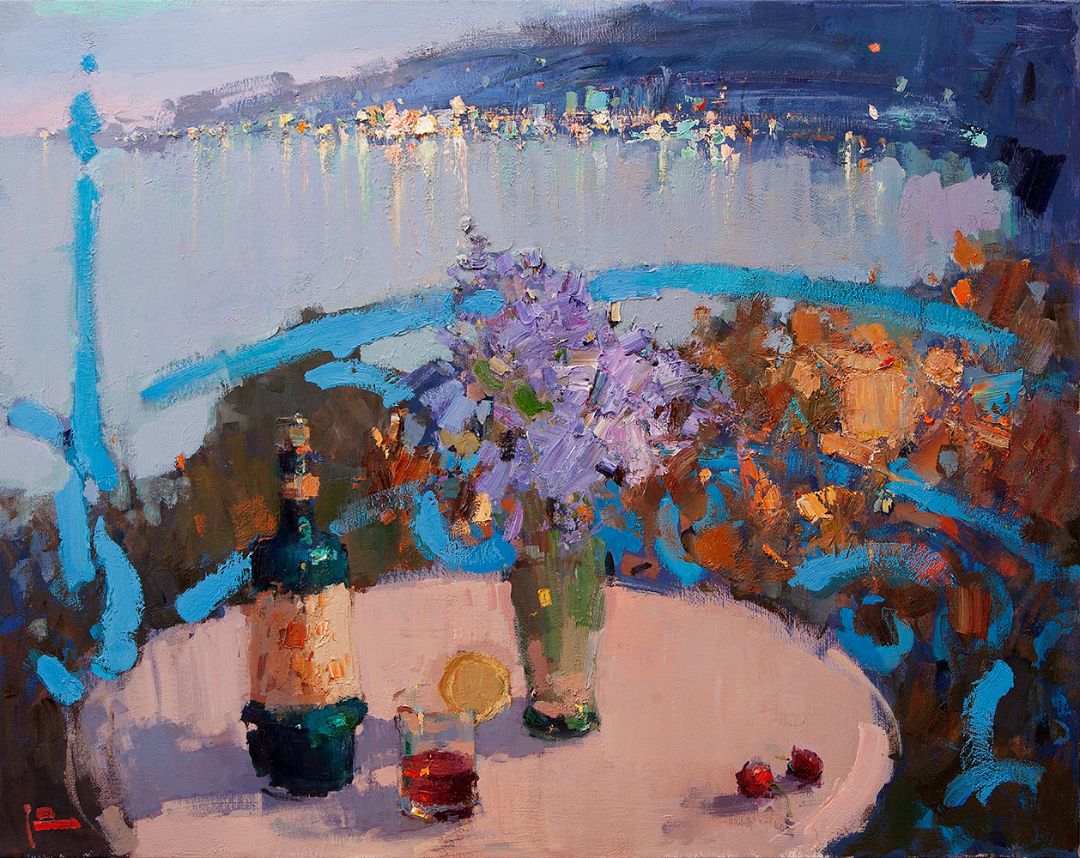
Amaro Montenegro, 2020. Oil on canvas, 61 × 77 cm
This way of working requires the artist to abandon assumptions. An object we instinctively describe as white may contain subtle violets, greens or warm greys. A dark surface can appear lighter than one beside it. Distance is not created simply by reducing detail, but through delicate changes in colour, tone and atmosphere. Again and again, nature challenges what we think we know.
For Korolenkov, these moments of uncertainty are among the most valuable aspects of painting. They prevent routine from replacing observation. Instead of relying on familiar formulas, the artist is compelled to look again, compare again and question again. Every correction brings the painting closer not to an objective truth, but to a more truthful perception.
This is why he continues to work outdoors throughout the year. Plein-air painting is not merely a tradition or a preferred genre; it is a discipline that sharpens vision. It teaches decisiveness without haste, confidence without rigidity and freedom without losing structure. Every changing shadow, every shift in weather and every variation in atmosphere becomes part of the lesson. Nature, in Korolenkov's view, remains the greatest teacher an artist can have. It offers no ready-made solutions and no final answers. Instead, it continually reminds us that seeing is an active process—one that demands patience, honesty and the willingness to begin again with every new painting.
Finding a Visual Language
Academic training forms the invisible framework of Vyacheslav Korolenkov's paintings, yet it never dominates them. Drawing, composition and structure are not displayed as achievements in themselves; they exist to support something far more important—the freedom to respond to life with confidence, sensitivity and clarity.
His paintings reveal a rare balance between discipline and spontaneity. Strong construction allows the brushwork to remain open, expressive and immediate. Forms may be simplified, edges softened and details reduced, yet the underlying structure always holds the image together. Freedom, in this sense, is never accidental. It is made possible by knowledge. Korolenkov works across landscape, still life, portraiture and the human figure, approaching each subject with the same fundamental question: not what does it look like, but how does it exist in light? Rather than describing objects individually, he seeks to reveal the atmosphere that connects them. A landscape becomes a study of air and distance; a still life explores the dialogue between colour, texture and illumination; a portrait grows from the rhythms of form rather than superficial likeness alone.
Among the painters to whom he repeatedly returns are Konstantin Korovin, Valentin Serov and Nikolai Fechin.
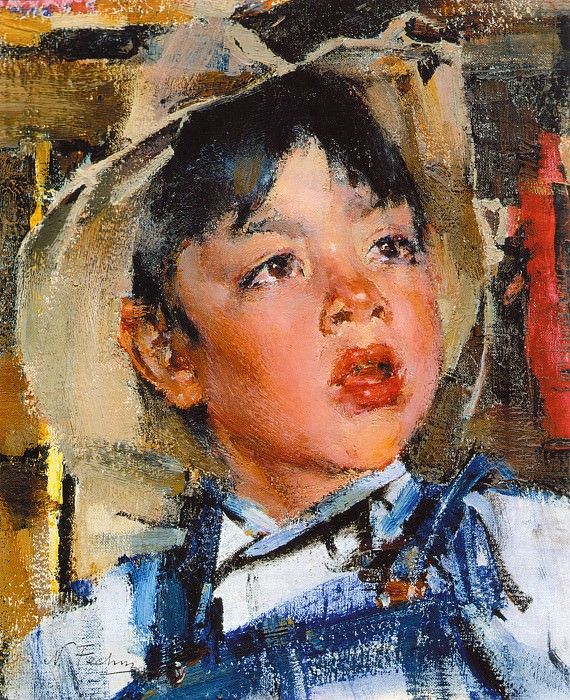
Nikolai Fechin. Boy, 1927–1933. Oil on canvas
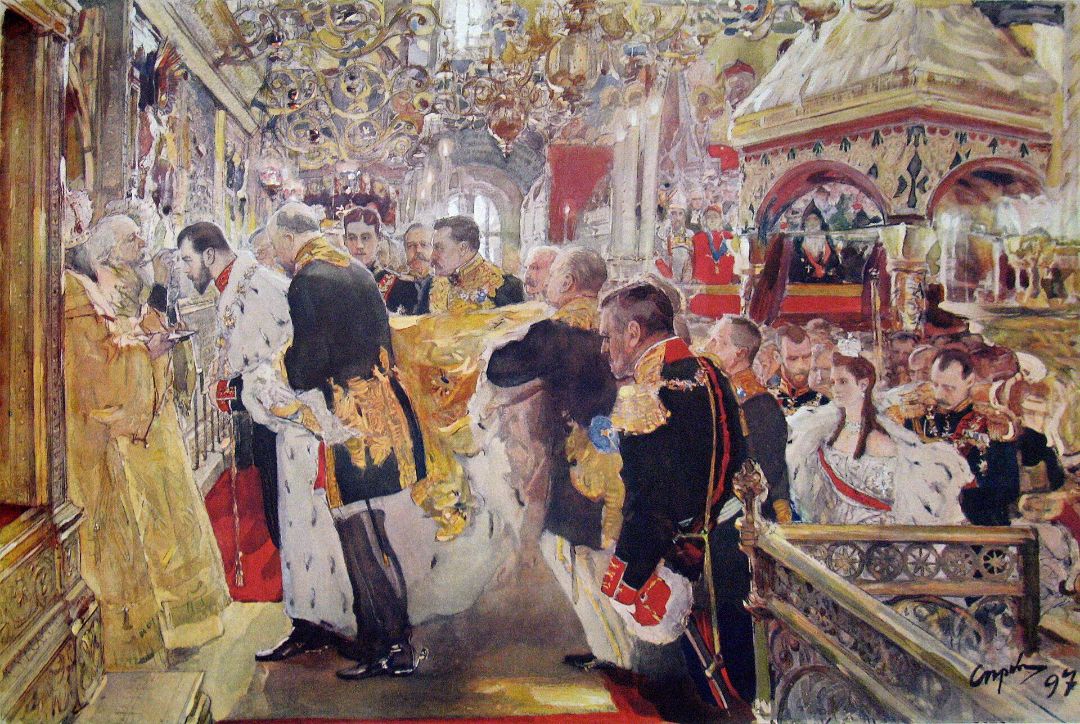
Valentin Serov. Coronation of Nicholas II, 1896. Oil on canvas
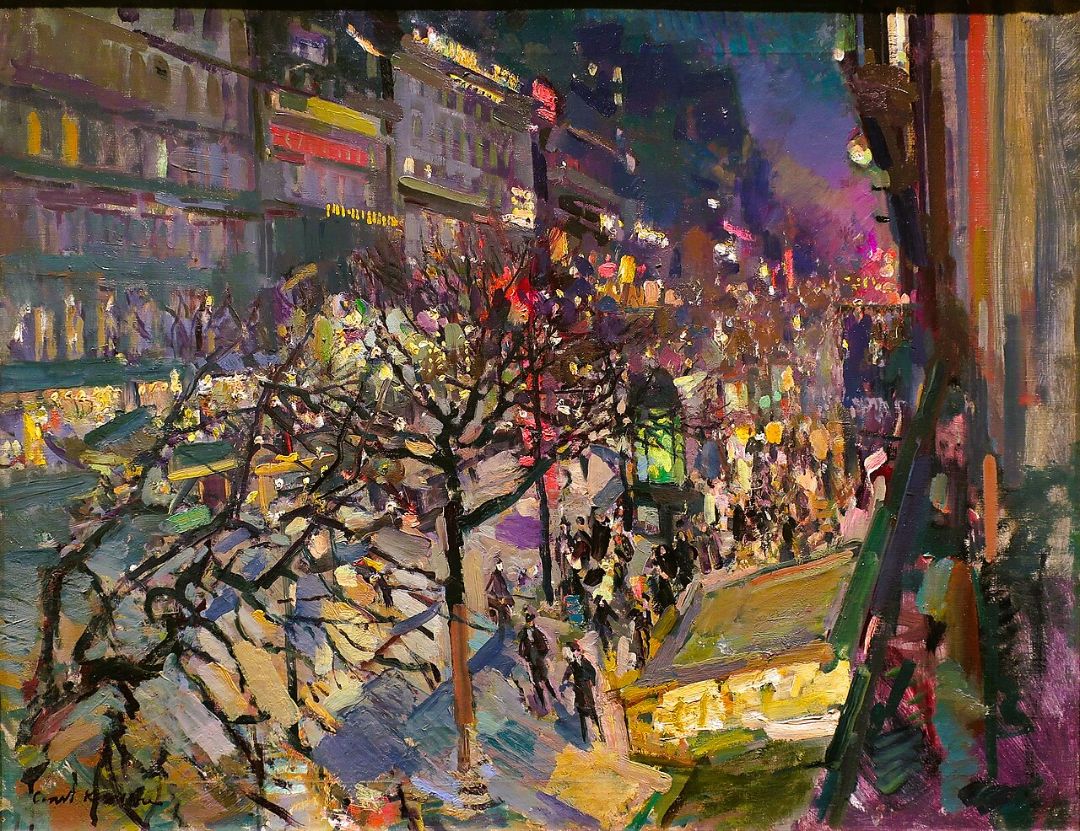
Konstantin Korovin. Boulevard Montmartre at Night, 1922. Oil on canvas. Karl Ernst Osthaus Museum, Hagen, Germany
Each represents a different aspect of painting that continues to shape his thinking. From Korovin comes an extraordinary understanding of light and the ability to preserve the freshness of direct observation. Serov demonstrates how rigorous drawing can coexist with remarkable freedom and vitality. Fechin reveals the expressive possibilities of painterly gesture while never sacrificing the structural integrity of form. These are not artists Korolenkov seeks to imitate. They are artists he continues to learn from. Equally significant is the influence of the French Impressionists. Their work transformed the understanding of colour, atmosphere and changing light, showing that painting could record not only the appearance of the world but also the experience of seeing it. Korolenkov's affinity with Impressionism, however, lies not in stylistic imitation. What interests him is its method of observation and its commitment to painting directly from life. Studying the great masters has never been, for him, an act of admiration alone. He approaches their paintings analytically, asking practical questions. Why does this composition remain convincing? How is space constructed? What makes one colour resonate beside another? Where does simplification strengthen an image rather than weaken it?
For Korolenkov, art history is not a gallery of untouchable masterpieces but an ongoing professional conversation. Every generation inherits the discoveries of those who came before, yet every artist must test those discoveries against personal experience. Only then can influence become understanding rather than imitation. A personal visual language is never invented overnight. It develops gradually through observation, study, reflection and years of sustained practice. For Korolenkov, that process remains as compelling today as it was at the very beginning of his artistic journey.
In Search of Painting
For Vyacheslav Korolenkov, painting has never been about developing a recognisable style for its own sake. A distinctive manner may emerge naturally over time, but it should never become an end in itself. The moment an artist begins repeating familiar solutions simply because they have proved successful, genuine exploration begins to fade.
Throughout his lectures and interviews, Korolenkov returns to one recurring idea: every painting should pose a question rather than confirm an answer. That question may concern colour, composition, light or the structure of form, but it must remain alive throughout the entire process. Once the artist believes he already knows exactly how the painting will unfold, curiosity disappears—and with it, much of the painting's vitality.
This attitude explains his reluctance to rely on formulas. There is no universal method capable of solving every pictorial problem. Each landscape, portrait or still life demands its own visual language, determined by the particular conditions of light, atmosphere and form. What worked yesterday may be entirely inappropriate today. The same principle shapes his understanding of artistic success. Recognition, exhibitions and public appreciation are deeply valued, yet they cannot become the driving force behind creative work. If the desire to satisfy expectations begins to outweigh the desire to discover something new, painting risks becoming predictable—even to the artist himself. For Korolenkov, uncertainty is not a weakness but an essential part of artistic practice. Every new canvas begins with the acceptance that its final outcome cannot be fully known in advance. Decisions are tested, reconsidered and, when necessary, abandoned altogether. A painting develops through observation and response rather than through the execution of a predetermined plan.

City of the Sun, 2015. Oil on canvas, 28 × 29 cm
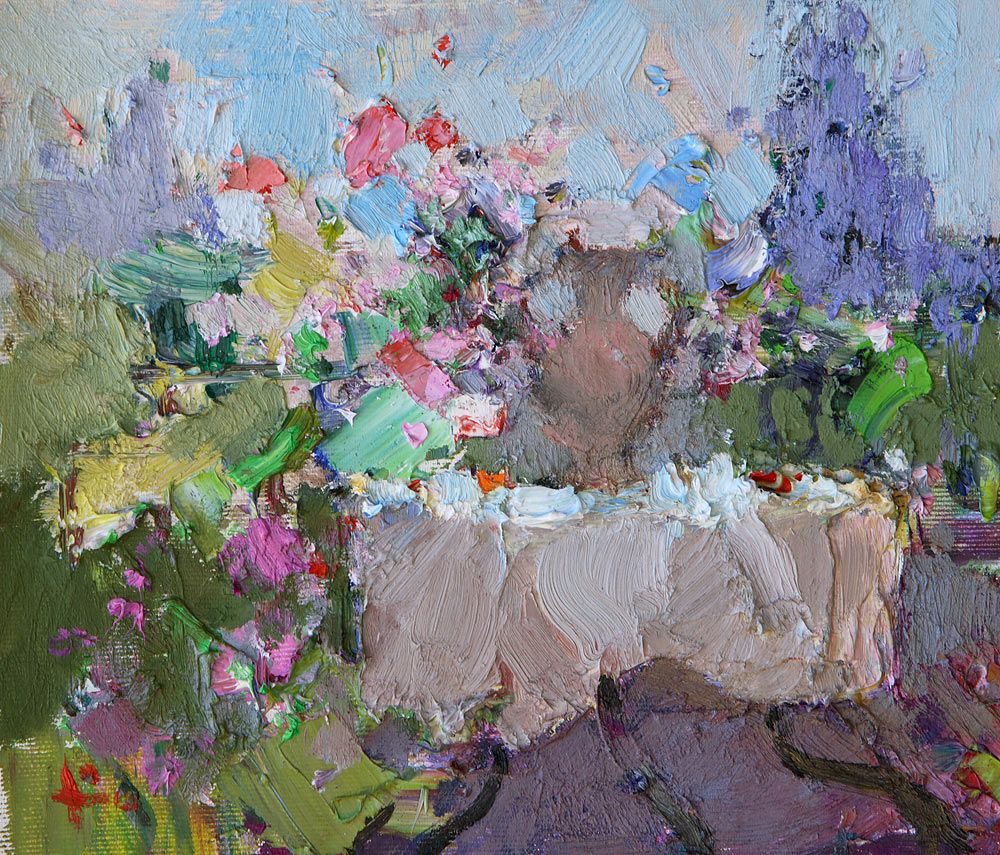
Amphora. Oil on canvas, 22 × 25 cm
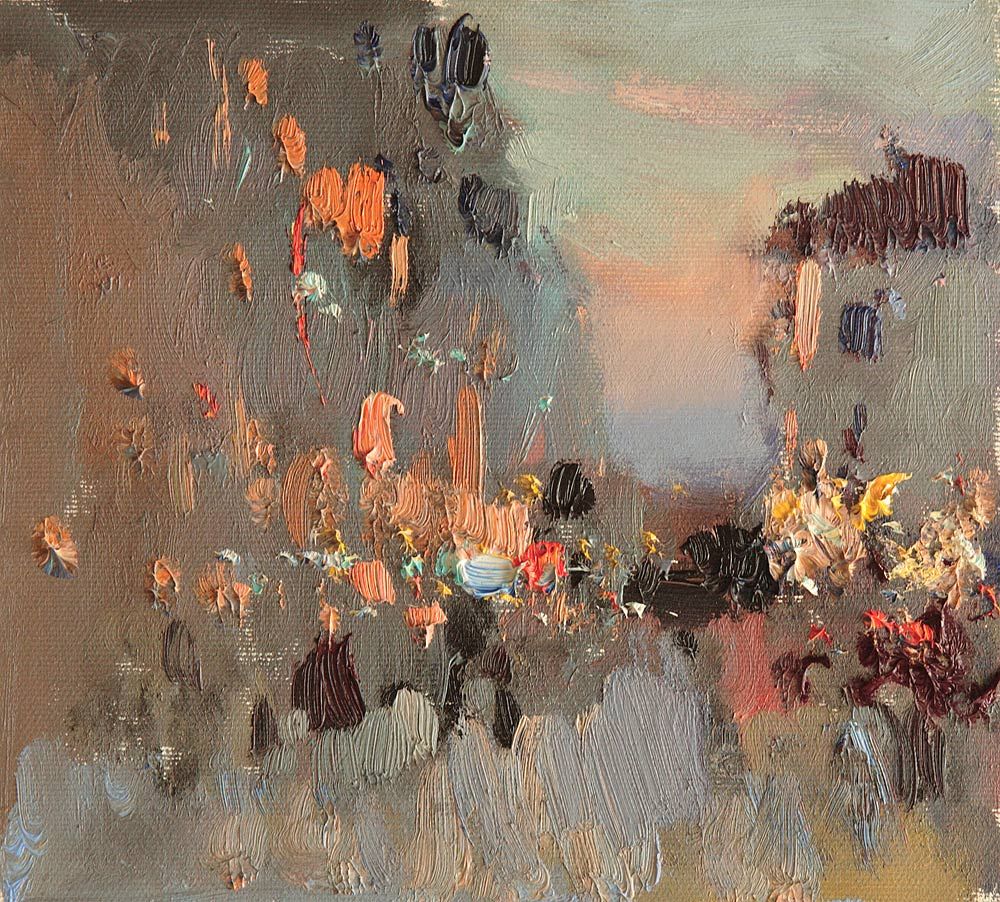
Evening in Paris, 2016. Oil on canvas, 21 × 23 cm
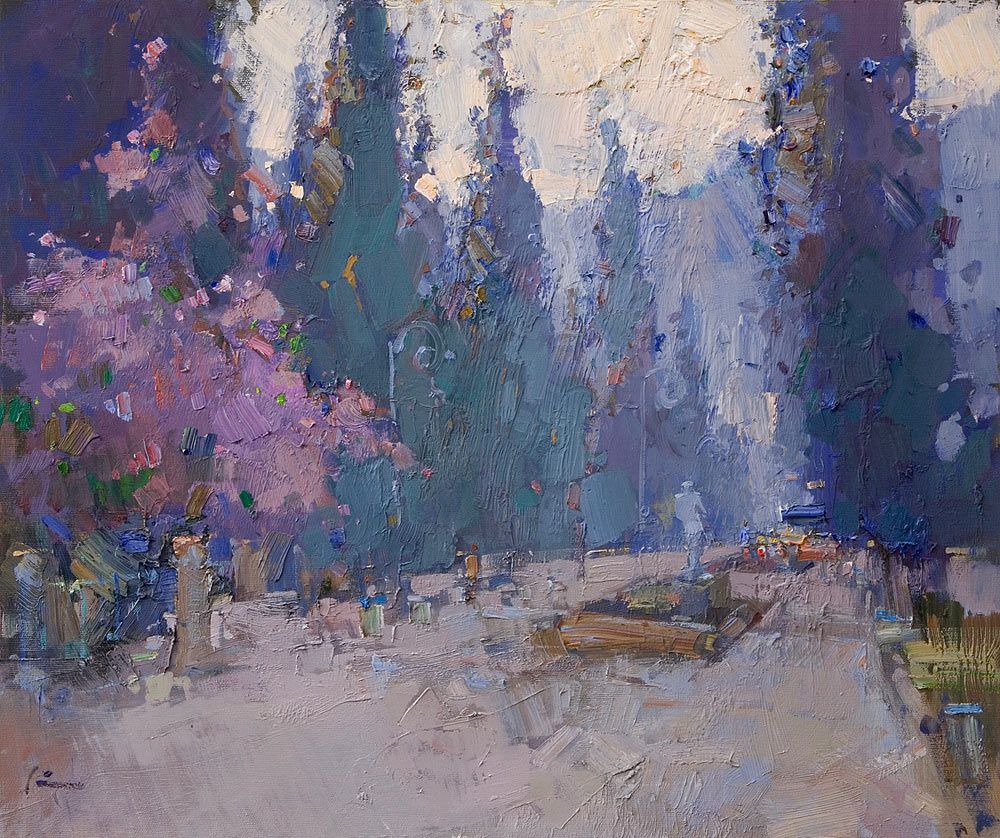
Alley, 2016. Oil on canvas, 51 × 61 cm
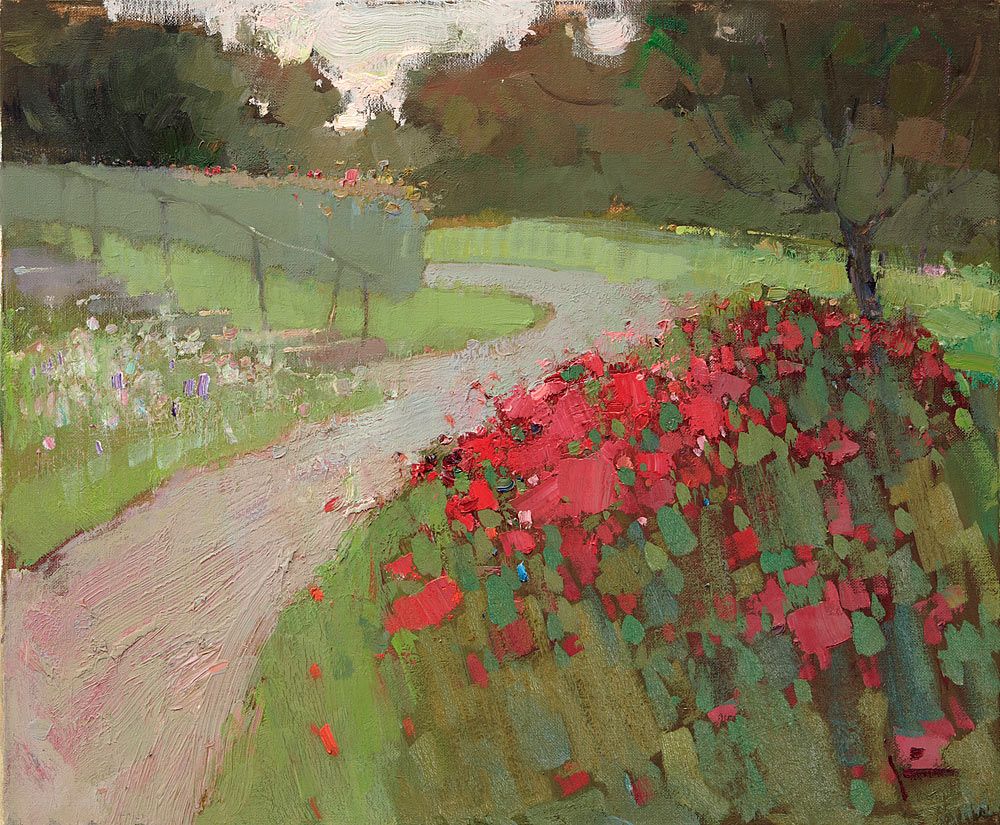
Captivated by Roses, 2016. Oil on canvas, 50 × 60 cm
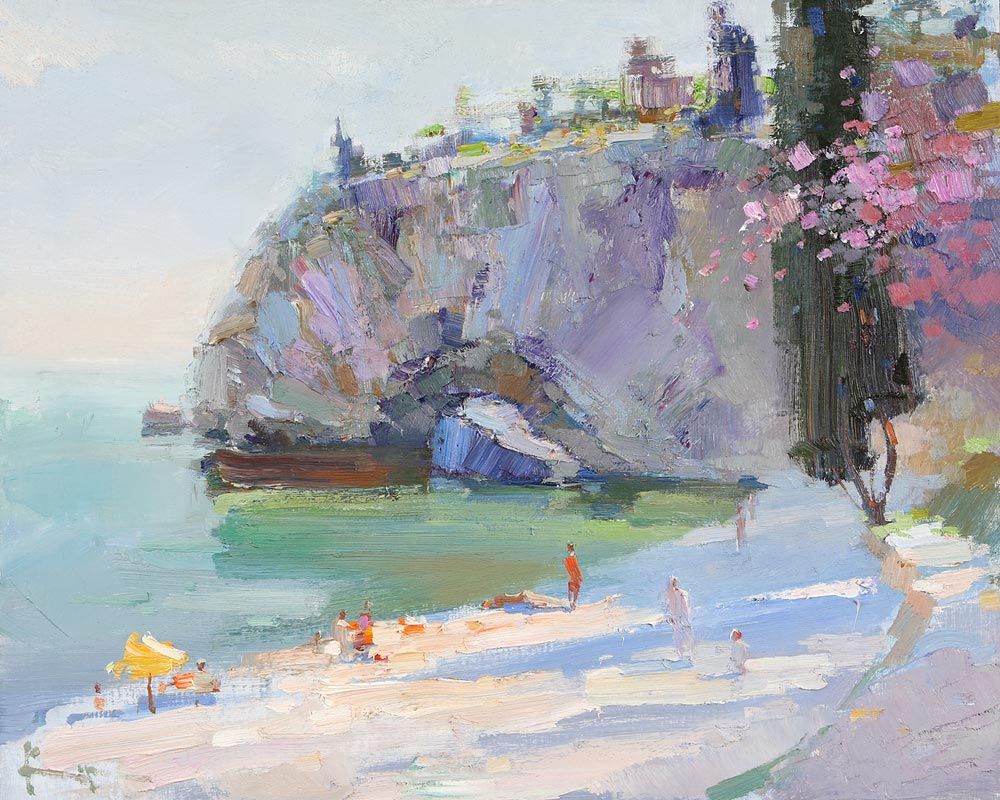
Chaliapin's Grotto, 2013. Oil on canvas, 50 × 60 cm
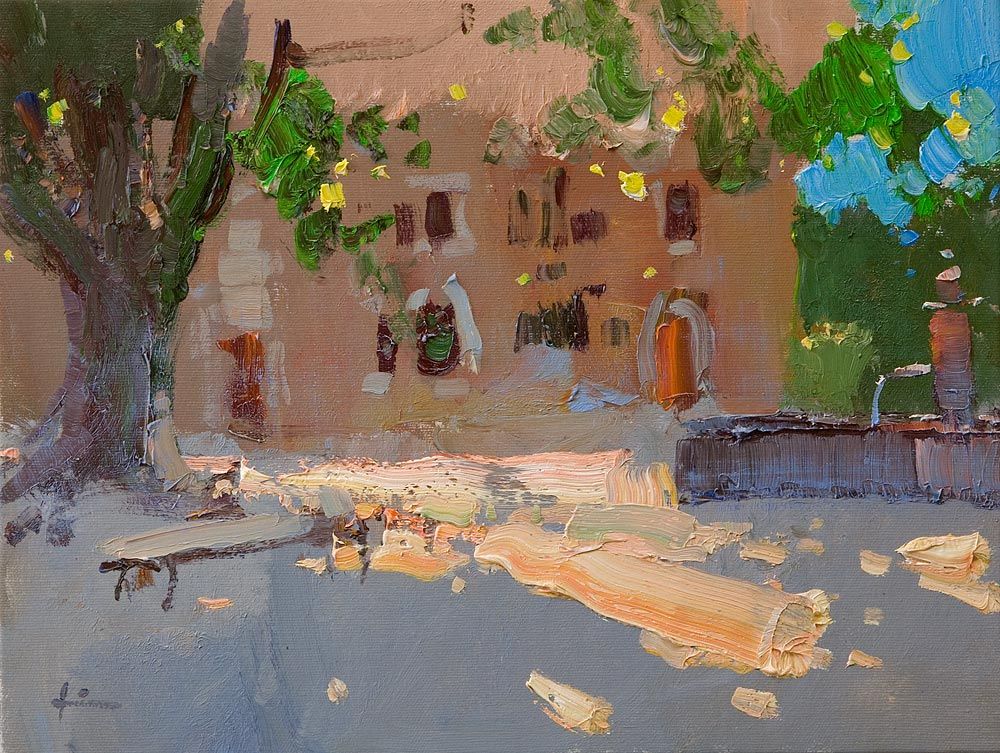
Cheerful Fountain, 2018. Oil on canvas, 31 × 41 cm
This search extends well beyond the studio. Korolenkov regularly returns to the paintings of artists he has admired for decades, yet he rarely sees them in quite the same way twice. As his own experience evolves, so too does his understanding of theirs. Familiar masterpieces reveal new relationships, while earlier conclusions give way to fresh questions.
This is why he speaks of painting not as a destination but as a lifelong conversation. Every completed work leads naturally to another question; every discovery opens the possibility of further exploration. There is no final solution—only a deeper understanding of the endlessly changing act of seeing.
Perhaps this willingness to remain a student throughout his life explains the openness that characterises both his work and his teaching. Curiosity, rather than certainty, continues to guide his practice. And it is precisely this curiosity that keeps painting alive.
Sharing Experience
Teaching emerged naturally from Vyacheslav Korolenkov's own artistic practice rather than as a separate profession. As his understanding of painting deepened, so too did his desire to share the questions, discoveries and methods that had shaped his own development.
His workshops differ noticeably from conventional demonstrations of technique. Although practical skills are always present, they are never treated as isolated exercises. Every discussion of brushwork, colour or composition leads back to a more fundamental question: Why does this solution work? Understanding always takes precedence over imitation.
Rather than encouraging students to reproduce his own paintings, Korolenkov seeks to cultivate independent ways of thinking. Observation, comparison and analysis become more important than copying visible results. Students are encouraged to understand the reasoning behind every decision, enabling them to solve new pictorial problems for themselves instead of relying on memorised formulas.
Questions occupy a central place in his teaching. Why should one edge remain sharp while another dissolves? Why does a particular colour appear convincing in one context but fail completely in another? How can simplification strengthen an image rather than weaken it? Such discussions transform practical instruction into a broader exploration of visual thinking.
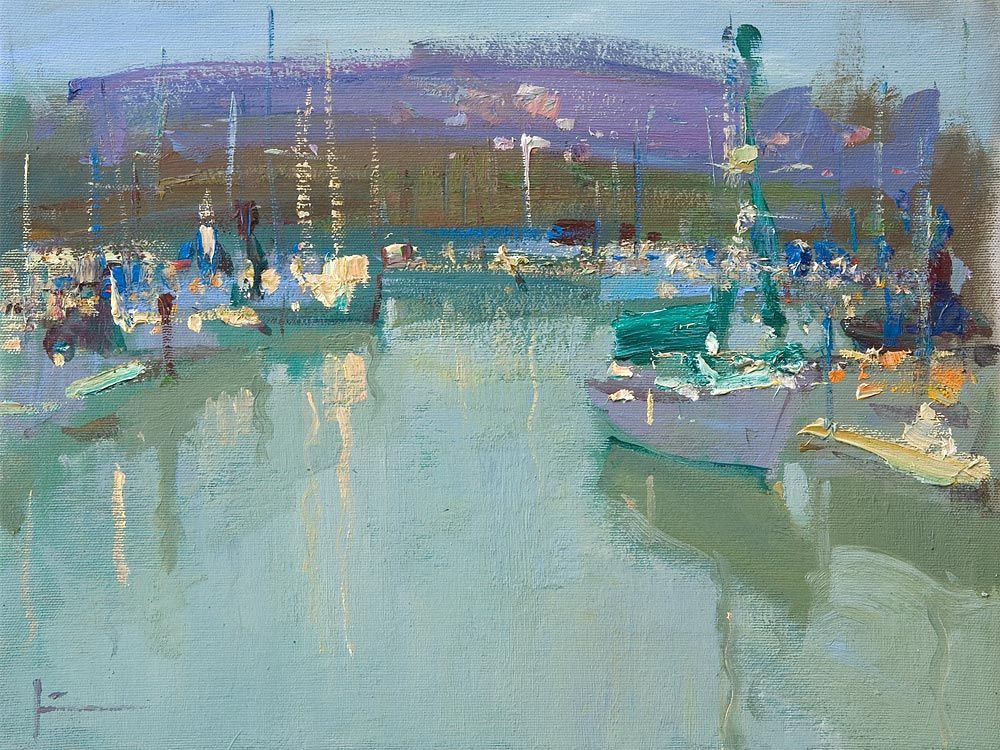
Berkeley Marina, 2018. Oil on canvas, 31 × 41 cm
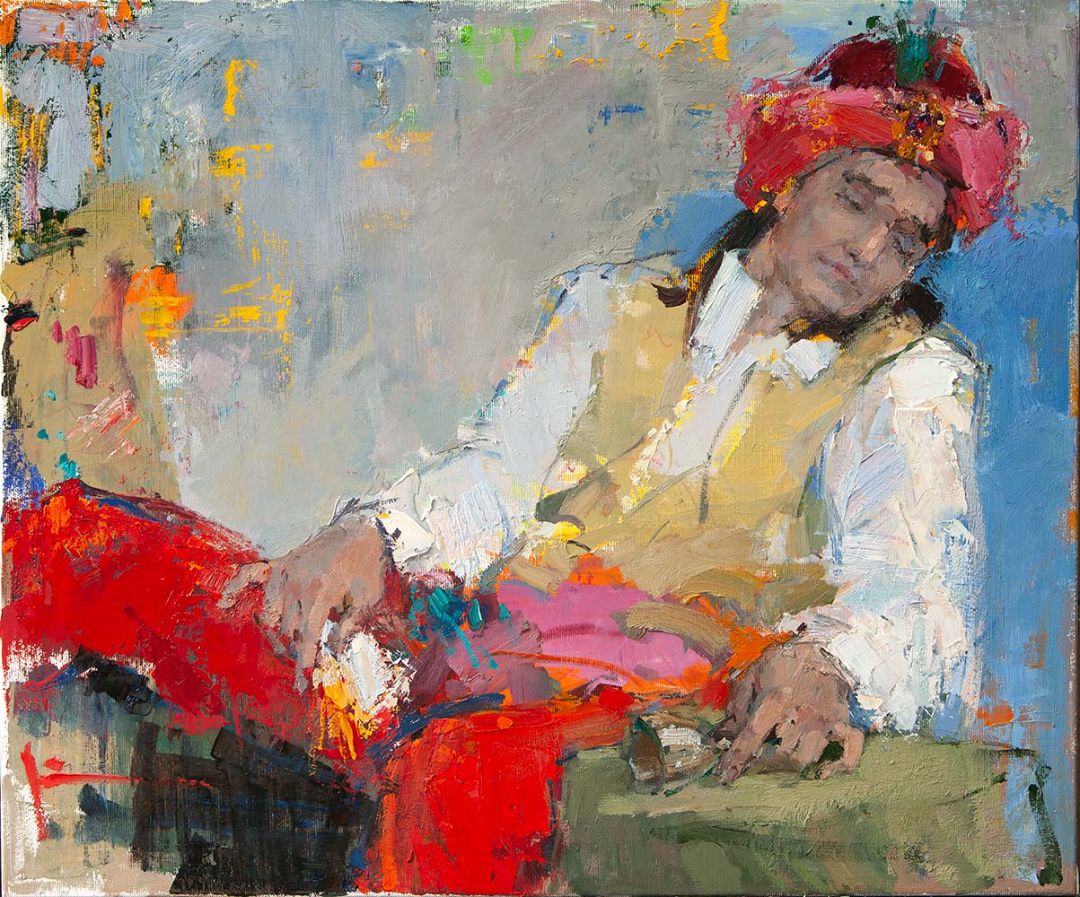
A Wizard Needs Rest, 2022. Oil on canvas, 51 × 61 cm
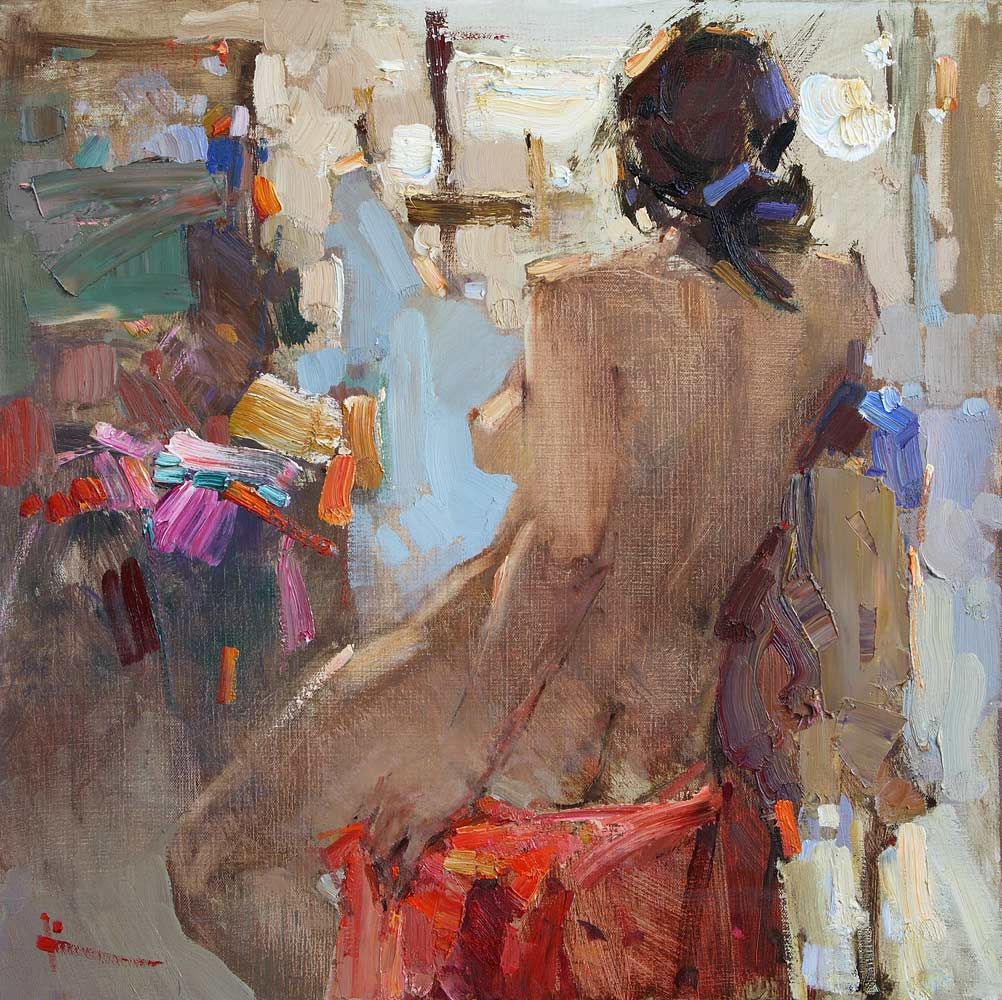
In the Artist's Studio II, 2014. Oil on canvas, 60 × 60 cm
Beyond the studio, Korolenkov has reached an international audience through lectures, articles, online courses and his YouTube channel. These platforms have allowed artists from different countries to engage with his approach, extending conversations that once took place only during workshops and plein-air sessions.
Teaching also continues to influence his own development. Explaining complex artistic ideas requires constant reflection and refinement. Principles that may seem intuitive while painting must be expressed clearly in words, often revealing new aspects of the creative process itself.
For Korolenkov, learning and teaching are inseparable. Every conversation with students becomes another opportunity to examine his own assumptions, reconsider familiar ideas and continue learning alongside those he teaches. Education, in his view, is not the transmission of certainty but the sharing of an ongoing search.
The Artist Today
Today, Vyacheslav Korolenkov continues to divide his time between the studio, the landscape and the classroom. These are not separate aspects of his career but different expressions of the same lifelong commitment to painting. Each informs the others. A painting raises new questions; teaching encourages him to articulate them more clearly; dialogue with students often leads back to the easel with renewed insight.
Despite decades of professional experience, Korolenkov speaks about painting with the curiosity of someone who still considers himself a student. Recognition has never diminished his desire to question familiar solutions or to challenge his own understanding. Every exhibition, every workshop and every new painting represents another stage in an ongoing dialogue with painting itself.
Those encountering his work for the first time often notice its freshness: confident brushwork, luminous colour and a remarkable sense of atmosphere. Yet beneath this apparent spontaneity lies years of disciplined observation, rigorous drawing and thoughtful analysis. Freedom, in Korolenkov's painting, is never accidental; it is the result of knowledge patiently acquired and continually tested against life. His work reminds us that painting is not simply about recording appearances. It is about understanding relationships—between light and colour, form and space, observation and memory. Above all, it is about remaining open to discovery, regardless of experience or achievement.
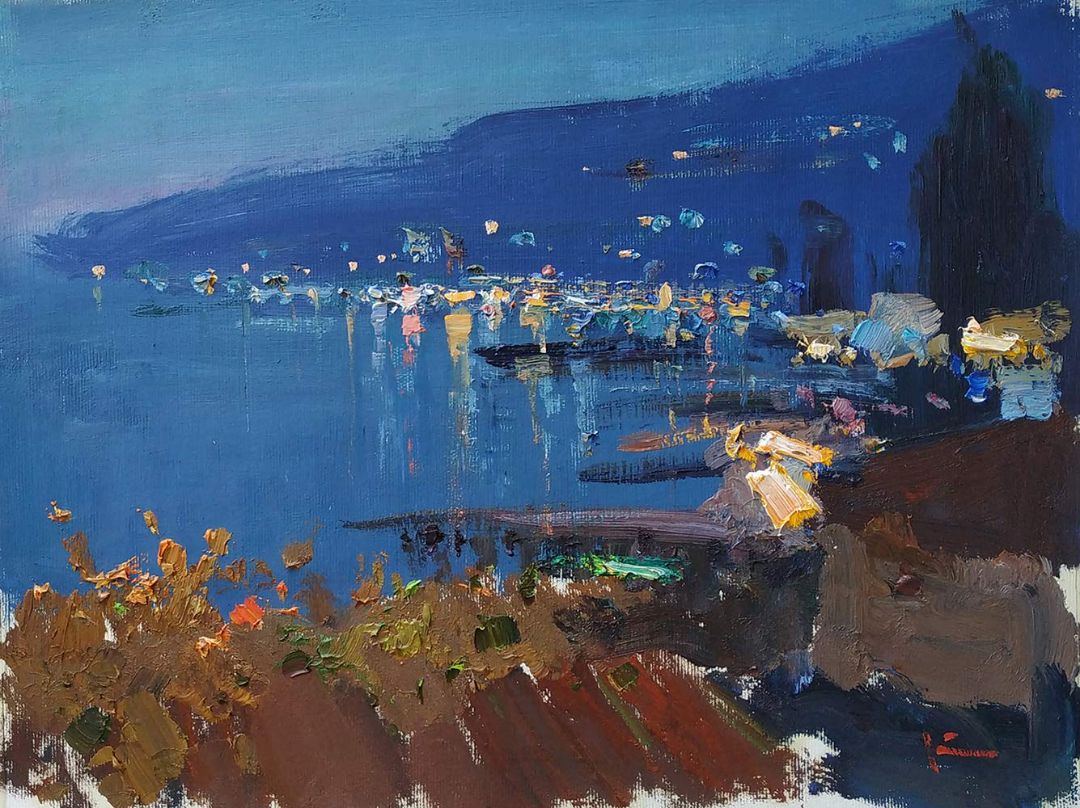
Evening Coolness, 2020. Oil on canvas, 31 × 41 cm
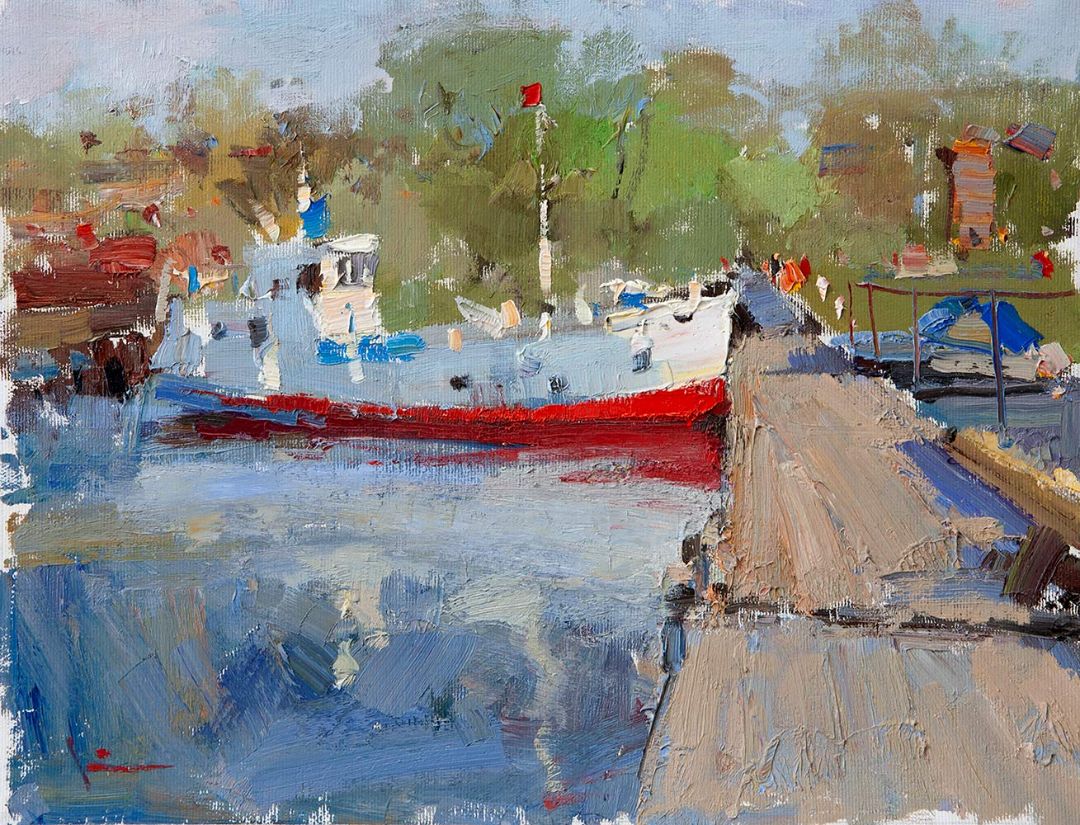
Cheerful Little Boat, 2021. Oil on canvas, 31 × 41 cm
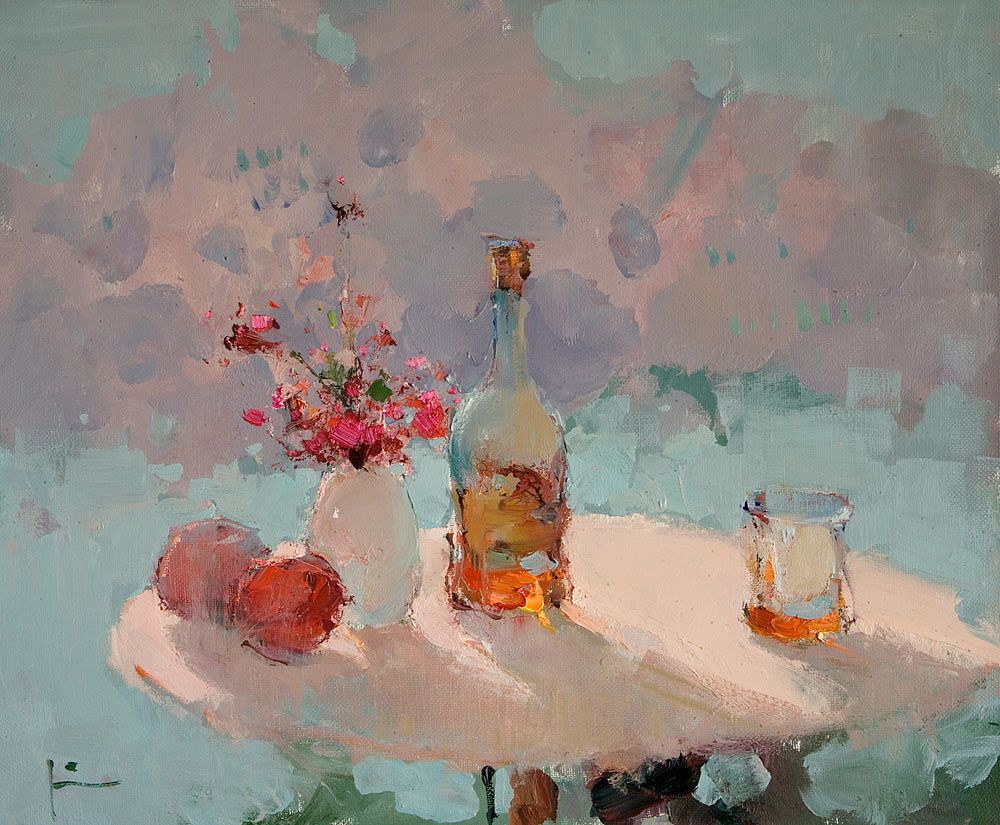
Cognac Mood, 2018. Oil on canvas, 50 × 60 cm
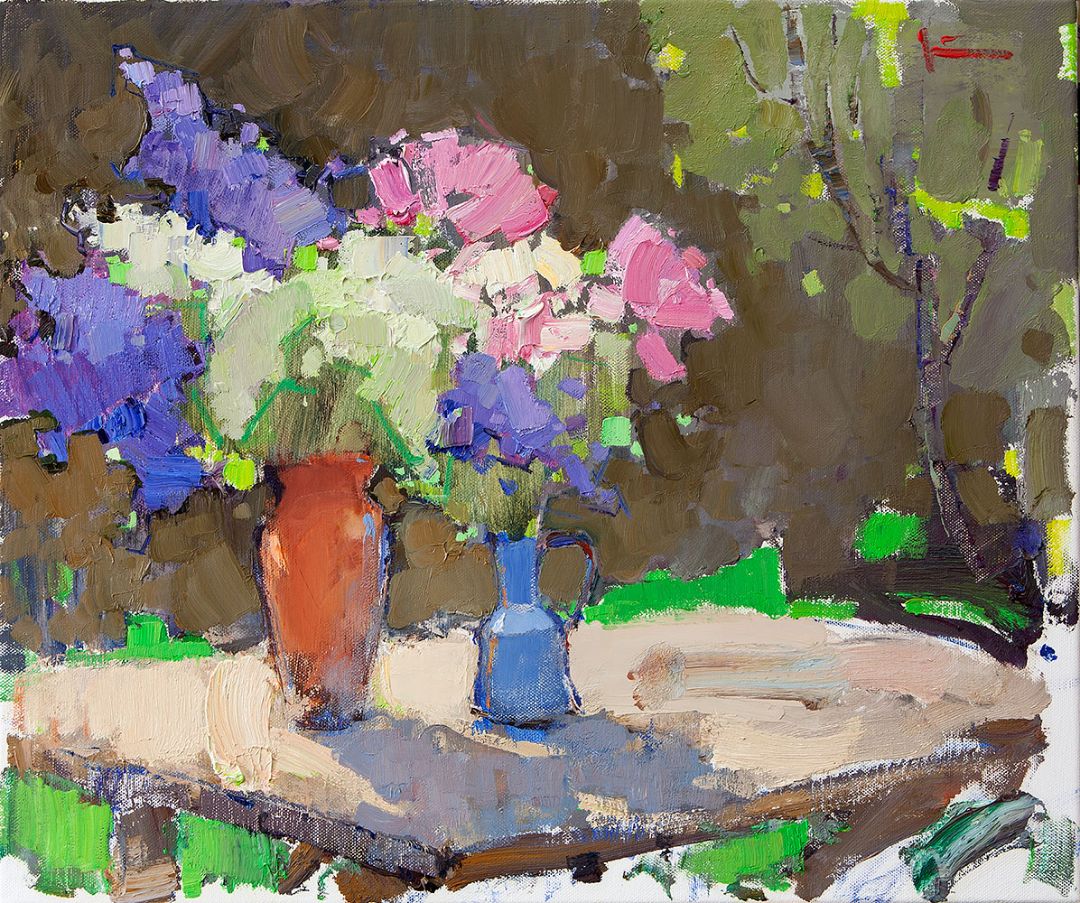
Lilacs and Peonies, 2020. Oil on canvas, 46 × 55 cm
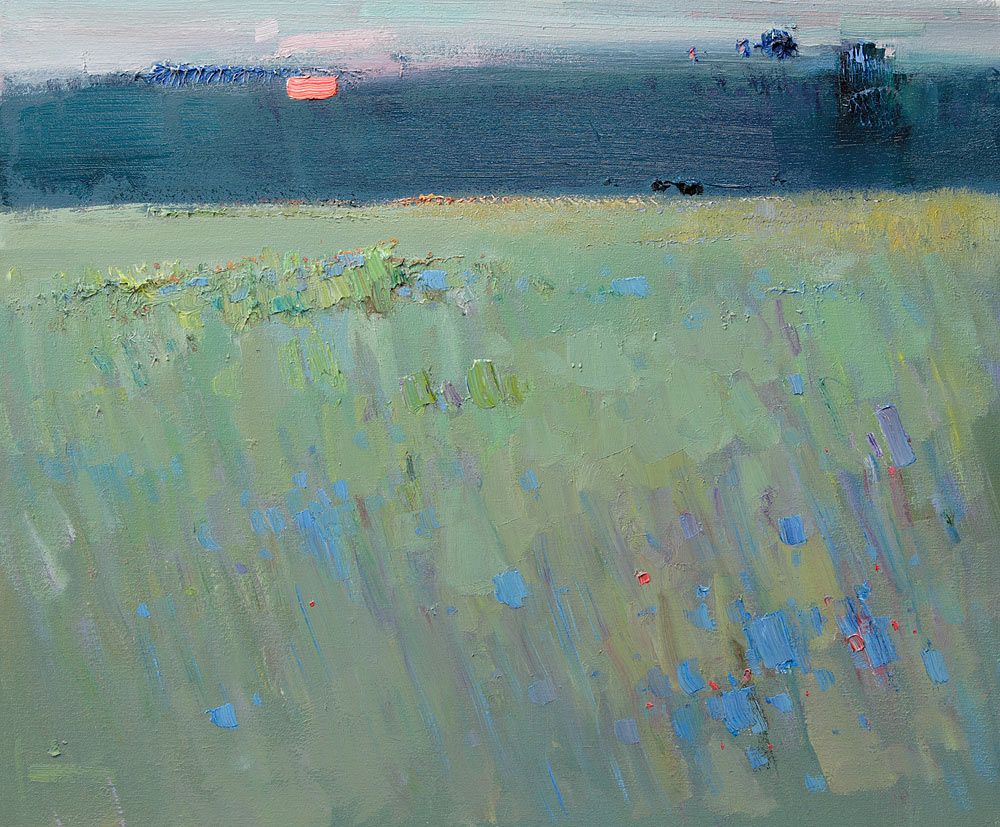
Cornflower Evening, 2017. Oil on canvas, 50 × 60 cm
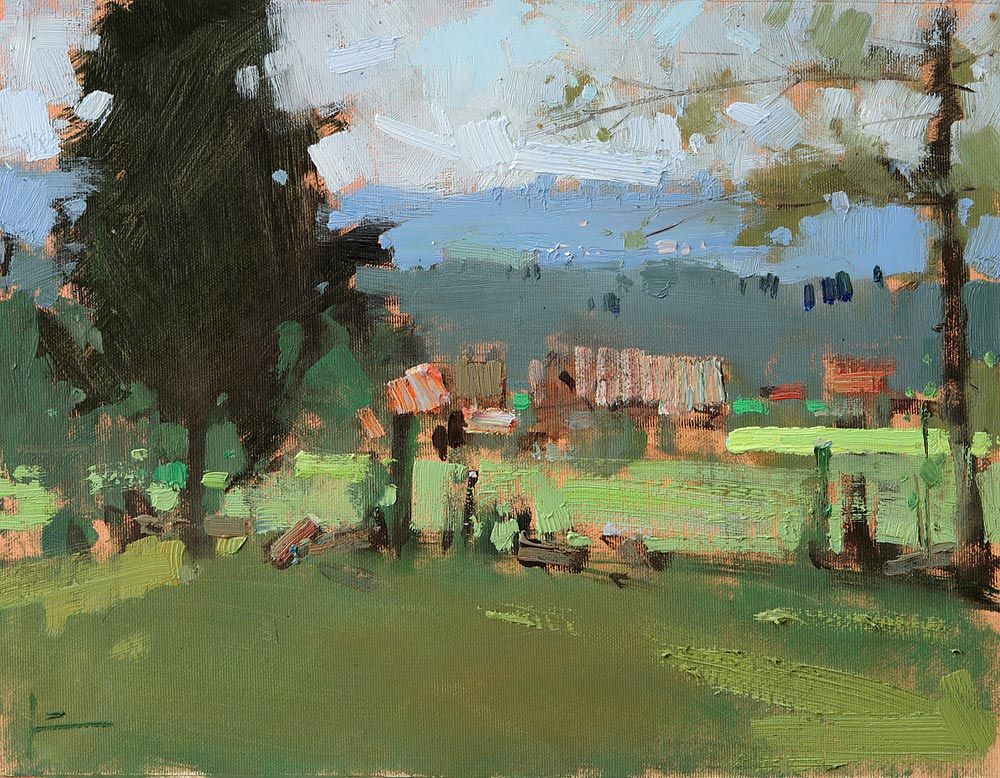
Cosy Glade, 2017. Oil on canvas, 31 × 41 cm

On the Farm, 2021. Oil on canvas, 31 × 41 cm
Learning Never Ends
"How do we learn to see?"
The question that opens this essay remains unanswered—and perhaps that is precisely the point.
For Vyacheslav Korolenkov, painting offers no definitive conclusions. Every finished canvas becomes the beginning of another conversation. Every new landscape, portrait or still life presents another opportunity to look more carefully, to question familiar assumptions and to deepen one's understanding of the visible world.
Throughout his career—as a painter, teacher and lecturer—he has consistently returned to the same belief: artistic development depends not on accumulating techniques, but on transforming perception. Skill may be learned, experience may be gained, but the ability to see continues to evolve throughout a lifetime. This philosophy explains both the character of his paintings and the generosity with which he shares his experience. His aim has never been to create followers who paint in his manner. Instead, he encourages artists to develop an independent way of seeing—to ask better questions, to trust direct observation and to remain intellectually curious.
Perhaps this is the most enduring lesson to be found in his work.
Painting is not a destination but a lifelong practice of looking more deeply.
And learning to see is a journey that never truly ends.


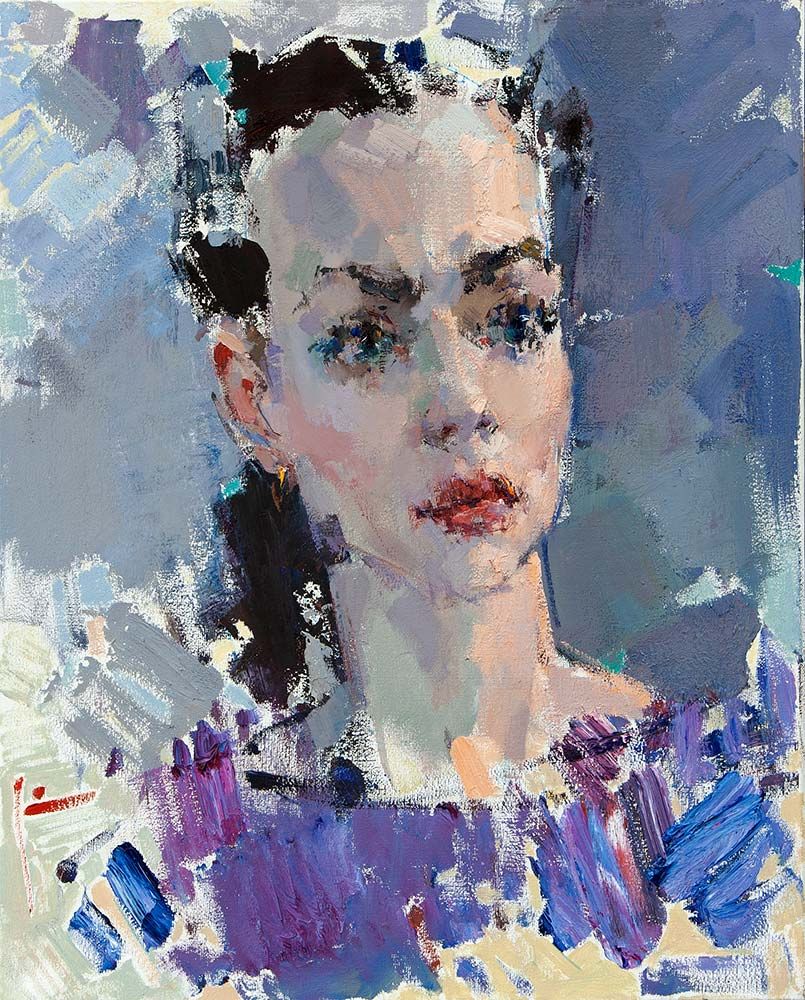
Crystal, 2022. Oil on canvas, 50 × 40 cm
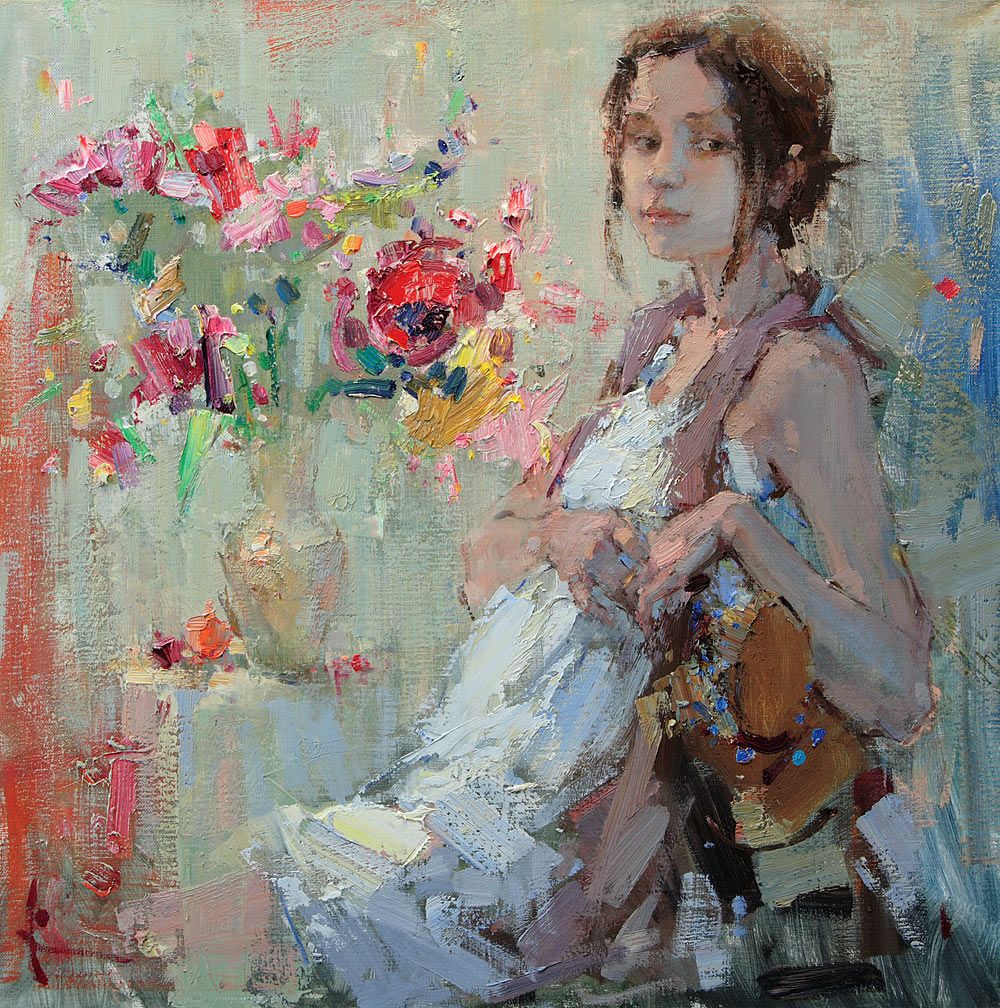
Early Spring. Oil on canvas, 60 × 60 cm
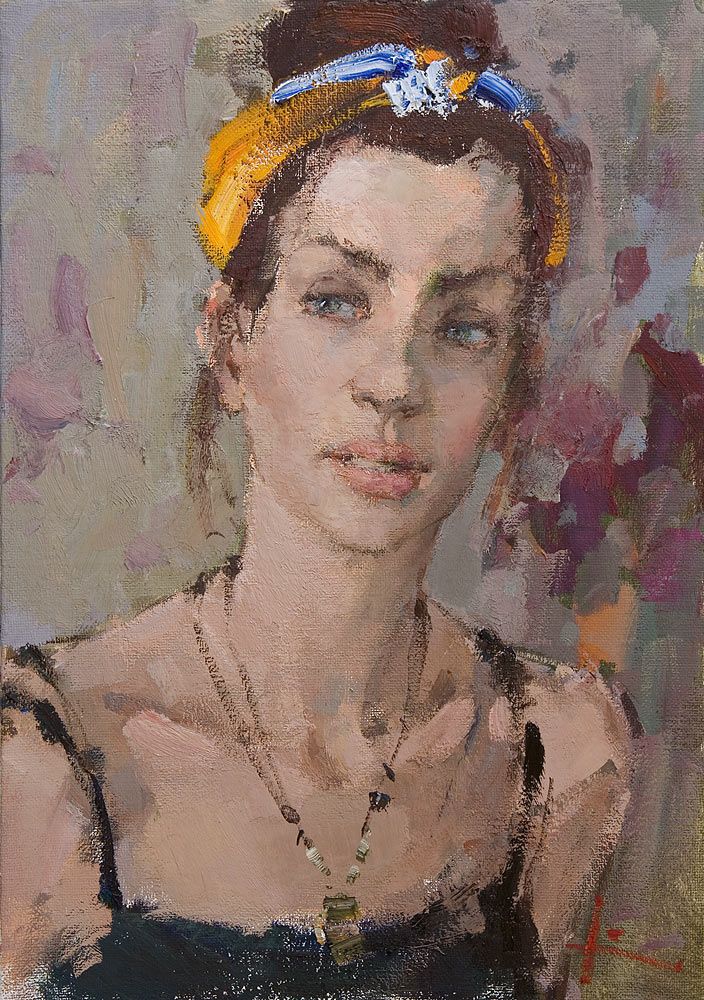
Lisa, 2019. Oil on canvas, 50 × 35 cm
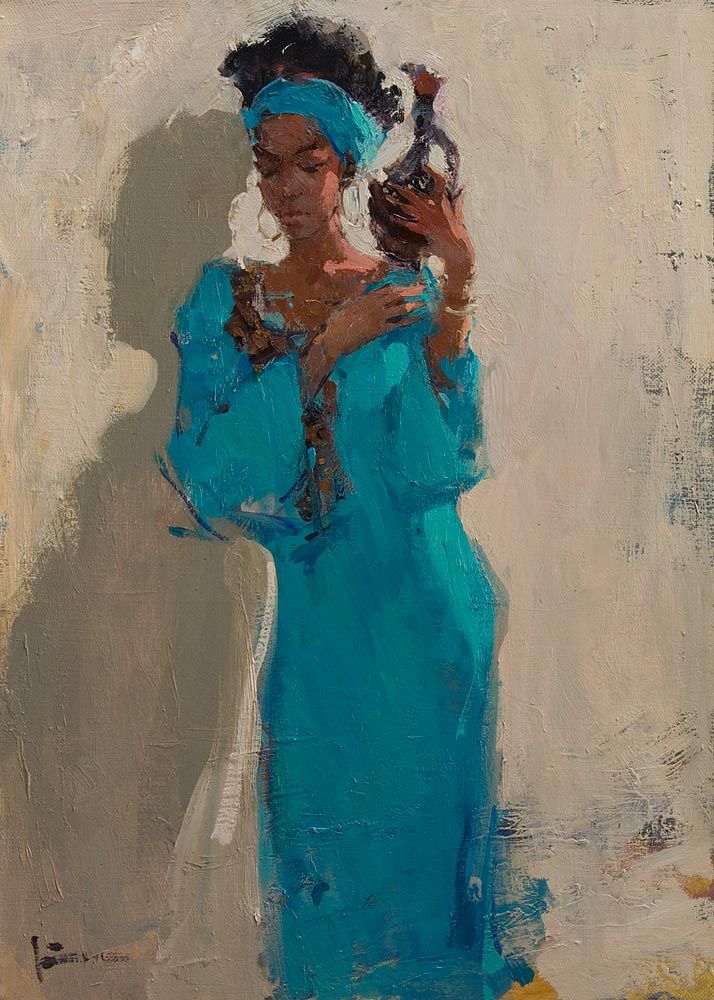
Girl with a Jug, 2018. Oil on canvas, 70 × 50 cm
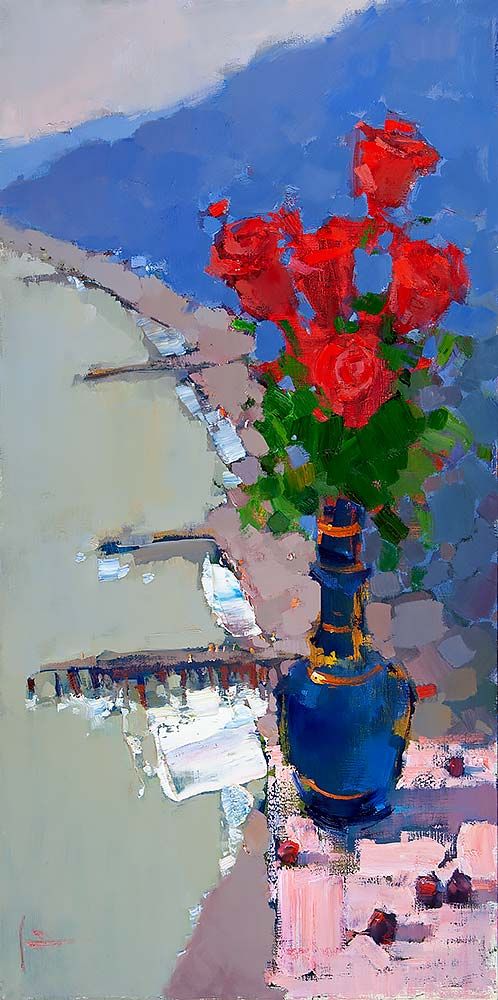
A Festive Mood, 2022. Oil on canvas, 80 × 40 cm
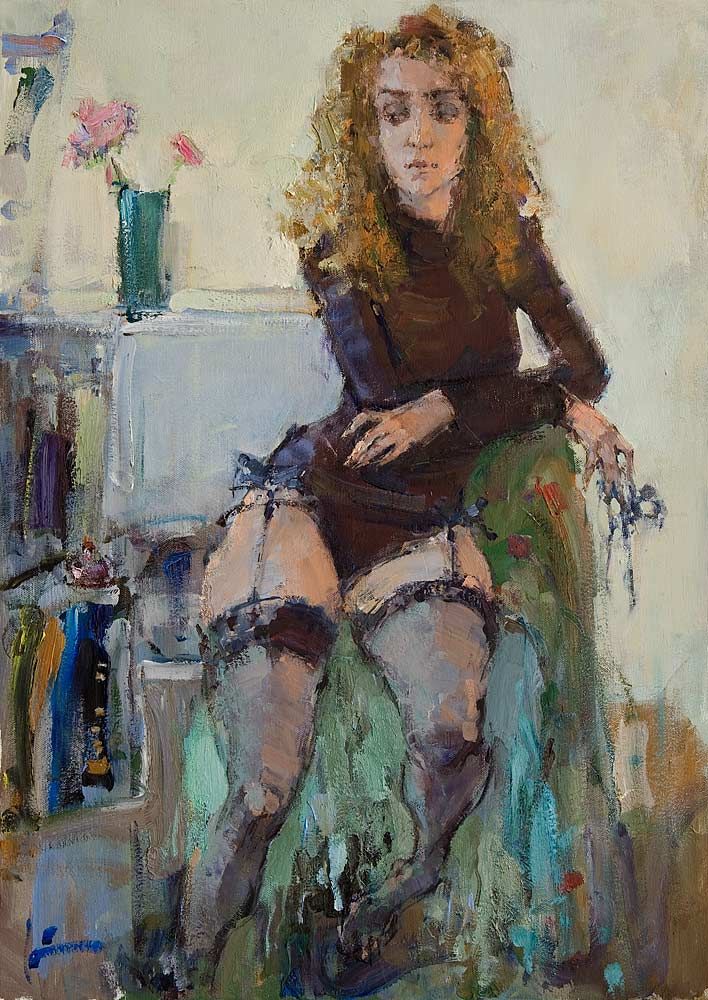
Pretty Mary, 2018. Oil on canvas, 70 × 50 cm
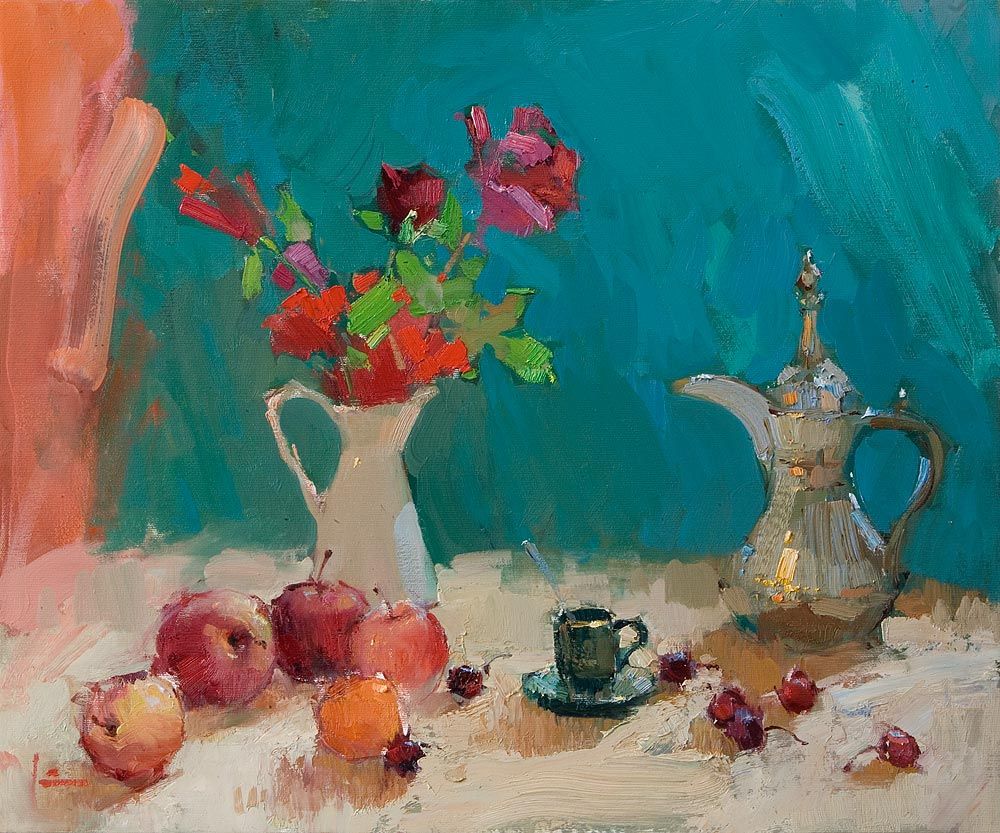
Turkish Coffee, 2018. Oil on canvas, 51 × 61 cm
Exhibitions and International Practice
Exhibitions have long been an essential part of Vyacheslav Korolenkov's professional life. Alongside his studio practice, he has consistently presented his work in solo and group exhibitions, regarding each exhibition not simply as an opportunity to display finished paintings but as another stage in an ongoing artistic dialogue.
His work has been exhibited extensively in Russia and internationally. Over the years he has participated in numerous major exhibition projects, including presentations at Moscow's Central House of Artists and international exhibitions in Europe. His paintings have also been shown in galleries and museums, reflecting the growing international recognition of his work.
International plein-air projects have become equally important to his artistic practice. Working in different countries allows him to encounter new landscapes, unfamiliar architecture and changing qualities of light. Rather than searching for spectacular motifs, he approaches each new place with the same attentive curiosity, allowing direct observation to shape the painting instead of preconceived ideas. Korolenkov has also taught widely beyond Russia, leading workshops and painting courses for artists from many different countries. These international programmes have become an extension of his own artistic practice, creating opportunities for dialogue between painters working within different cultural traditions while sharing the same commitment to observation from life.
Today his paintings are held in private collections across Russia, Europe, Japan and the United States. Yet public recognition has never become the goal of his work. Exhibitions, awards and collections are important milestones, but they remain the result of a lifelong dedication to painting rather than its purpose.
CRM-форма появится здесь